R&F Drawing Oils Test: Did the Colors Fade or Did the Surface Change?
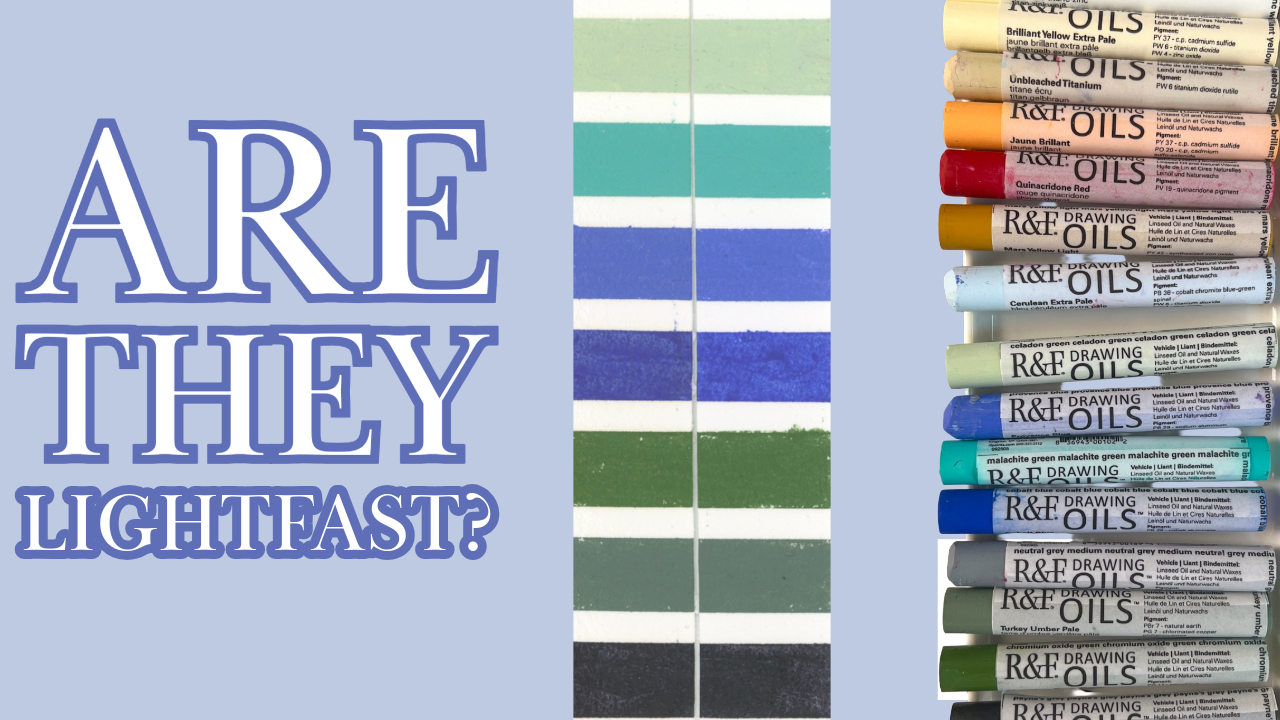
Why I Started Testing R&F Drawing Oils
R&F Drawing Oils are still a newer material, and while R&F provides pigment information, I wanted to see how these colors behave in my own studio over time.
I originally became interested in them because I mainly work in watercolor, but wanted a way to introduce the richness of oil-based materials into my paintings.
Since my work is intended to last, I wanted to understand not only pigment permanence — but how the entire material changes with time.
Colors I Own and Am Testing
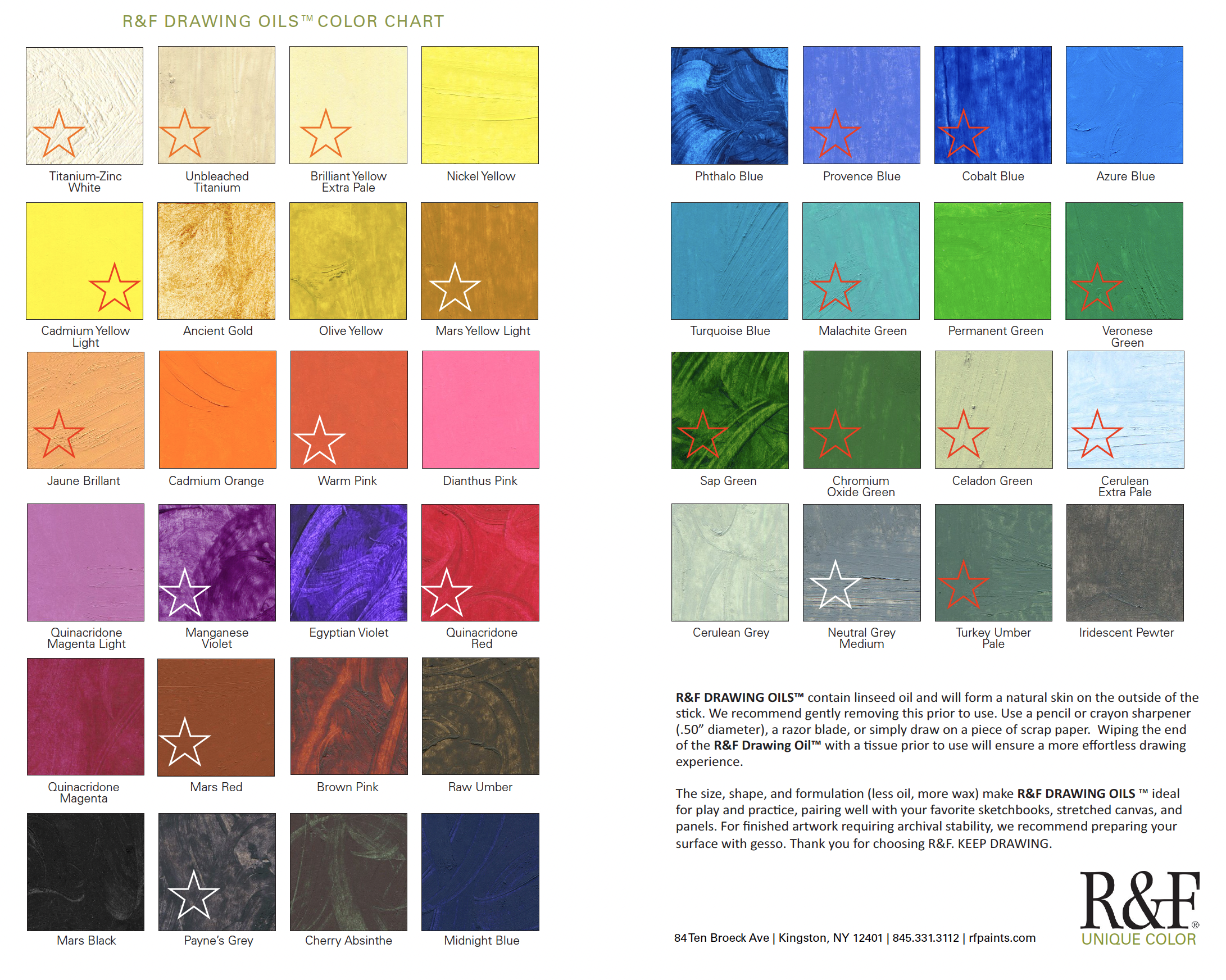
The stars indicate what I own.
I currently own 21 R&F Drawing Oils that I’m testing over time.
You can find my Drawing Oils materials list here, including the colors, paper, mediums, and tools I personally use:
https://tinyurl.com/2c65jd3v
Some links in this post are affiliate links, which means I may earn a small commission if you purchase through them, at no extra cost to you. I only share materials I personally use or test, and all opinions and results are my own.
Some links in this post are affiliate links, which means I may earn a small commission if you purchase through them, at no extra cost to you. I only share materials I personally use or test, and all opinions and results are my own.
Test 1: Oil Pastel Paper
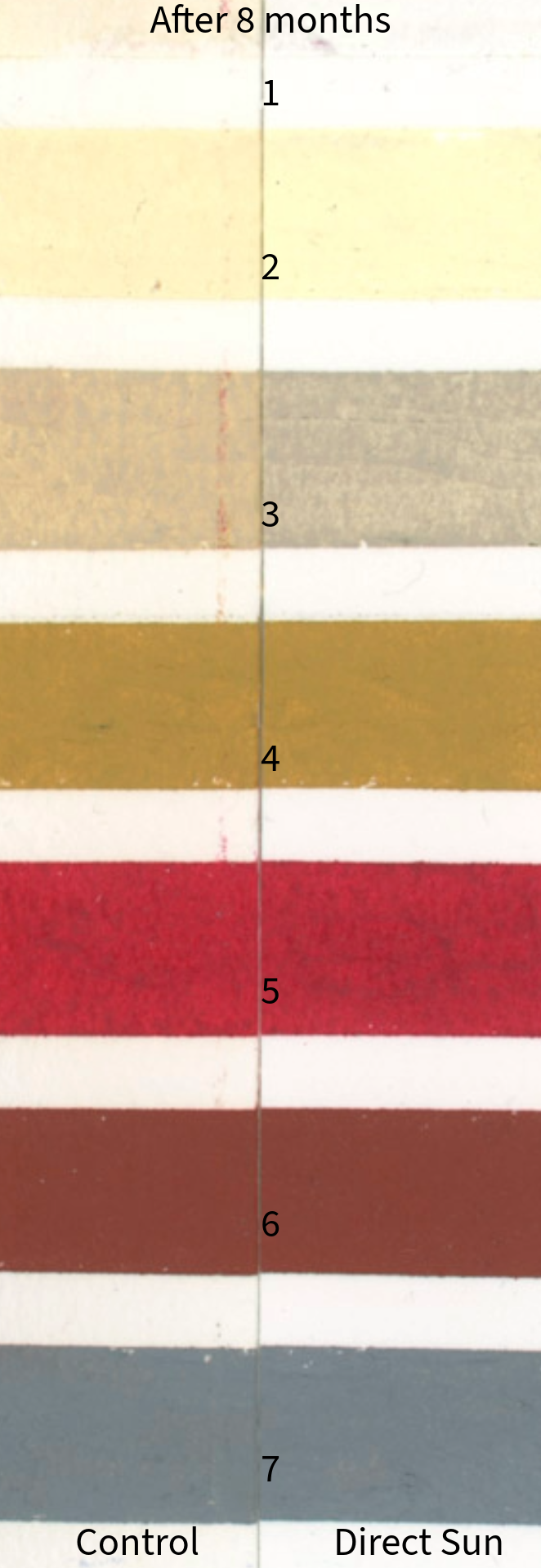
Started: September 2025
Surface: Oil pastel paper
Exposure Conditions:
Windowsill: Direct light exposure
Protected control: Stored in darkness
Indoor ambient: Stored under normal room lighting (comparison sample)
The first test was done on oil pastel paper.
Photo 1 (top to bottom):
Titanium-Zinc White
Unbleached Titanium
Brilliant Yellow Extra Pale
Mars Yellow Light
Quinacridone Red
Mars Red
Neutral Grey Medium
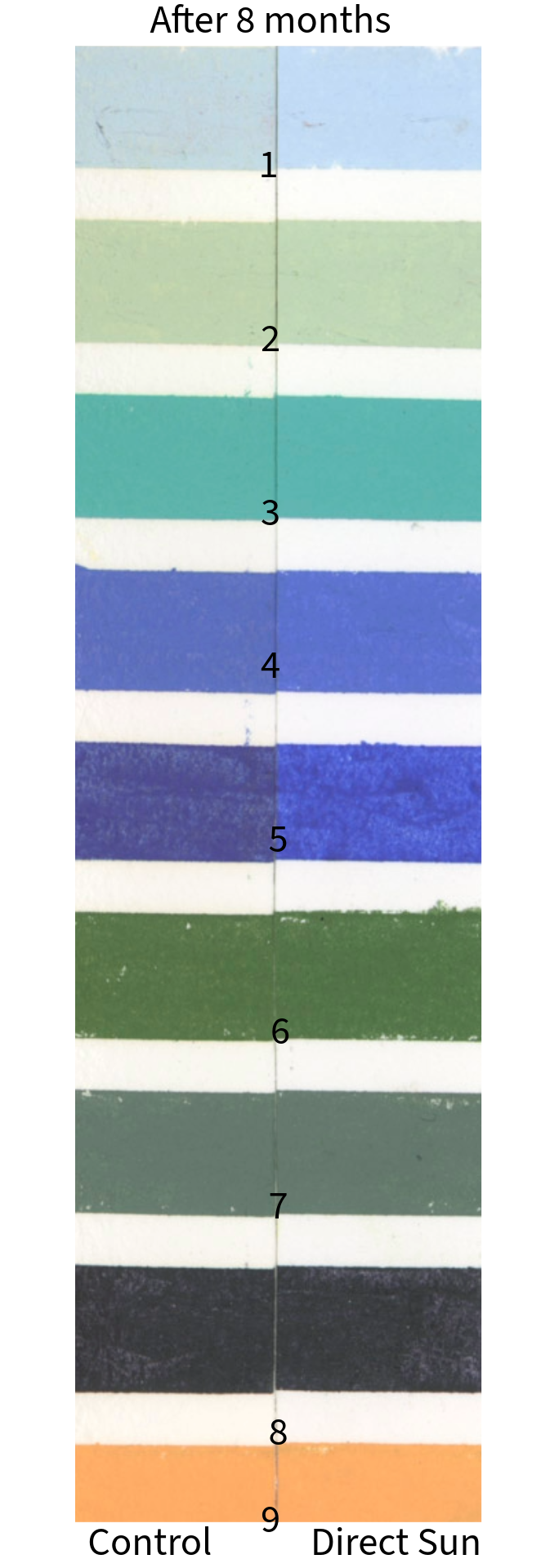
Photo 2 (top to bottom):
Cerulean Extra Pale
Celadon Green
Malachite Green
Provence Blue
Cobalt Blue
Chromium Oxide Green
Turkey Umber Pale
Payne’s Grey
Jaune Brilliant
Newer Colors Added to the Test (Currently 3 Months)
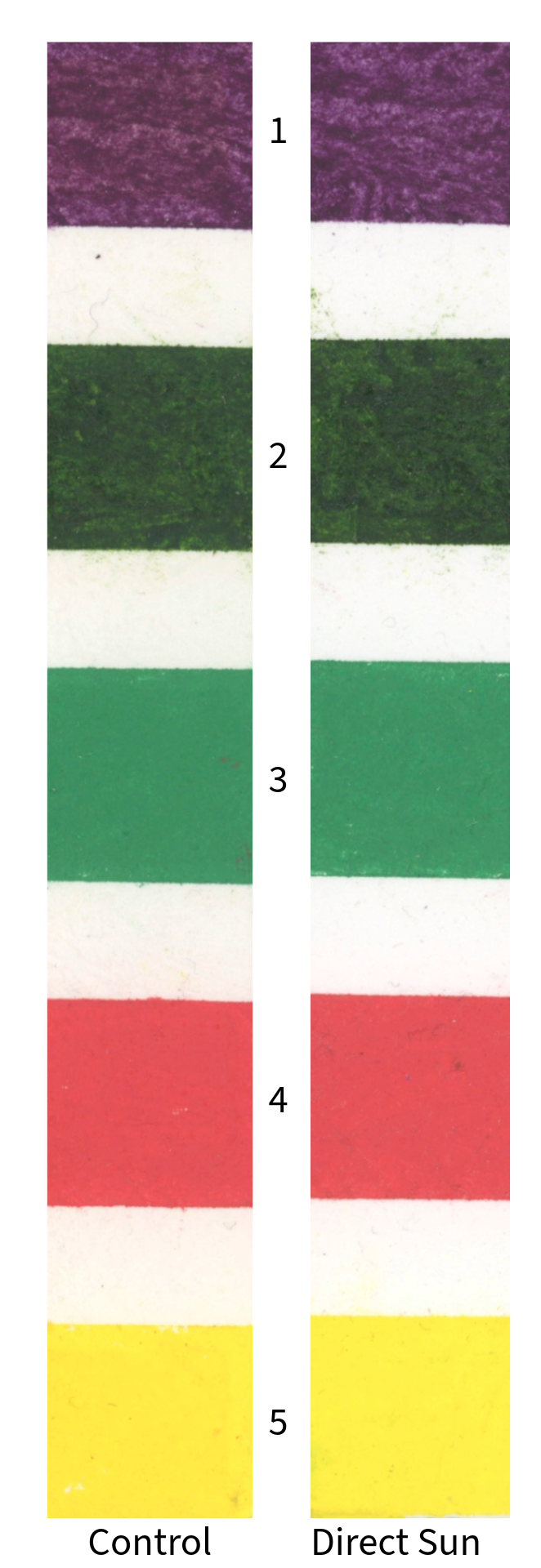
After 3 months lightfast test
I later added five more colors to the test. These have only been exposed for a shorter period, so I’ll continue updating their results over time.
Photo 3 (top to bottom):
Manganese Violet
Sap Green
Veronese Green
Warm Pink
Cadmium Yellow Light
Current result:
After 3 months, I have not noticed any major visible fading or color shift in these colors.
After several months, I noticed some unexpected changes.
Colors That Changed
Titanium-Zinc White
Result:
warmer/yellow tone reduced
appeared closer to a clean white
Possible explanation:
This may not be pigment fading. It could be changes in how the binder, wax, and paper interact over time.
Unbleached Titanium
Result:
lost some warmth
became visually cooler
Brilliant Yellow Extra Pale
Result:
slight loss of depth/warmth
Cerulean Extra Pale
Result:
yellow warmth reduced
appeared more purely blue
Celadon Green
Result:
very slight reduction in warmth
Cobalt Blue
The most surprising result.
Result:
color shifted noticeably
became visually closer to an ultramarine-like blue
This was unexpected because cobalt pigments are generally known for strong permanence.
Did the Pigments Actually Fade?
At first, I assumed the pigments themselves were changing.
But then I realized another possibility:
The surface may be changing how I see the pigment.
R&F Drawing Oils contain:
pigment
linseed oil
natural wax
They also contain more wax and less oil than traditional oil sticks.
Because my first test was on paper, it’s possible that over time:
the paper absorbed some binder
the surface appearance changed
light interacted differently with the pigment layer
The color may have shifted visually without the pigment itself disappearing.
Test 2: Primed Panel Test (Current Experiment)

To test that theory, I’m repeating the experiment.
This time:
Surface:
birch panel
2 coats Golden GAC 100
3 coats Golden Acrylic Gesso
Research question
Will the same colors show similar visual changes on a sealed, prepared surface, or were the changes observed in the paper test primarily influenced by the interaction between the Drawing Oils and the paper?
If they stay more stable, the original changes may have been caused more by surface interaction than pigment fading.
Testing Methodology
Method note:
One factor I'll account for in future comparisons is a phenomenon known as reversible dark yellowing, where drying oil binders (particularly linseed oil) can become temporarily warmer when stored in darkness and gradually return closer to their original appearance after exposure to normal ambient light.
To keep the first year of testing consistent, the protected control samples will remain undisturbed until the one-year comparison.
Beginning after the one-year mark, before each major comparison, the protected control samples will be placed under normal ambient indoor light for approximately one week before scanning. This helps reduce the possibility that differences are caused by dark storage rather than light exposure.
Updates
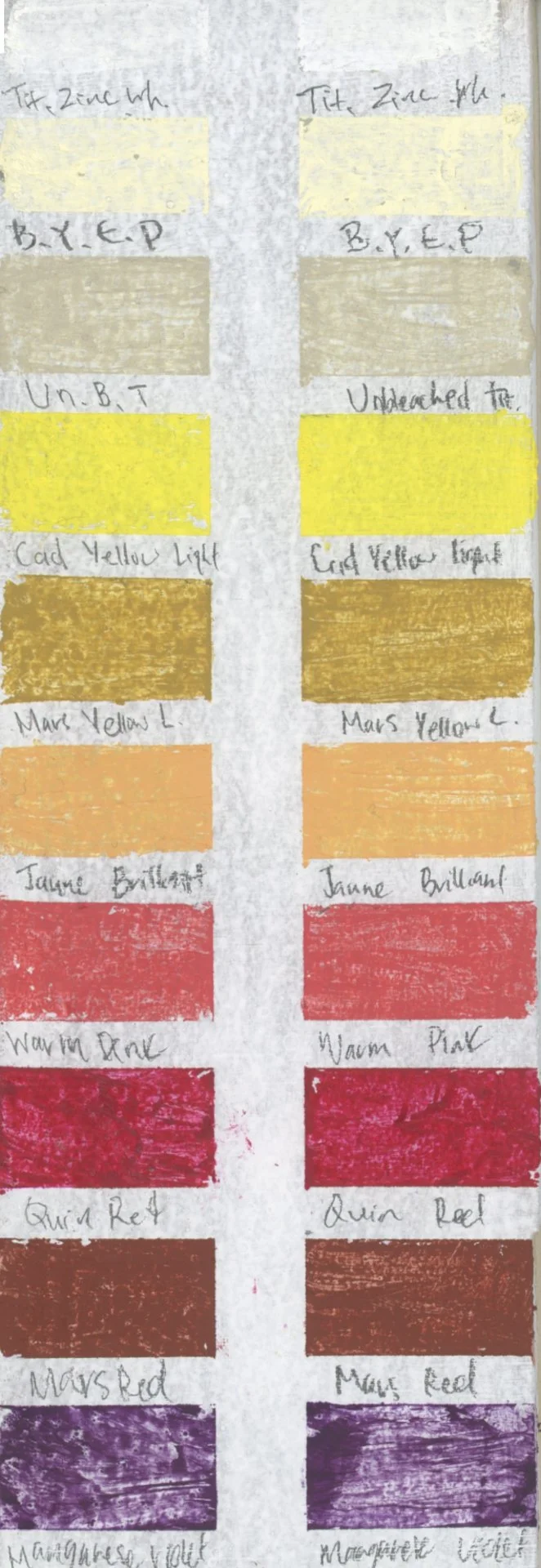
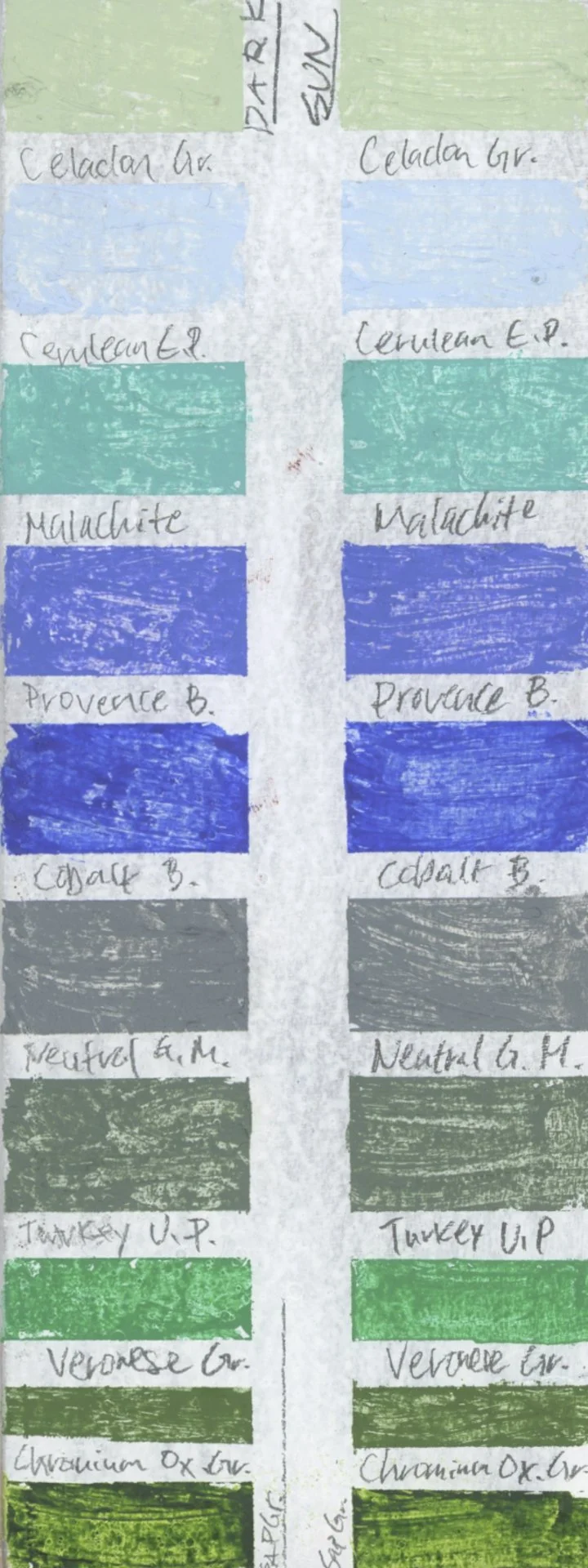
Month 0 — Starting Point
The drawing oils have dried so I have scanned them!
Notes:
colors applied
initial appearance documented
Month 3 Update
In progress….
Month 6 Update
Planned
Month 12 Update
Annual comparison (including re-exposure of protected controls before scanning)
Final Thoughts
This experiment has reminded me that archival testing is more complicated than simply asking:
“Is the pigment lightfast?”
Artists experience the whole material:
pigment
binder
surface
preparation
environment
time
I’ll continue updating this page as the test progresses.
If you’ve tested R&F Drawing Oils yourself, please share your results — especially colors I don’t own. The more information artists share, the better decisions we can make with our materials.