What Actually Survives My Studio: Testing MEEDEN Watercolor Supplies
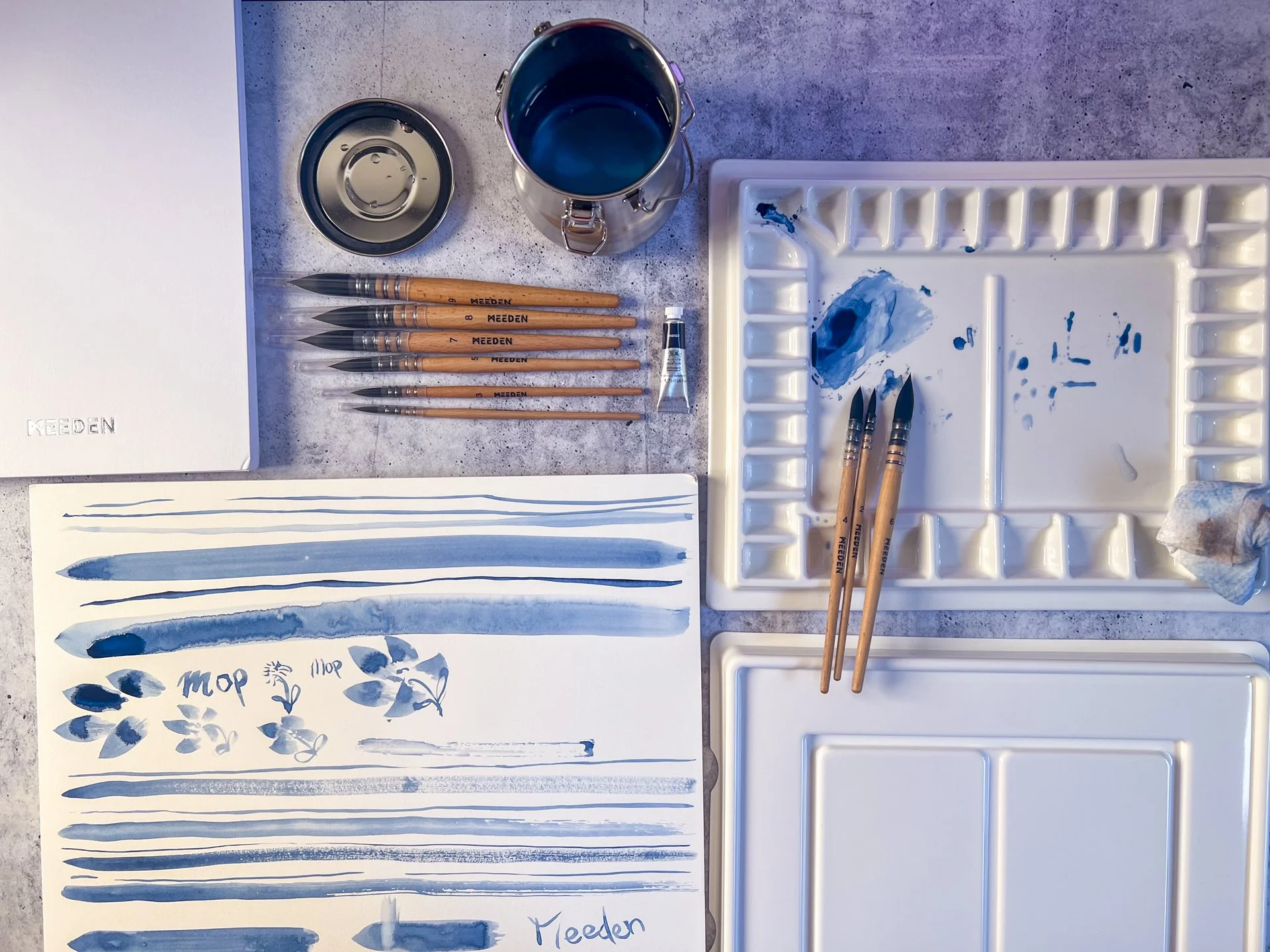
Every studio accumulates tools faster than it sheds them.
Over time, I’ve learned that most supplies don’t fail because they’re terrible. They fail because they don’t fit how I actually work. They interrupt the rhythm, take up space, or ask for compromises I’m not willing to make.
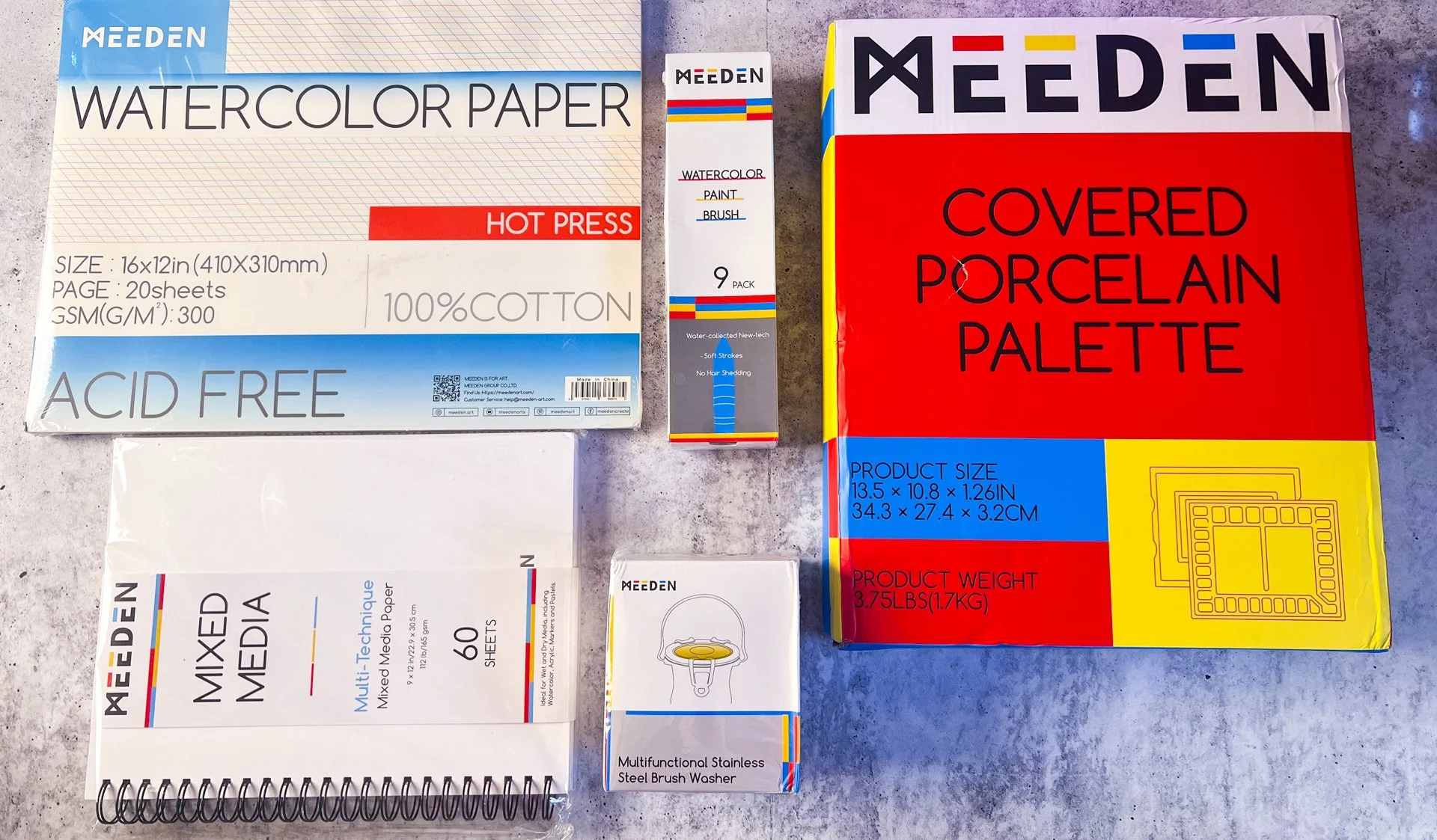
When MEEDEN sent me a selection of watercolor supplies ($178 worth in total!) and asked for my honest opinion, I approached it the same way I approach anything new in my studio. Slowly. Comparatively. And with the assumption that not everything needs to stay.
How I Test Supplies
I don’t believe in judging materials through swatches alone. Swatches show color. They don’t show behavior.
Instead, I test supplies in the conditions they’re meant to live in. On real paper. With actual painting. Side by side with tools I already trust.
For this test, I compared MEEDEN’s supplies against what’s already part of my daily workflow. Their watercolor paper against Baohong. Their brushes against the mop brushes I reach for instinctively. Their palette against the metal and plastic palettes that already sit on my desk.
The question wasn’t whether these tools were “good.”
It was whether they earned their place.
Paper: Close Enough to Matter
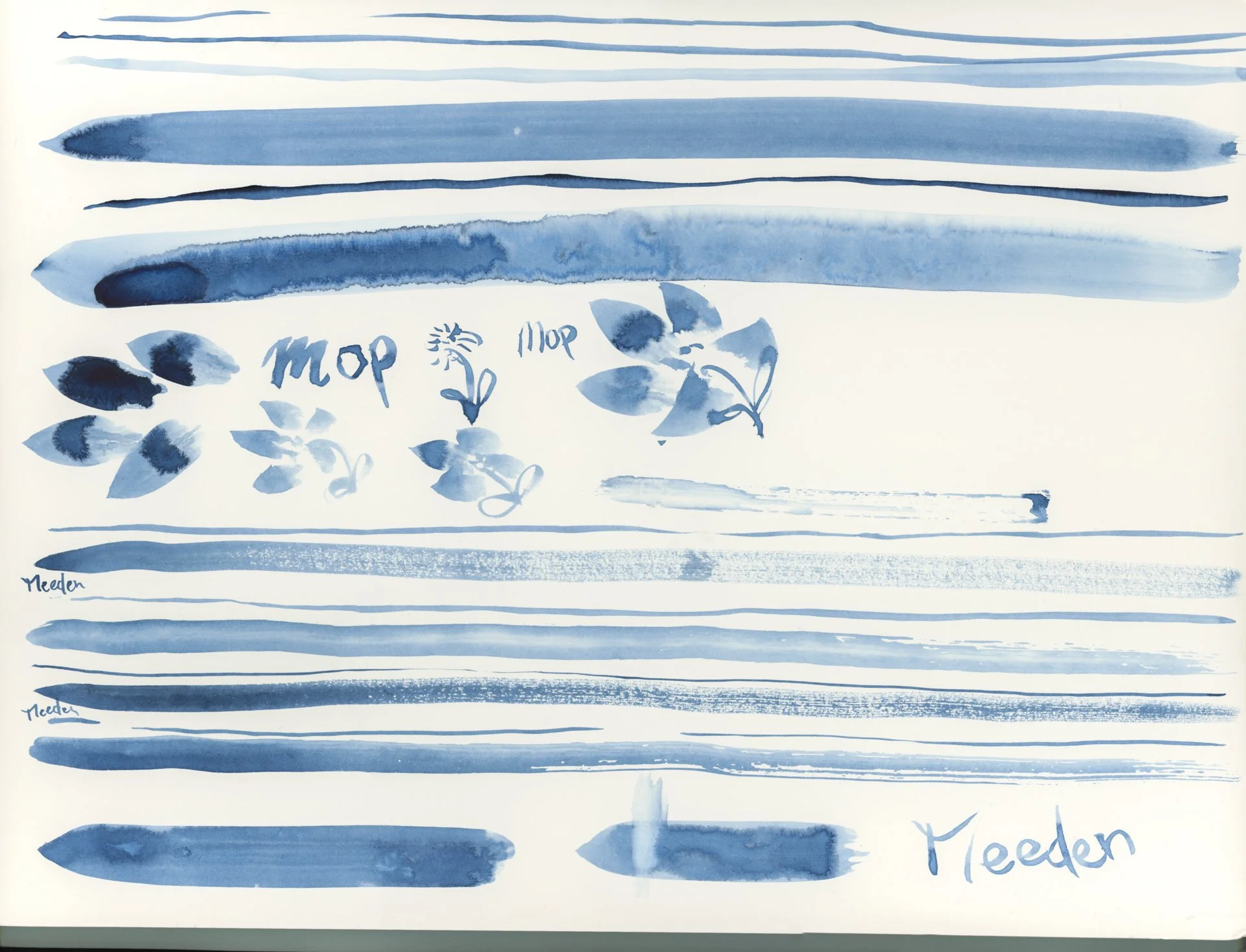
MEEDEN’s hot press watercolor paper is often described as coming from the same factory as Baohong, which immediately made it interesting to me.
In practice, it behaved similarly in light washes and detail work. The surface felt elegant and responsive, especially for controlled applications. Under heavier washes, it showed some of the same quirks Baohong users will recognize: occasional buckling and variations sheet to sheet.
This isn’t a flaw so much as a characteristic of this category of paper. It’s something to understand rather than expect to disappear.
For artists working thoughtfully and not abusing the surface, it’s a viable option. For aggressive lifting or scrubbing, I’d still reach for something sturdier.
Brushes: Understanding What They Are (and Aren’t)
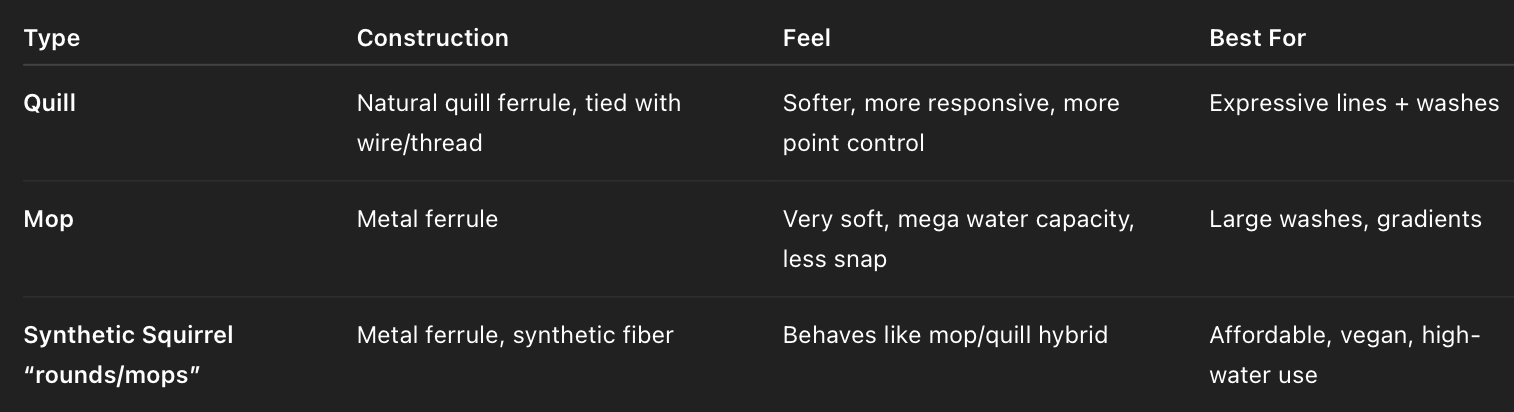
MEEDEN’s brushes are often described as synthetic squirrel, and that distinction matters.
They behave quill-like in terms of water capacity and softness, but they are not true quill brushes by construction. Traditional quills use a natural feather (or reed) ferrule bound with thread or wire; these brushes use a standard metal ferrule, which places them in the mop / round category, despite their teardrop shape and generous belly.
Once that distinction is clear, expectations fall into place.
In use, the brushes held a generous amount of water and came to a usable, reliable point. They felt especially well suited for expressive passages, soft transitions, and loose mark-making rather than tight, architectural control.
Brushes like these reward a relaxed grip and confidence. They’re not designed for precision drafting, but in the right hands, they’re capable, fluid, and surprisingly refined.
The Porcelain Palette: A Desk Decision
Porcelain palettes are never neutral objects. They’re heavy. Fragile. And they demand a permanent place.
MEEDEN’s palette performed exactly as porcelain should. Paint mixed cleanly. Colors stayed readable. Nothing beaded or stained.
This is not a travel palette, and it doesn’t pretend to be one. As a stay-on-the-desk tool, it made sense. Whether it replaces an existing palette depends less on quality and more on how much space and weight you’re willing to commit.
The Sketchbook and the Washer
Mixed-media sketchbooks often promise more than they deliver. This one handled light to moderate watercolor better than most, though I wouldn’t push it for heavy layering across multiple pages.
The wooden brush washer was the most unfamiliar object in the group. Its stability and practicality mattered more to me than novelty. In use, it felt functional rather than decorative, which is the highest compliment I can give a studio tool.
What Stayed With Me
Testing these supplies reinforced something I already believe.
There is no universal “best” material. There is only what supports your way of working and quietly steps out of the way.
Some of these tools earned a place on my desk. Others didn’t. And that’s not a failure. It’s the natural outcome of testing materials honestly, without trying to make them perform a role they weren’t designed for.
That, to me, is the real test.
Related
Products Tested
• Large Brush Washer
https://go.meedenart.com/3KAZp8a
• Porcelain Palette (half-size; 33-well currently sold out)
https://go.meedenart.com/3Mf7sIq
• Watercolor Ceramic Brush Wash Bowl (mentioned, not tested)
https://go.meedenart.com/4pO2OzI
• Professional Watercolor Brush Set
(Available as sets of 4 or 9)
https://go.meedenart.com/48LTExP
• MEEDEN Watercolor Paper Pad (16×12, Hot Press)
https://go.meedenart.com/4rCg1NG
• Mixed Media Sketchbook (9×12)
https://go.meedenart.com/4pkSoHU
Discount
12% off MEEDEN supplies
Use code: WHATIF
Watch the full studio test:
I Tested 5 MEEDEN Watercolor Supplies – What Survived My Studio