What I Took Away From the #222magnetic Challenge (And What It Clarified About My Work)
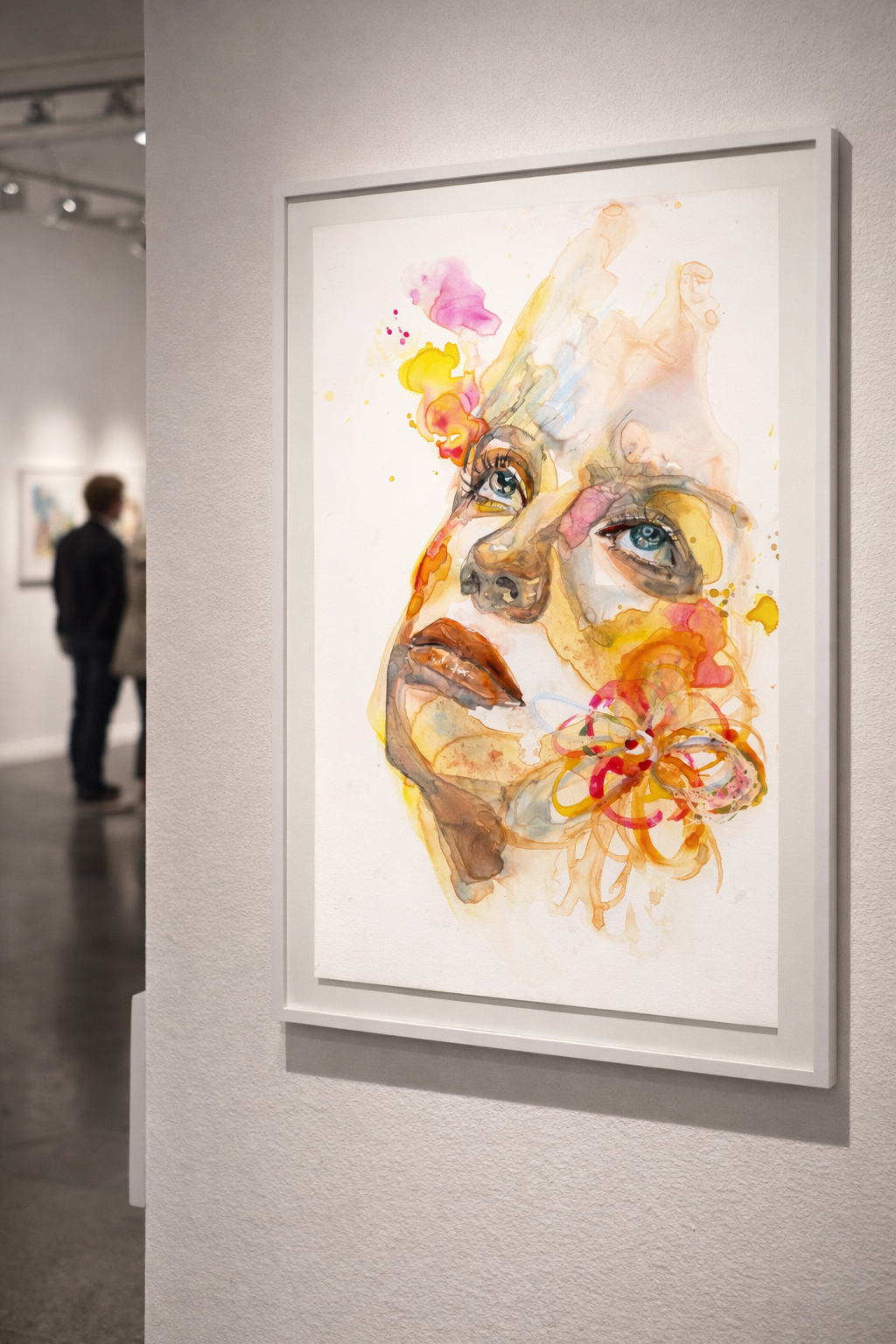
Its been quite a while since I took part in Marina Granger’s three-day #222magnetic challenge and thought it was about time I cleaned out all the “draft” blogs I have been accumulating now that its Jan of 2026 lol.
I joined because I wanted to refine how I talk about my work, especially in ways that might resonate more clearly with galleries. What I didn’t expect was how much it helped me see things I was already doing, but hadn’t fully named yet.
It wasn’t just about strategy. It felt more like a pause. A moment to step back and look at my work from a little distance, without judgment. Part reflection, part structure, and part permission to trust what’s already there.
These are the main things I’m still sitting with.
1. Speak from your “why”, and simplify it
One of the most helpful frameworks we were given was surprisingly simple:
Why you create
How your perspective shapes your work
What you actually make
It sounds obvious, but it was freeing.
So often we lead with the technical description. “Watercolor portrait artist.” “Figurative painter.” That’s not wrong, but it’s rarely the heart of it.
When I stripped things back, I realized this is what sits at the center of my work: I paint to notice. Subtle shifts. Unspoken feelings. Things that feel unresolved or just out of reach. That awareness is there whether I’m painting a child, a quiet gaze, or something more symbolic.
Once that “why” is clear, the rest falls into place more naturally.
2. Visual identity isn’t about sameness, it’s about recognition
This really landed for me during the final day.
We were asked to look at three to five pieces together and ask: what connects them? Not subject matter, but feeling. Mood. Palette. Rhythm. A sense of softness or tension that repeats.
Galleries and collectors aren’t looking for everything to look identical. They’re looking for coherence. They want to feel that the work comes from one inner world.
Seeing my pieces side by side helped me notice patterns I hadn’t consciously planned, but clearly return again and again. That recognition alone made me feel more grounded in what I’m building.
3. Language can support intuition, not replace it
At one point, Marina referenced Heinrich Wölfflin and his five visual contrasts:
Linear vs. painterly
Plane vs. recession
Closed form vs. open form
Multiplicity vs. unity
Absolute vs. relative clarity
At first, I wasn’t sure how useful this would be. But when I applied it to my own work, it gave me language for instincts I already trusted.
Painterly. Open form. Recession. Unified. Intentionally unclear.
That vocabulary doesn’t box me in. It gives me something to lean on when speaking with curators or writing about my work, without losing the intuitive side of how I paint.
4. Instagram really is a virtual white wall
I’ve heard this before, but it clicked differently this time.
Your grid is often the first encounter someone has with your work. Treating it like a white wall means thinking about clarity, consistency, and pacing, not perfection.
It doesn’t mean stripping away personality. It means letting the work breathe, and allowing patterns to become visible over time.
5. Share enough story to open the door, not explain everything
One of the most helpful reminders was this balance between story and restraint.
People connect through story, but they stay with feeling.
When I wrote about Child, Blossom, I didn’t need to explain every layer of meaning. A few honest sentences were enough to guide the emotional entry point. The rest could stay unspoken.
That felt important. I don’t want to over-explain my work. But I also don’t want to disappear from it.
What I’m Doing With This Now
I’m slowly refining my bio, revisiting how I describe my work, and paying more attention to visual continuity across platforms. Not to polish things endlessly, but to be clearer. To feel more aligned.
If you’re an artist struggling to find the right words, or wondering how to make your presence feel more gallery-ready without losing honesty, this kind of reflection is worth taking time for.
And if you’re reading this, maybe scroll through your own work for a moment. What do you see repeating? What do you feel?
That might already be your style. You just haven’t named it yet.