What Is an Artist Statement? (And How It Actually Helped Me)
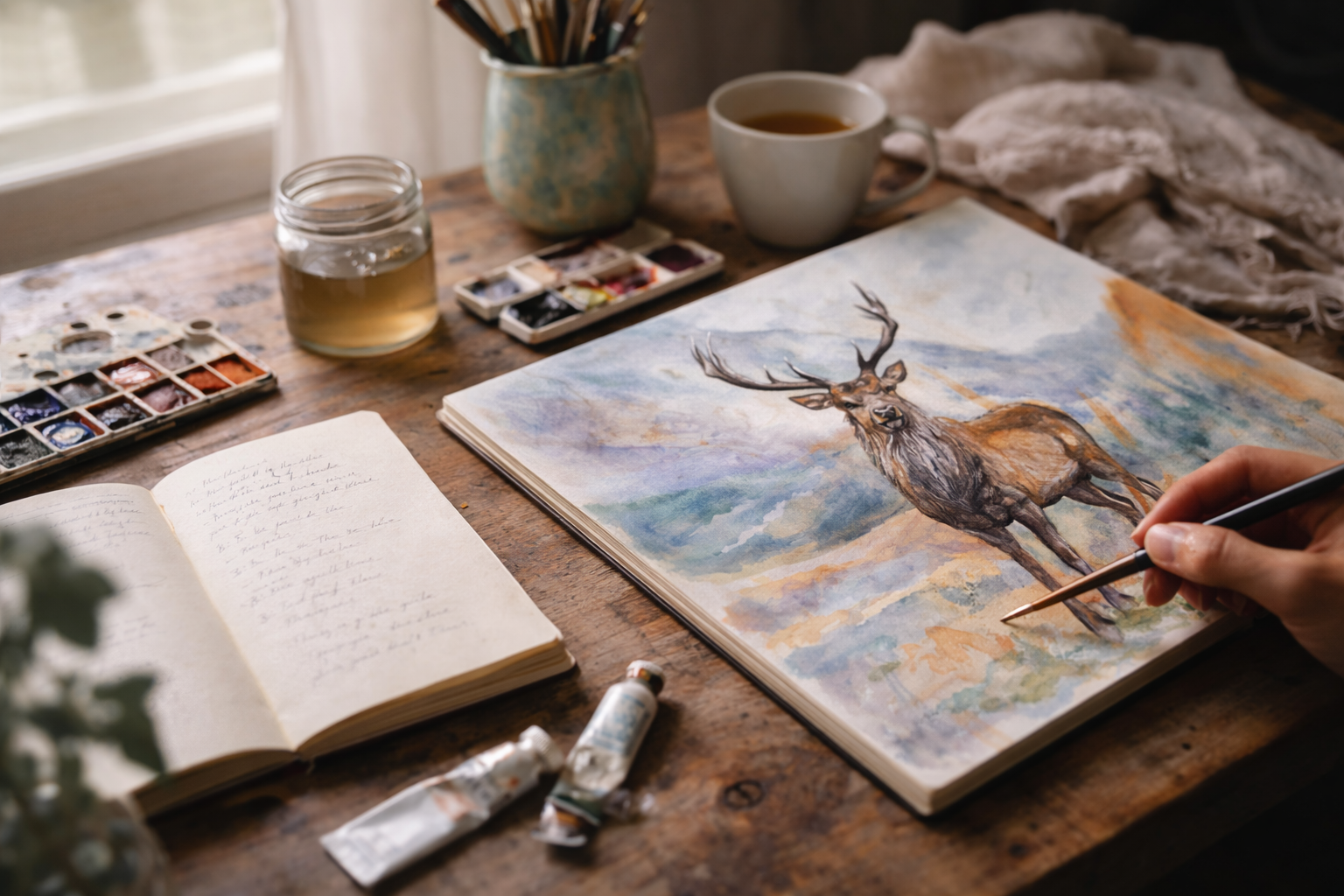
If you’ve ever stared at a blank page trying to explain your own art, you’re not alone.
I used to think artist statements were just formal things galleries asked for, or something you added to your website because you were supposed to. Over time, though, I’ve come to see them very differently. They’ve become one of the most grounding tools in my practice.
Whether you’re applying for an exhibition, introducing your work to new people, or simply trying to understand what you’re really saying through your art, a good artist statement helps.
So let’s break it down.
So, What Is an Artist Statement?
At its core, an artist statement is a short piece of writing, usually one to three paragraphs, that explains your art in your own words.
It can touch on things like:
Why you make art
The themes or ideas you keep returning to
The materials you use and why they matter to you
What you hope people feel or notice when they see your work
You’re not trying to explain everything. You’re simply inviting people in. I think of it as a small doorway into how you see and work.
Types of Artist Statements
This part confused me for a long time, so here’s how I understand it now.
1. General Artist Statement
This is about you as an artist overall. It reflects your broader body of work and how you approach making art.
This is the version you’d usually share on your website or when someone wants to understand your practice as a whole. Mine often touches on subtle emotion, the way parenthood shapes how I see people, and why watercolor feels like a medium that reveals rather than imposes.
Use this for:
Portfolio websites
Gallery submissions
Artist bio pages
Grant or residency applications
2. Specific Work Statement
This one focuses on a single piece or a series. I write these when submitting to juried shows, or when I want to share the deeper story behind a work on my blog or newsletter.
For example, when I painted Child, Blossom, inspired by Vincent van Gogh’s Almond Blossom and a quiet moment with my son, I wrote about seeing myself reflected in him, and how that feeling naturally found its way into the blossoms.
Use this for:
Juried exhibitions
Wall labels
Collector information sheets
Blog posts or social media
Why Bother Writing One?
If you’re anything like me, words don’t always come as easily as brushstrokes. But here’s why I keep coming back to writing artist statements.
It helps me get clear.
When I write about my work, I start to notice patterns. Themes like motherhood, fleeting emotion, or my relationship to master painters keep resurfacing, even when I don’t plan them.
It builds connection.
More than once, someone has told me they bought a painting because of what I wrote about it. The writing helped something click emotionally.
It supports the practical side of being an artist.
Exhibitions, grants, applications, art fairs. Having a statement ready makes all of that less stressful.
Easy Ways to Write One (That Don’t Feel Awkward)
Here are a few approaches that actually work for me:
Talk it out first.
Open a voice memo and answer this question out loud: “Why do I make this kind of art?” Speak like you’re talking to a curious friend.
Choose three words.
Pick three words that describe your work, then build from there. For me, words like emotional, soft, and observant helped anchor what I wanted to say.
Write directly to the viewer.
Try starting with: “What I want you to feel when you look at this painting is…” It doesn’t need to be poetic. Just honest.
Let it evolve.
Your artist statement isn’t permanent. Mine changes every year, sometimes every few months. That evolution helps me stay connected to where my work is heading.
Final Thoughts
If writing about your art feels vulnerable, that makes sense. It is.
I no longer see the artist statement as a pitch or a formality. I see it as a mirror. A way to notice what I’m really trying to say through my work, and a bridge that lets others meet it halfway.
If you’ve never written one before, start messy. If you’ve written one that doesn’t feel like you anymore, rewrite it. Your voice matters, on the page as much as it does on paper.