What the Seattle Art Fair Taught Me About My Art
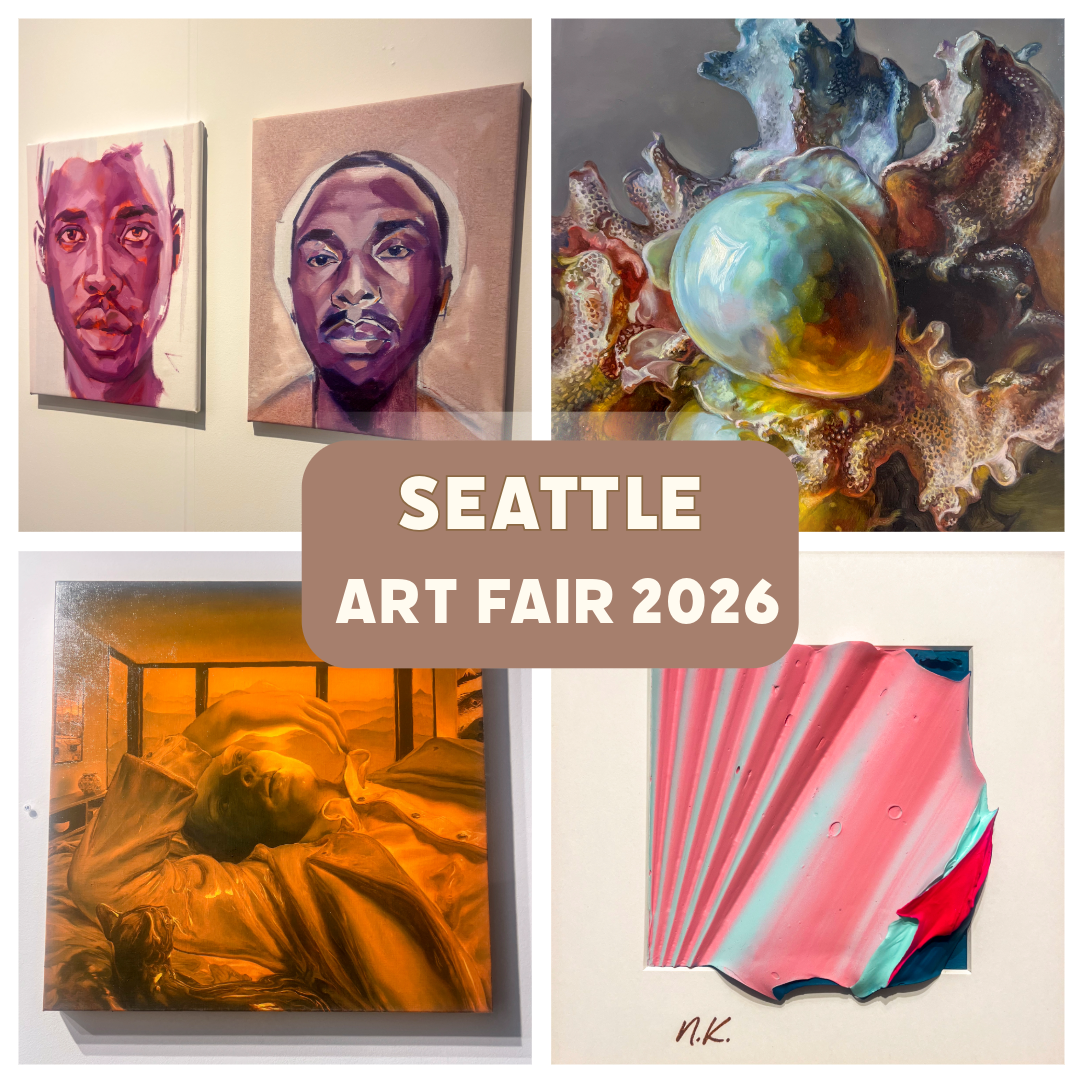
I didn't go to the Seattle Art Fair expecting to come home with a completely new direction or a list of artists I suddenly wanted to paint like.
To be honest, I went because I was curious.
Curious whether I'd find artwork that genuinely resonated with me. Curious whether I could imagine my own paintings belonging in the same space one day. Would I walk through the fair feeling inspired, intimidated, or completely disconnected? I honestly didn't know.
The second reason is much less poetic—I happened to win one of the complimentary tickets through Columbia City Gallery, where I'm a member. It felt too good an opportunity to pass up.
So I went.
Over the course of two days, I wandered from booth to booth, taking hundreds of photos and far too many notes.
At first, I thought I was simply collecting images of artwork I liked.
But by the end of the fair, I realized something unexpected.
The answer wasn't hidden in one unforgettable painting.
It was hidden in a pattern.
Without realizing it, I had been stopping at the same kinds of work over and over again. Different artists. Different mediums. Different galleries. Yet the same visual qualities kept pulling me in.
The Seattle Art Fair didn't change my taste.
It revealed it.
Color Is Emotional Before It's Decorative
One of the first things I started noticing was color.
Not specific subjects or styles—but certain color combinations that kept making me stop.
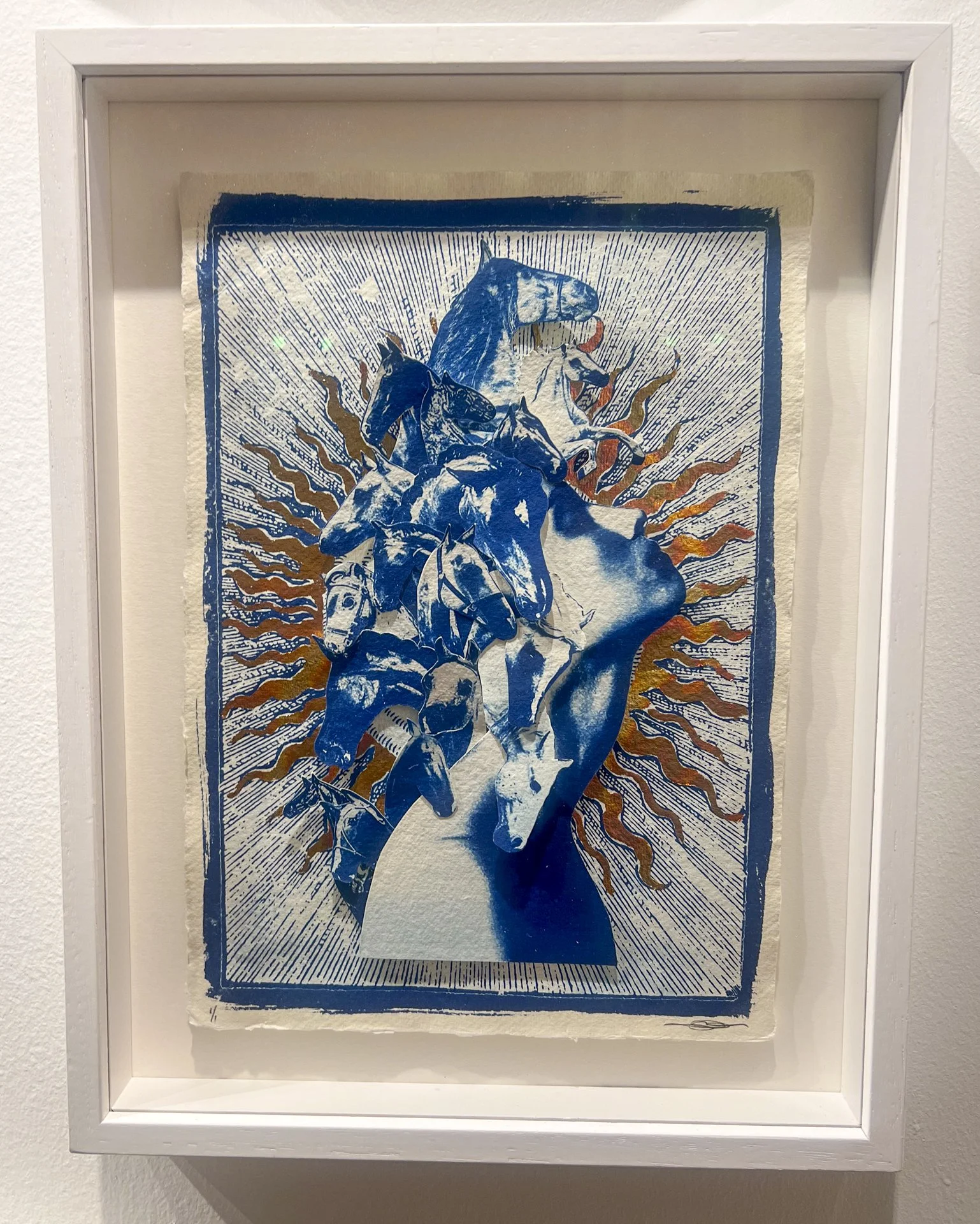
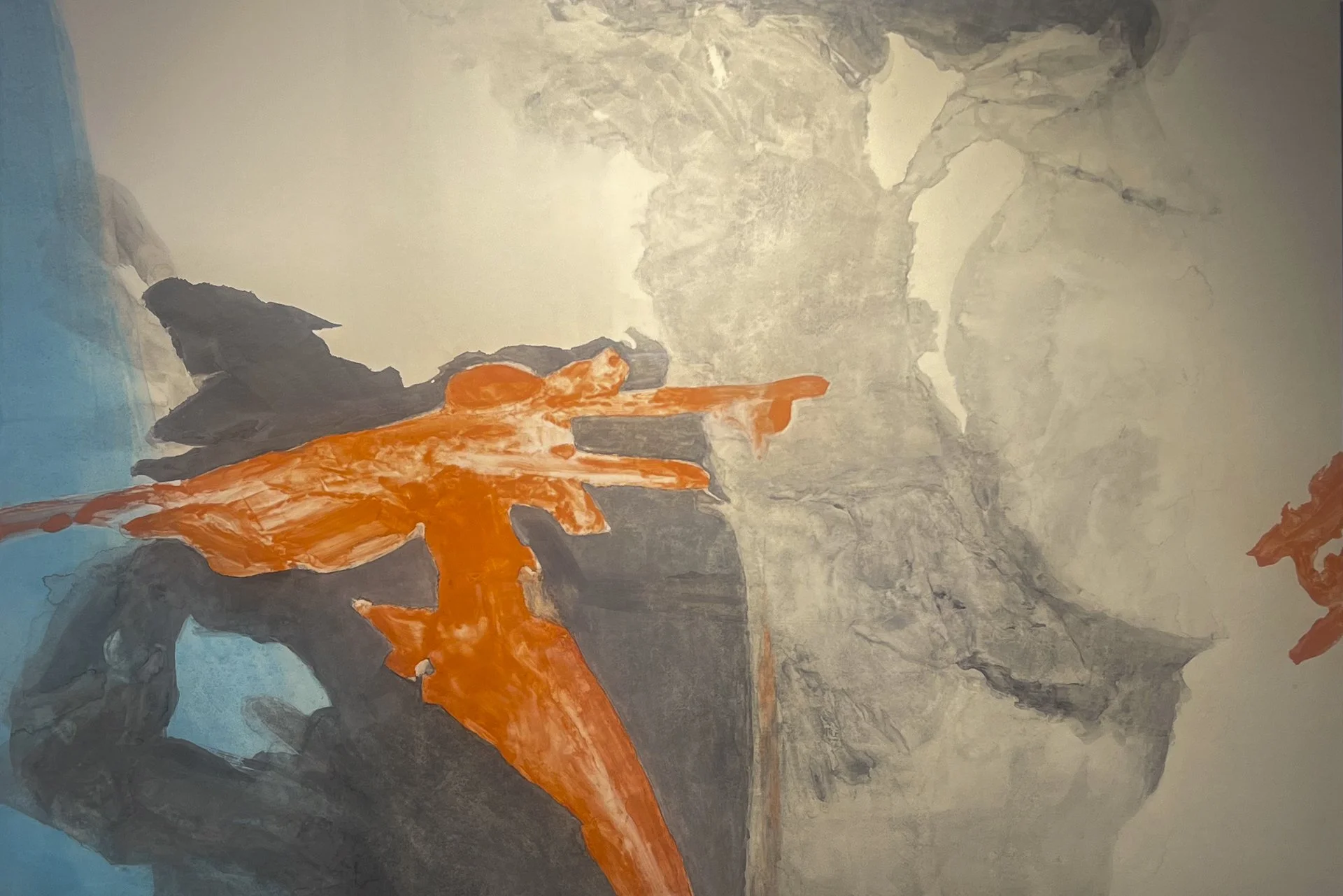
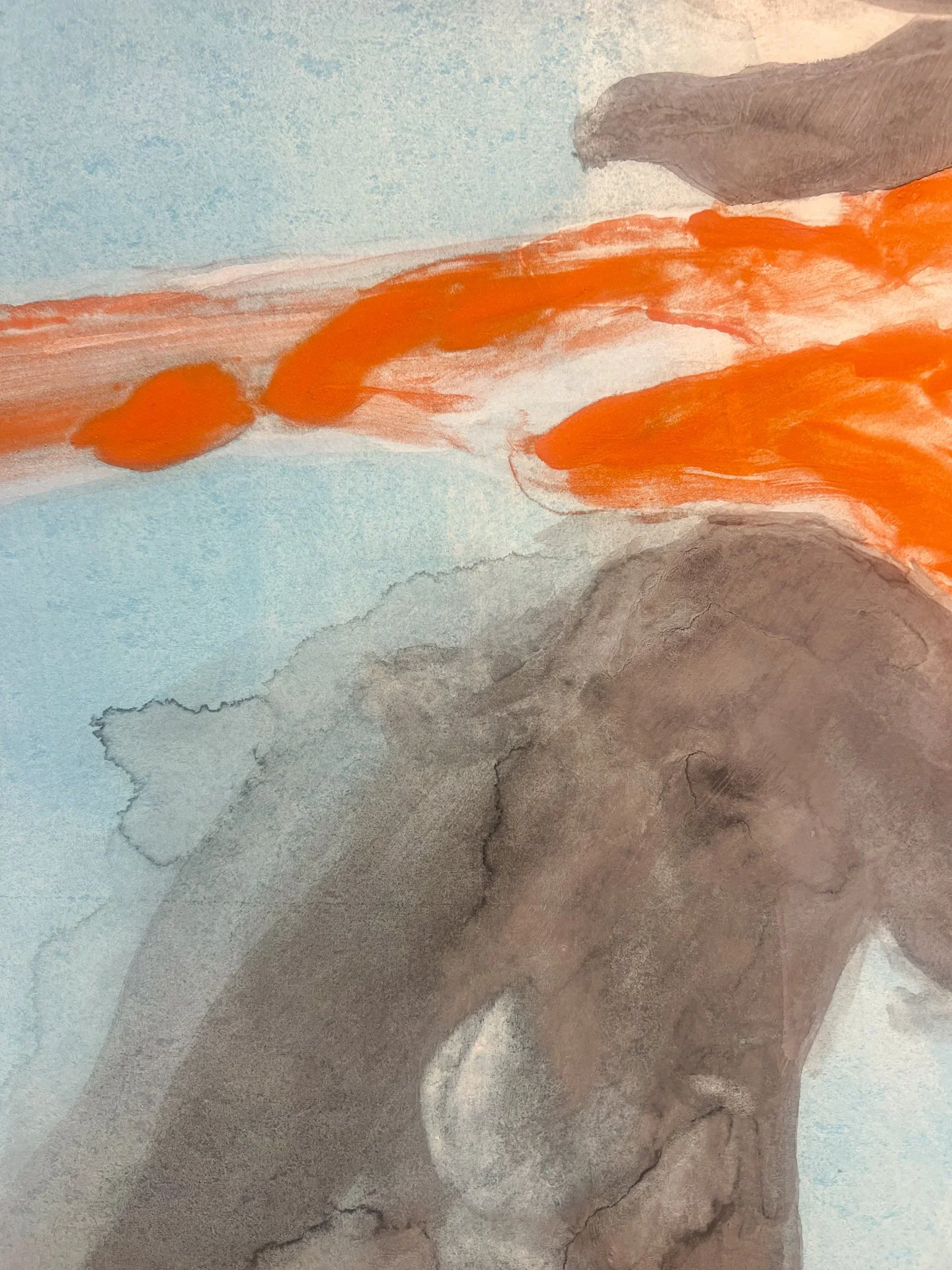
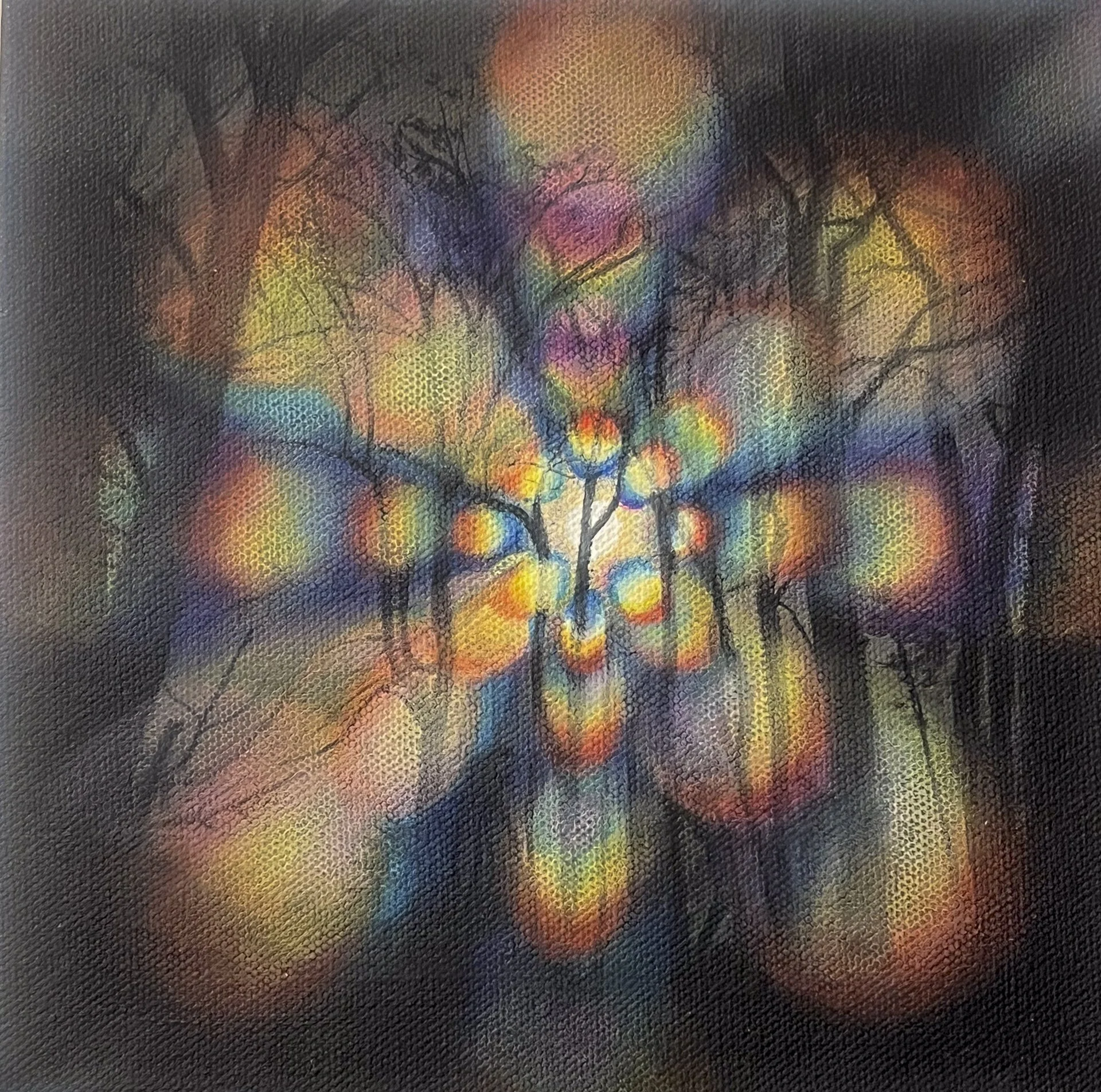
Again and again, I found myself drawn to paintings with restrained palettes interrupted by one bold accent. Deep blues against warm oranges. Earthy neutrals with flashes of gold. Soft, muted paintings suddenly lit up by an electric pink or cobalt blue.
I hadn't planned on paying attention to color, but after the third or fourth booth, I realized it wasn't a coincidence anymore.
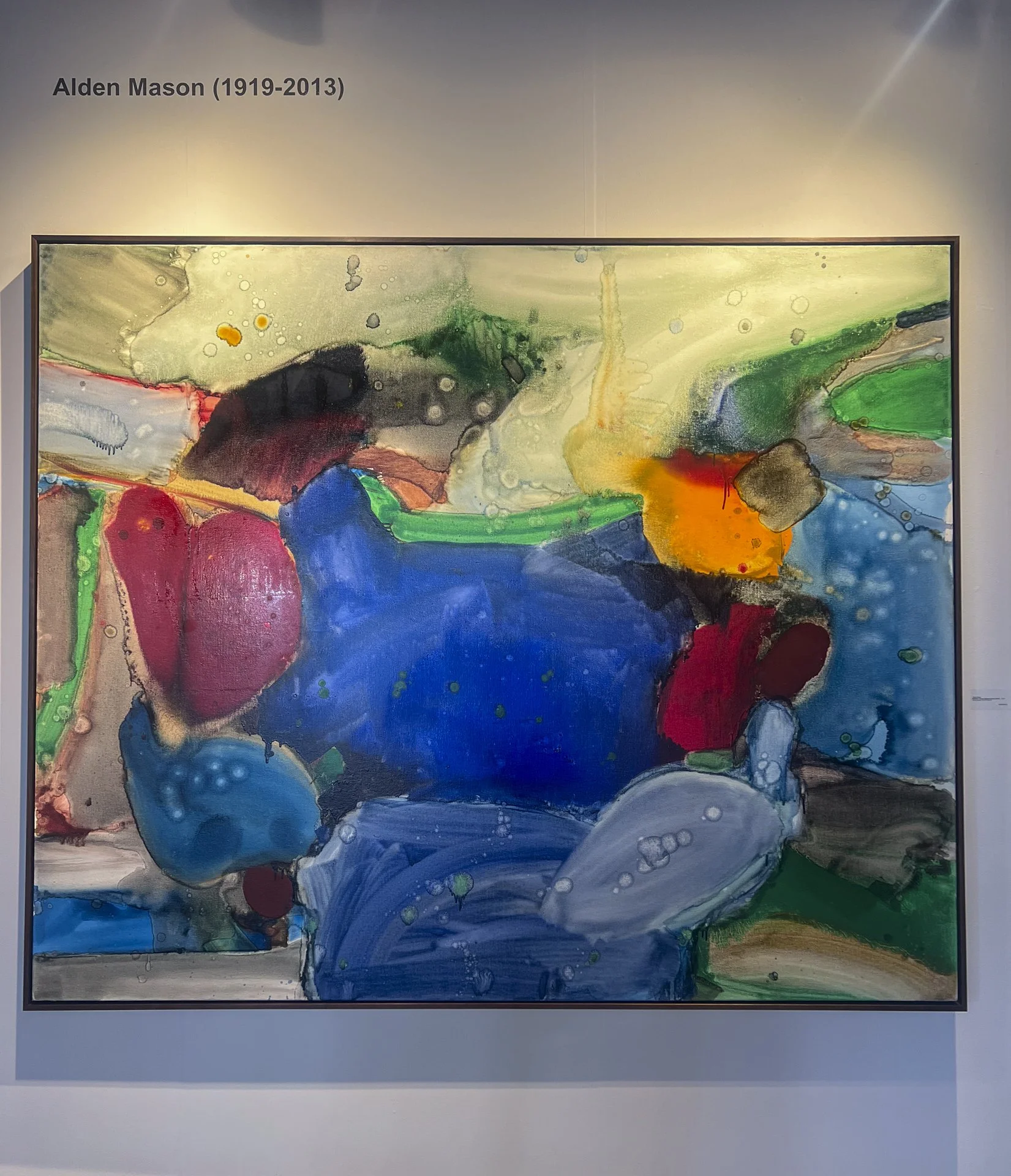
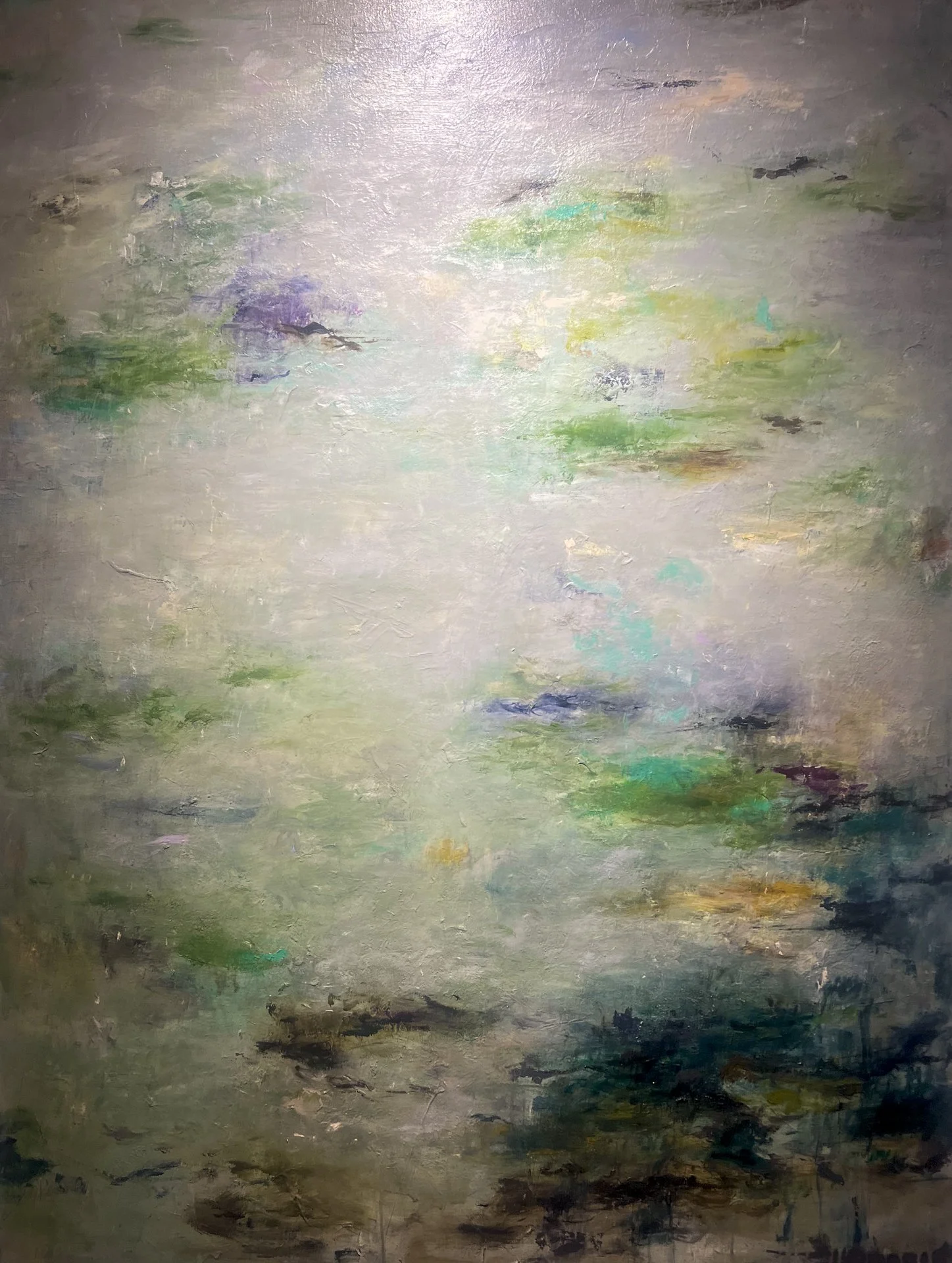
Alden Mason's drippy, organic abstract paintings caught my attention immediately. Even though they were painted in oil, they reminded me so much of watercolor—the way pigments bloom, separate, and flow into one another.
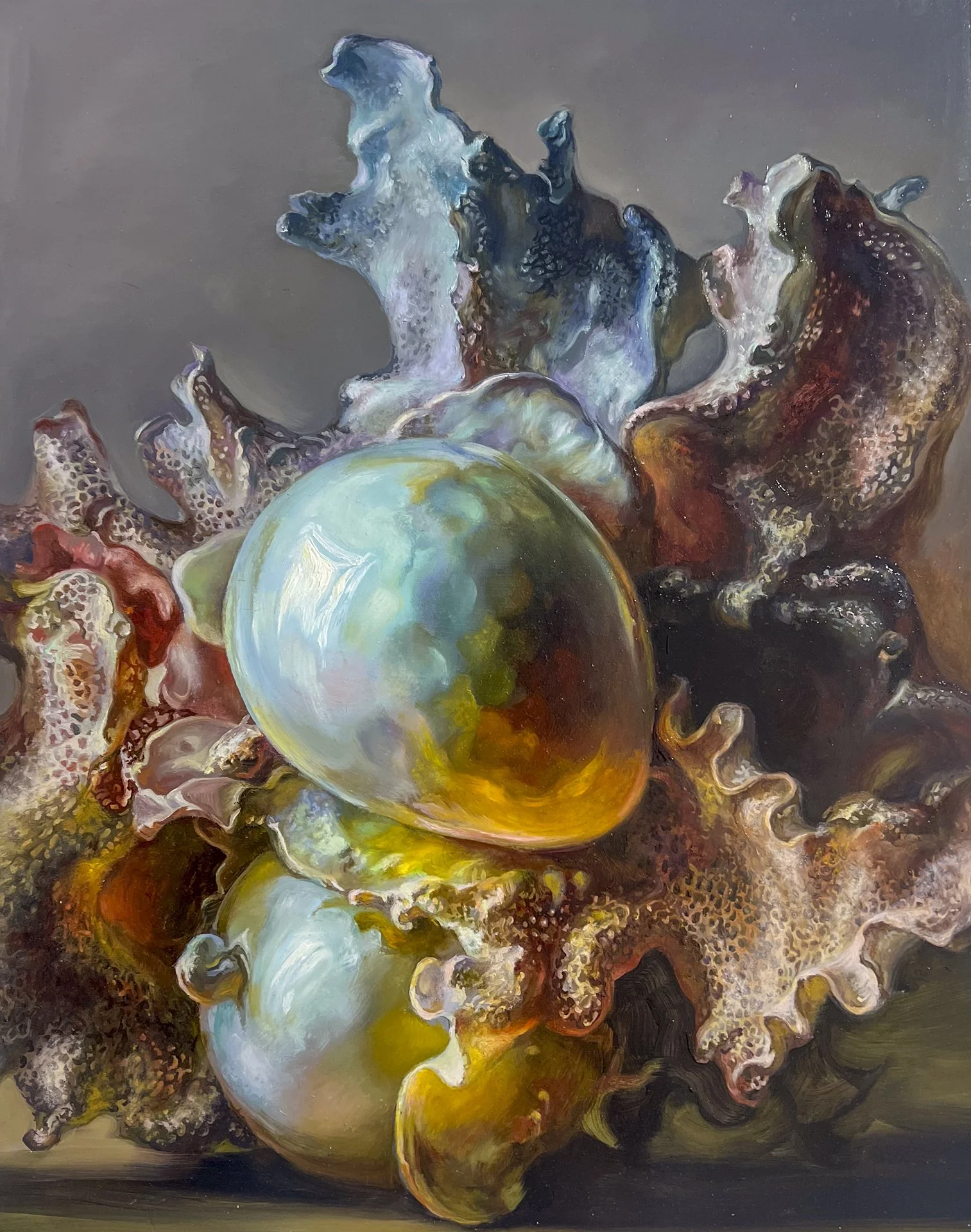
Nikolina Kovalenko's luminous still life had another combination I kept coming back to: warm golds sitting against cool blues. There was something calm about it, but also enough contrast to keep it alive.
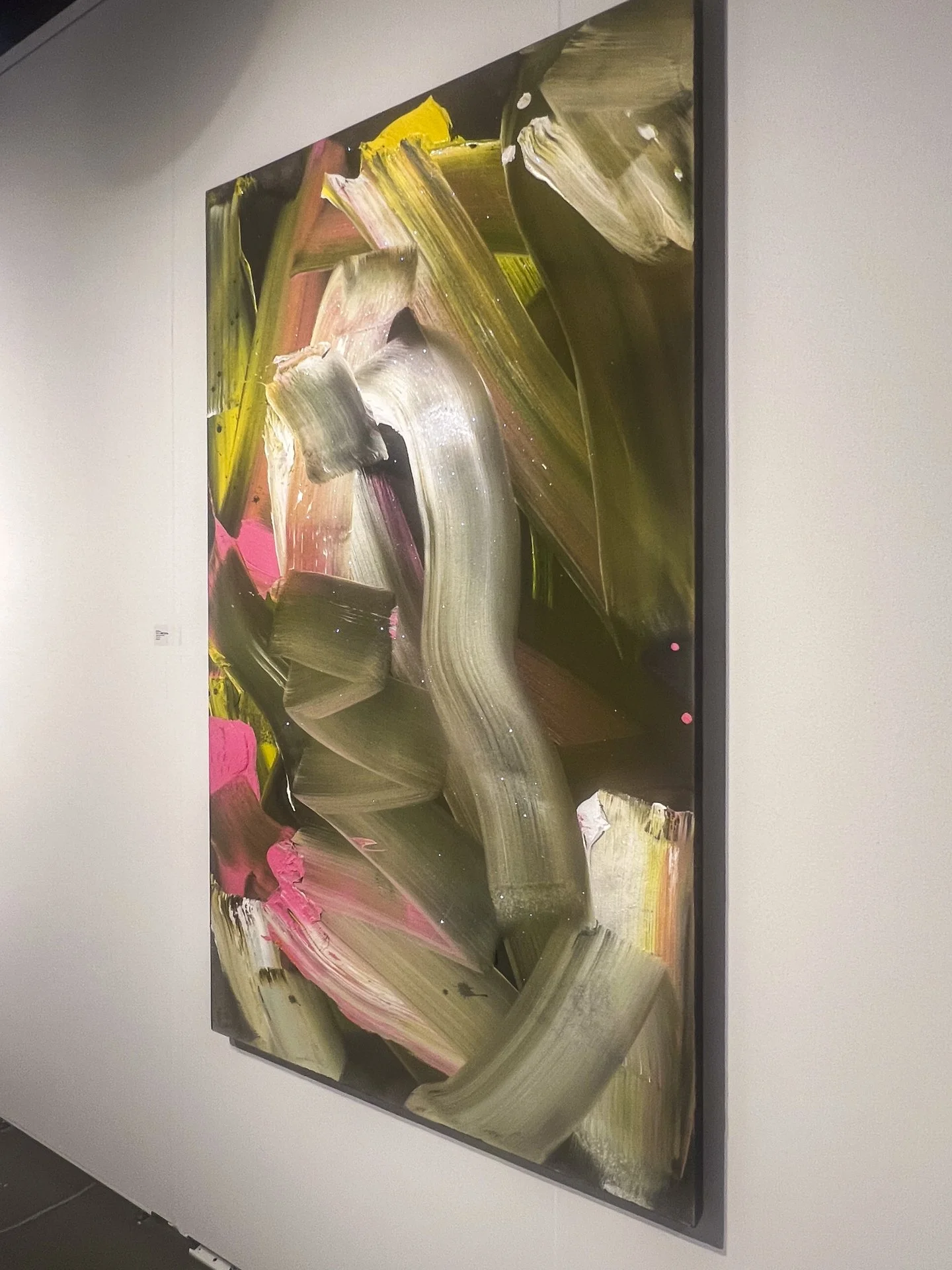
Then there was Ed Moses's Huha, priced at $52,000.
What first caught my eye wasn't actually the composition—it was the shimmer across the surface. Looking closer, it appeared to include metallic or glitter-like material, something Moses experimented with throughout different periods of his career to activate the surface rather than make it decorative.
What interested me was that the shimmer wasn't the painting.
It was simply another layer.
The painting still worked without it.
The sparkle just gave the surface another dimension, another little surprise.
By that point, I realized I wasn't simply noticing colors.
I was noticing how artists used one unexpected accent to bring an otherwise harmonious palette to life.
Looking back at my own paintings, I don't think I consciously paint this way.
But I do seem to return, again and again, to blues and those little moments of surprise—a bright pink, a warm orange, or another color that quietly interrupts everything else.
The Surface Became More Important Than the Subject
If color was the first pattern I noticed, texture was probably the biggest surprise.
I expected to come home remembering faces.
Instead, I kept thinking about surfaces.
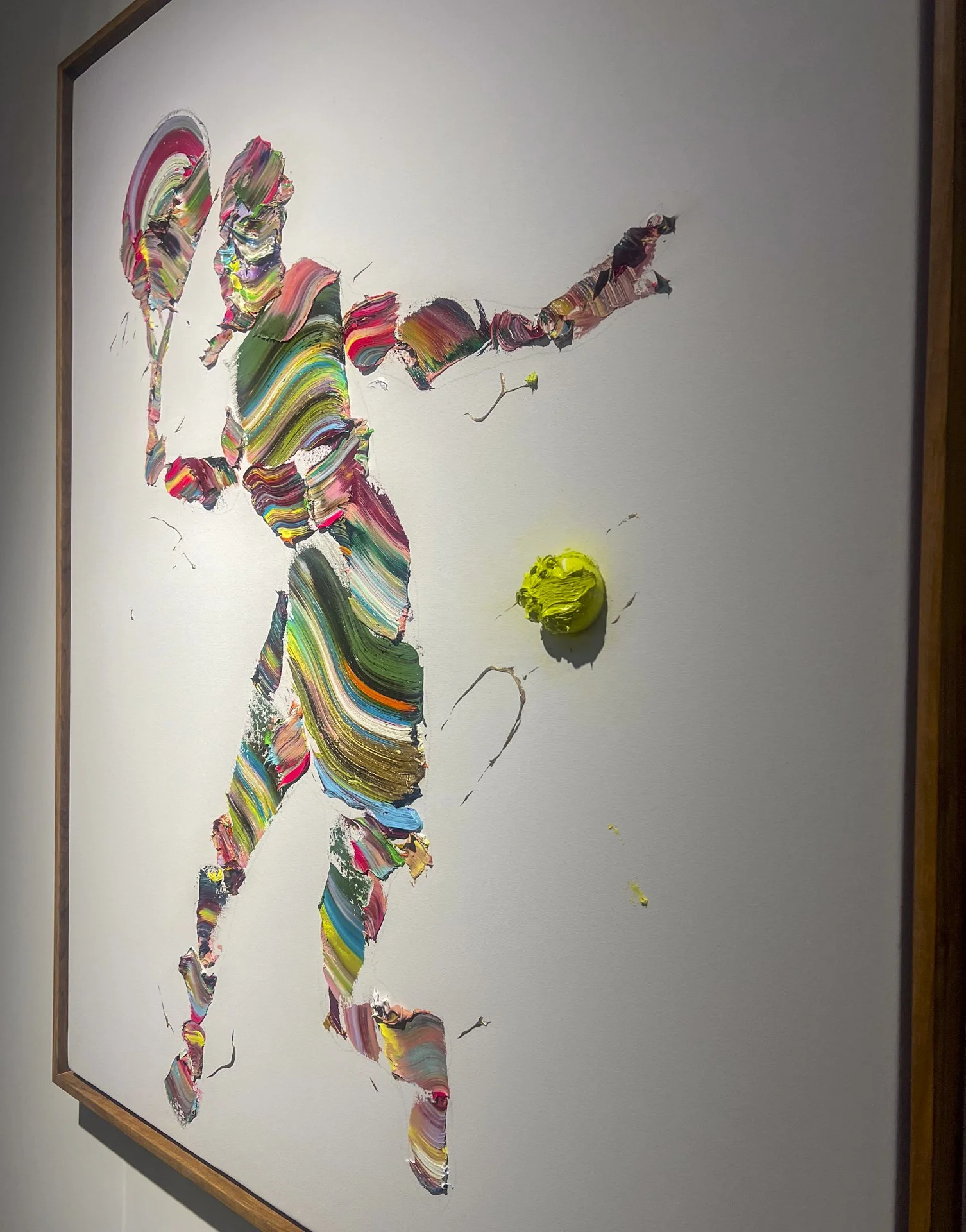
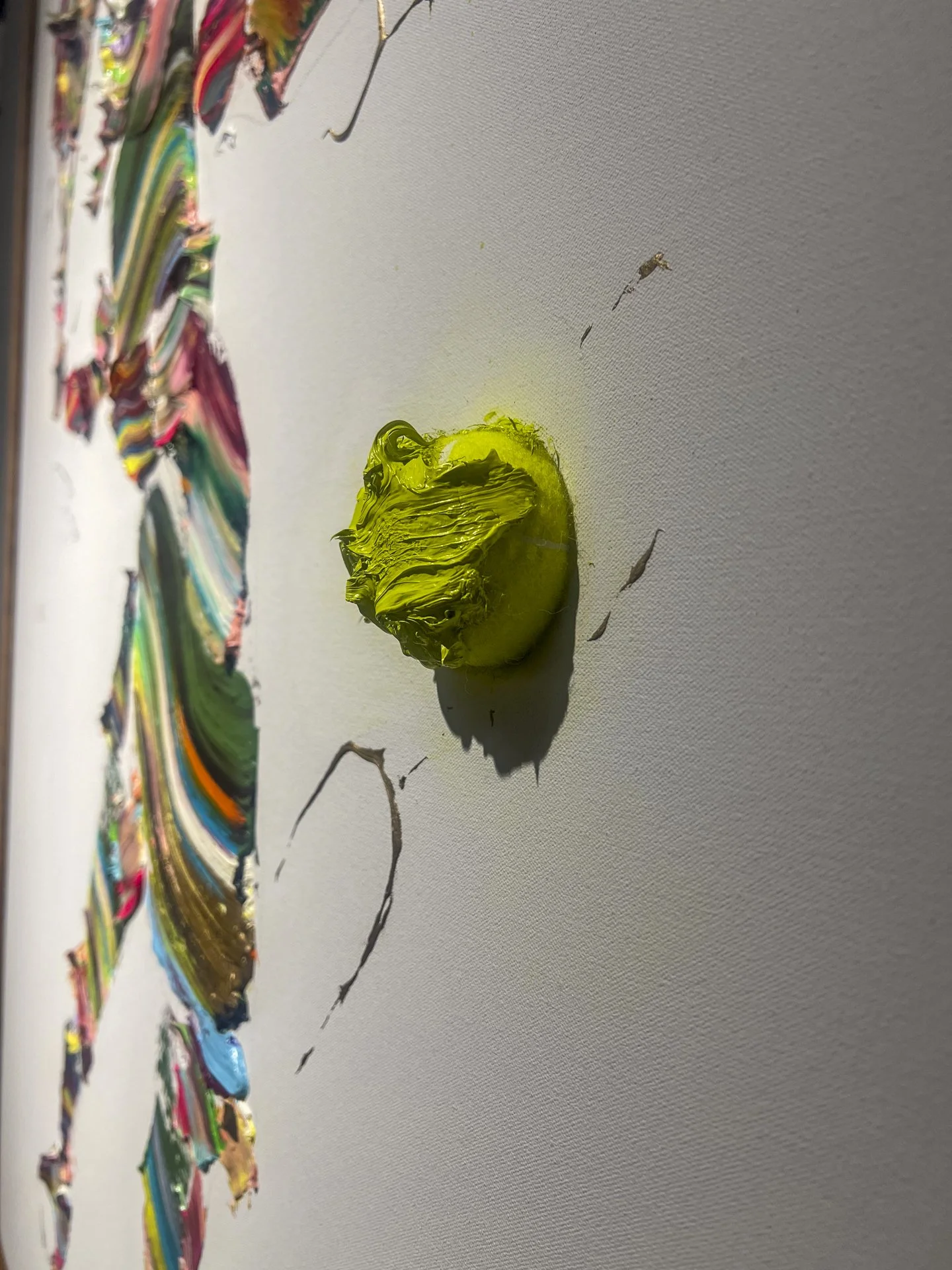
One of the strongest examples was Johan Andersson's work. His paintings didn't feel simply painted—they felt constructed. Thick ridges of oil paint sat proudly on the canvas, catching the light like sculpture. At the top of one enormous painting, Tennis, an actual tennis ball pushed through the canvas before being absorbed into the painting with layers of paint.
It wasn't the tennis ball itself that interested me.
It was the shift in thinking.
The painting wasn't trying to create the illusion of three dimensions.
It actually occupied three-dimensional space.
That immediately made me wonder what portraiture could become if I thought about it the same way.
Could a strand of hair leave the surface?
Could gold leaf become something you physically encounter instead of something you simply see?
Could tears become resin instead of watercolor?
Then, a few booths later, I found myself standing in front of Nermen Khalil's work.
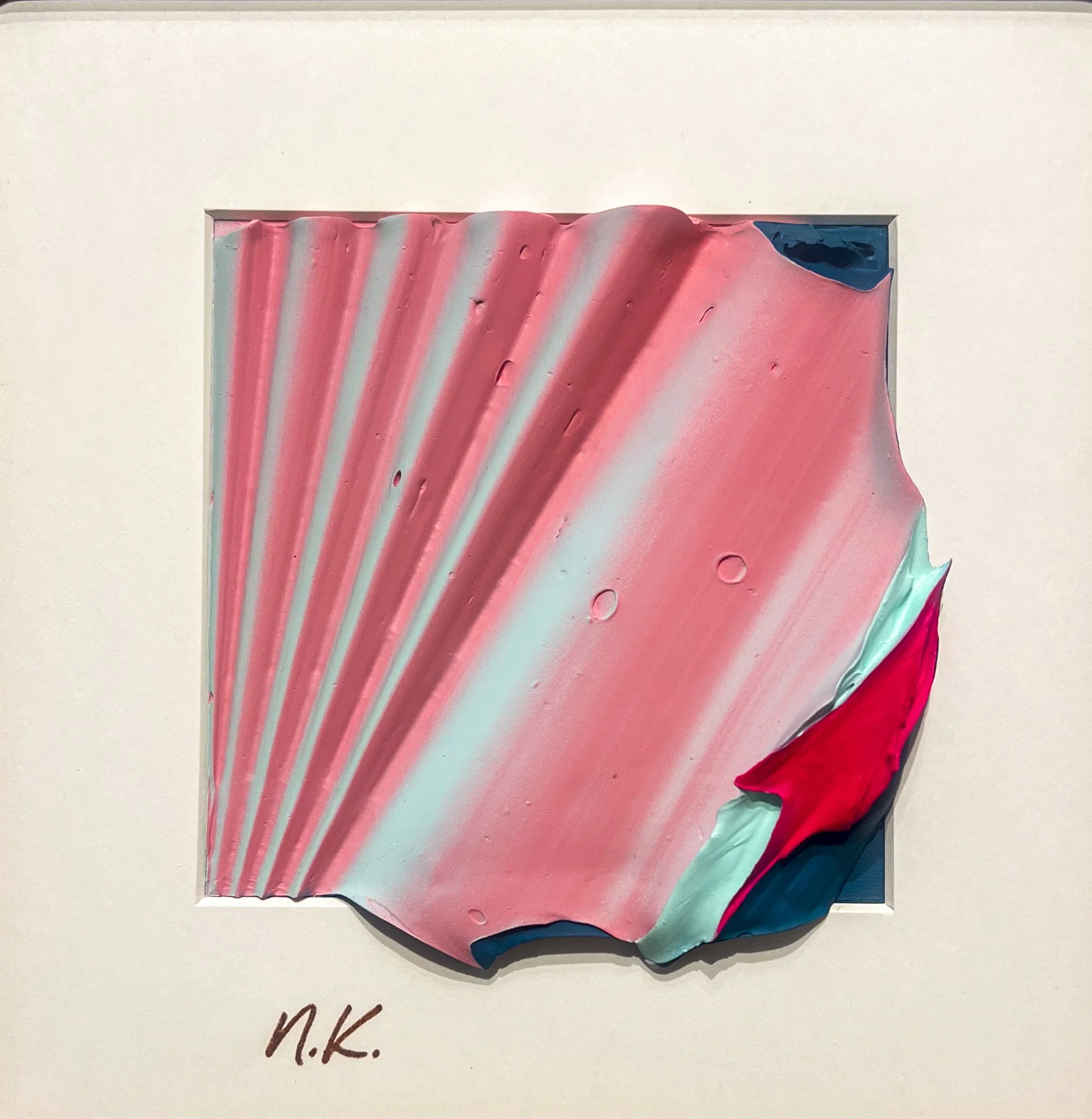
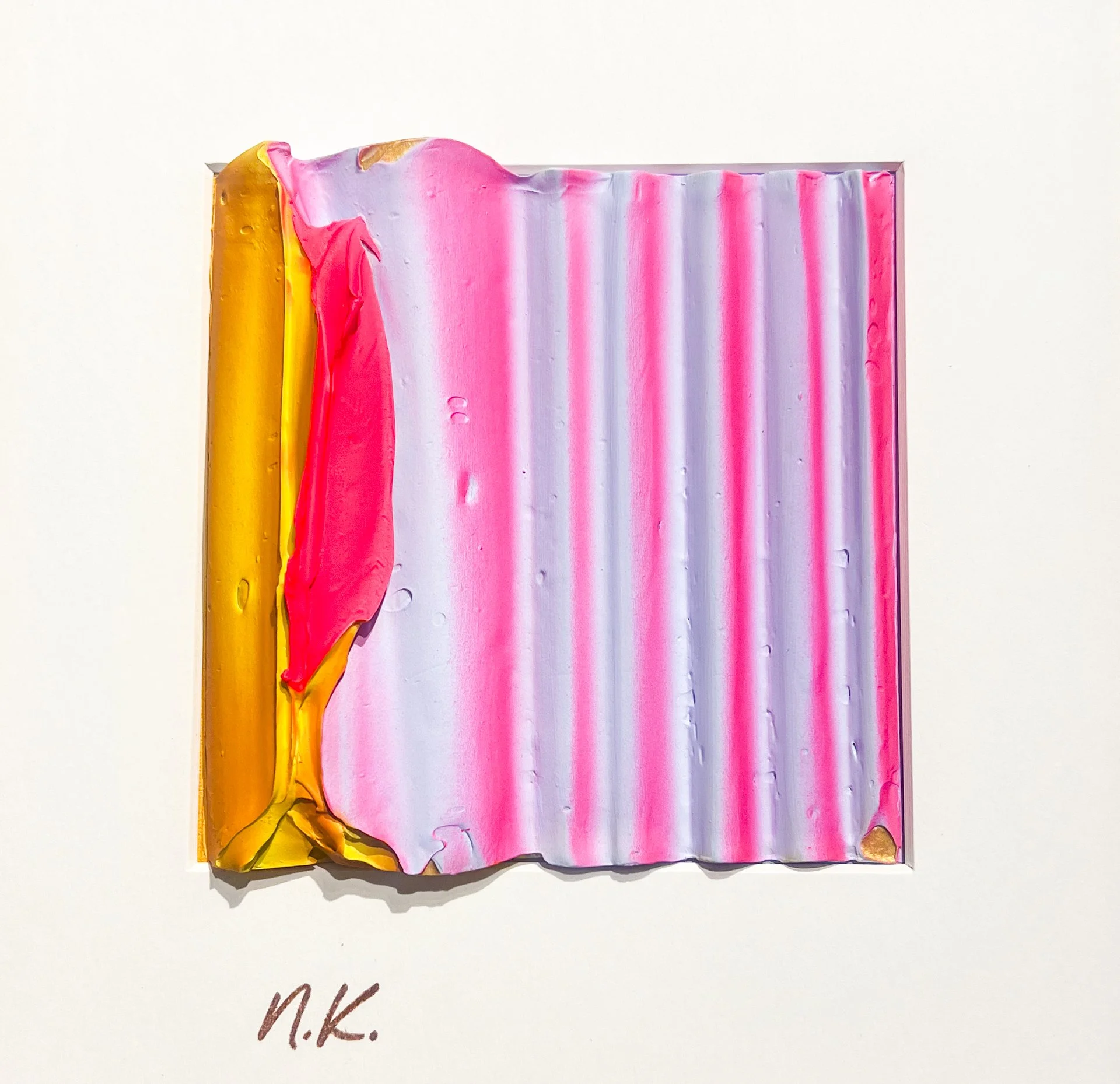
Her paintings felt almost geological. Layers of modeling paste rose from the surface like coral, weathered stone, or folded fabric. The color was beautiful, but what really held my attention was the physicality. My eyes wanted to keep tracing every ridge and shadow. Im not sure what he used, but Im gussing maybe Golden Light Molding Paste…
For the first time that weekend, I wasn't only thinking about what a painting depicts.
I was thinking about what a painting is.
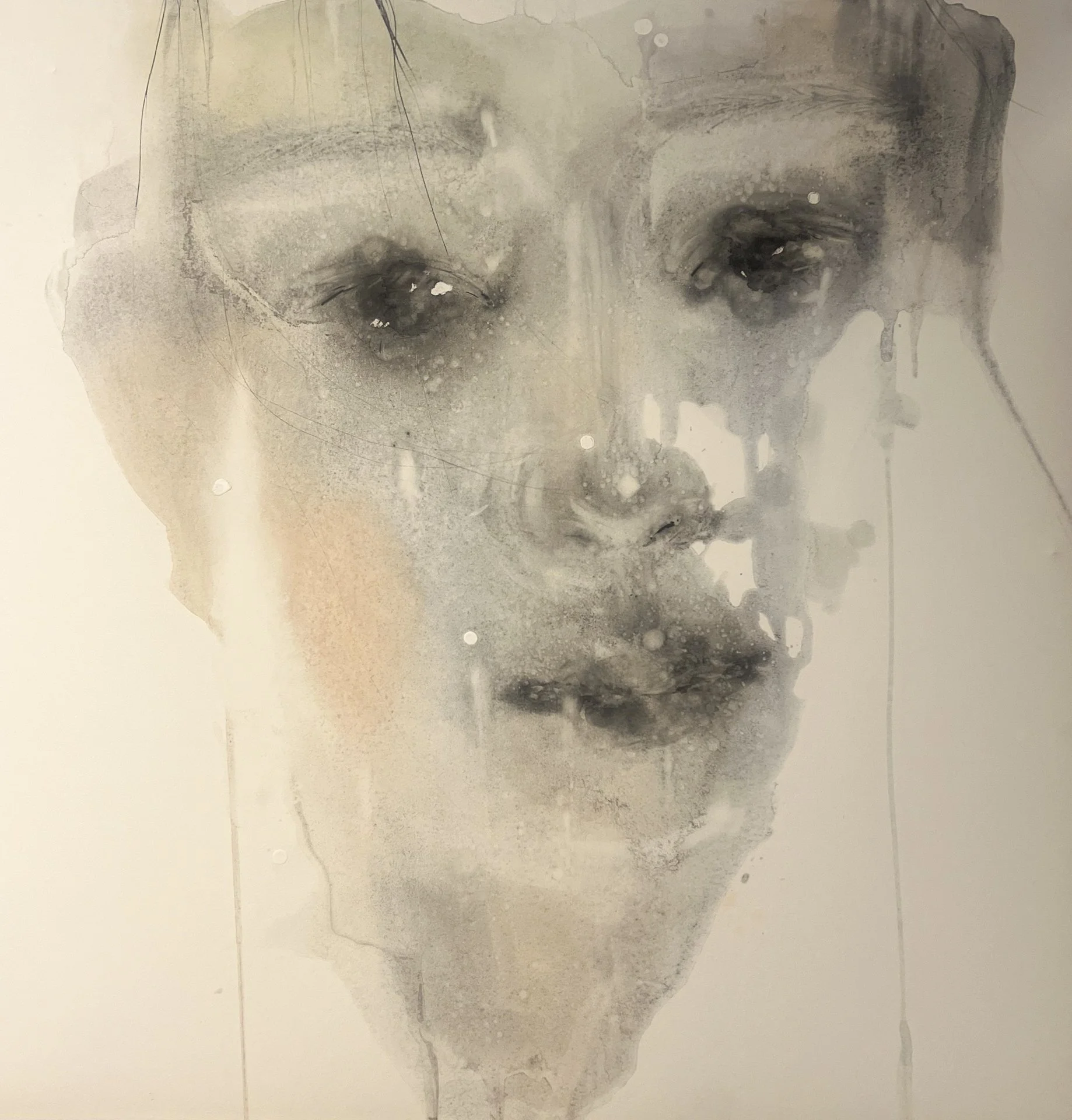
Jenny Saville once described painting as exploring "the anatomy of painting."
Standing in front of these works, I finally thnk I got a bit of grasp of what she meant.
I Saw Parts of My Own Work
One of the reasons I came to the fair was to see whether I'd find work that felt somehow familiar.
Not because I wanted to copy it.
More because I wanted to know whether there was a place for the kind of paintings I already enjoy making. I found myself quietly asking, Could I imagine my work in this gallery?
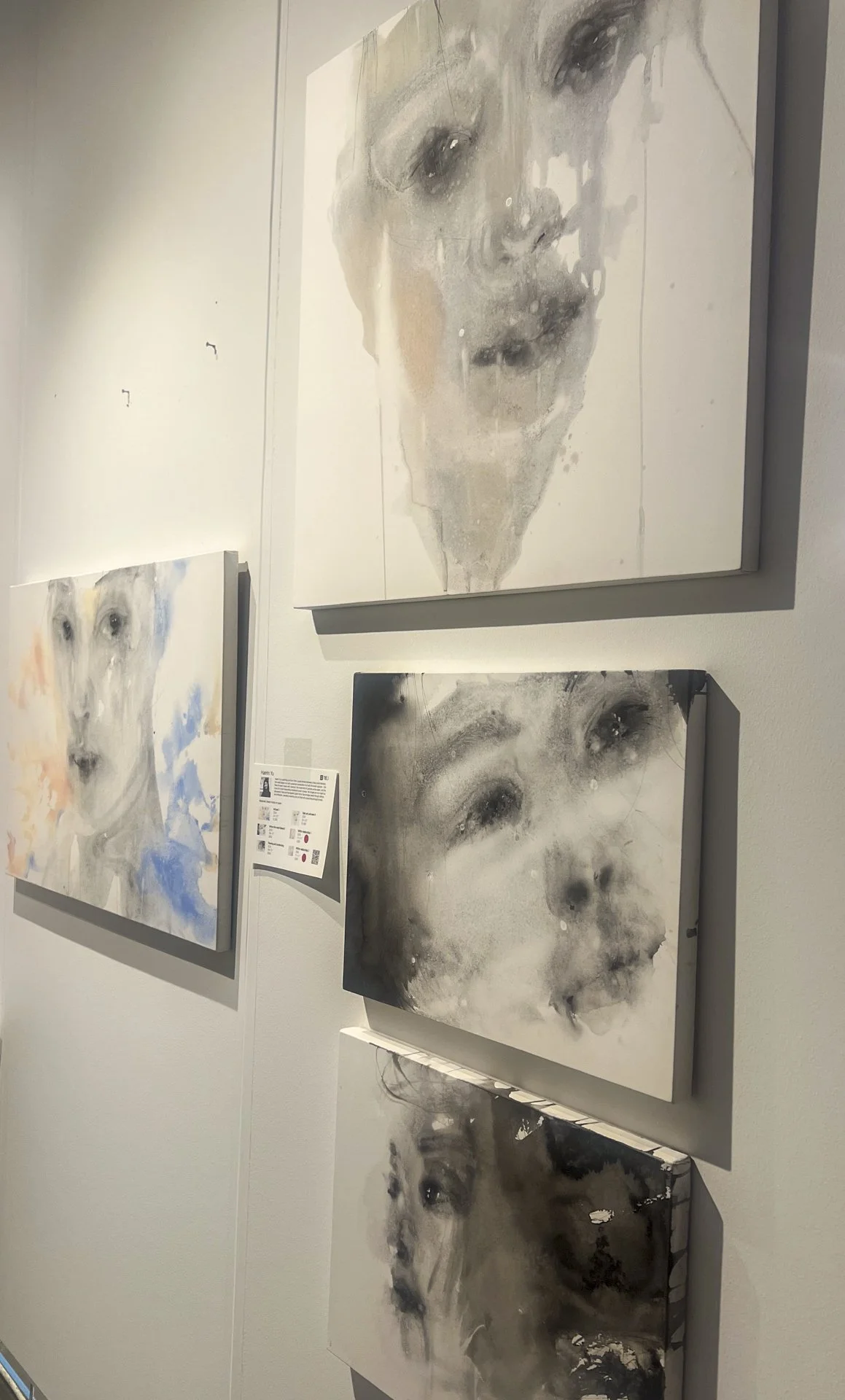
Then I came across Haerin Yu's booth.
For the first time that day, I wasn't simply admiring someone's work.
I found myself thinking,
"Oh... I understand this."
Her stretched watercolor paper, softened edges, visible blooms, and the way she allowed the watercolor to behave all felt strangely familiar. It wasn't that our paintings looked the same, but I recognized the way she seemed to think about the medium.
Rather than making me want to paint differently, it reassured me that the direction I've naturally been moving toward already exists within contemporary art.
I briefly caught myself thinking, Maybe this is the kind of gallery I could imagine working with someday.
Then I noticed the gallery was based in South Korea, so perhaps not this one.
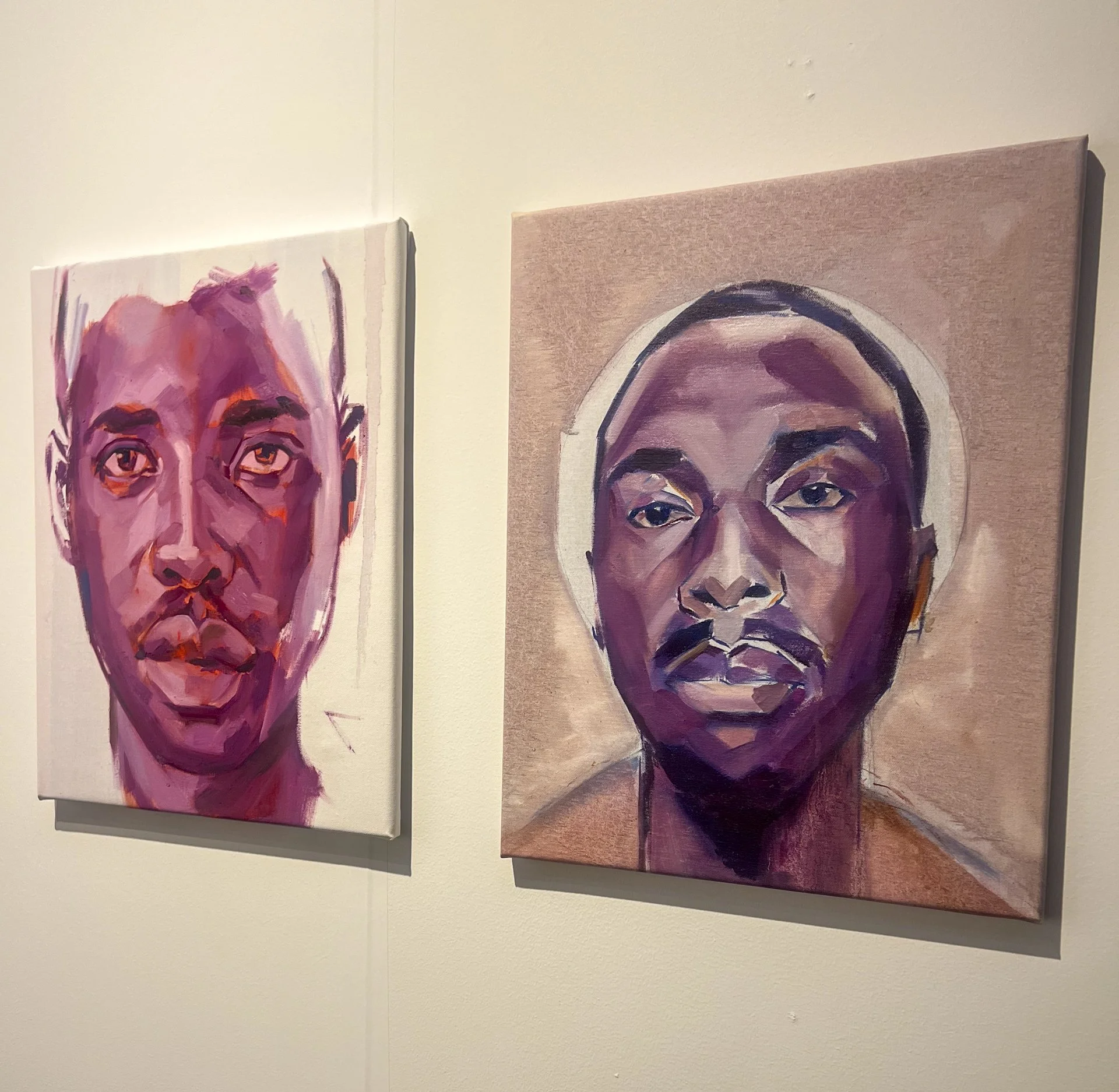
A little later, another portrait stopped me at Martin Art Projects.
Unfortunately, I never found the artist's name, so I've contacted the gallery to ask.
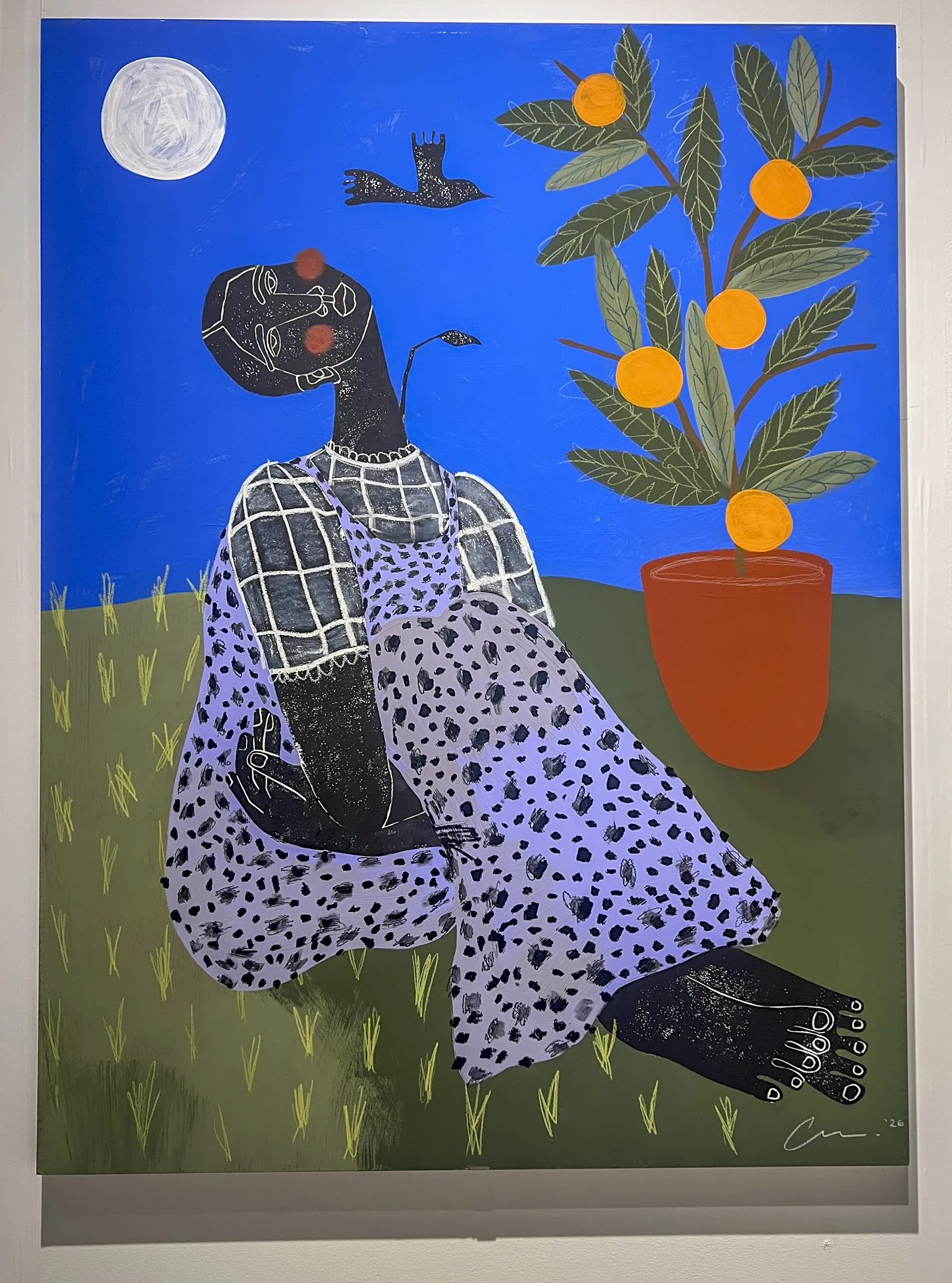
The painting immediately reminded me of the kind of portraits I enjoy making in gouache.
Raw canvas remained visible around the edges. A reddish underpainting was left exposed instead of being carefully covered. A simple halo sat behind the sitter's head.
Nothing felt overworked.
Nothing felt like it was trying too hard.
It left space for the viewer to finish the painting in their own mind.
That restraint is something I keep coming back to in my own work.
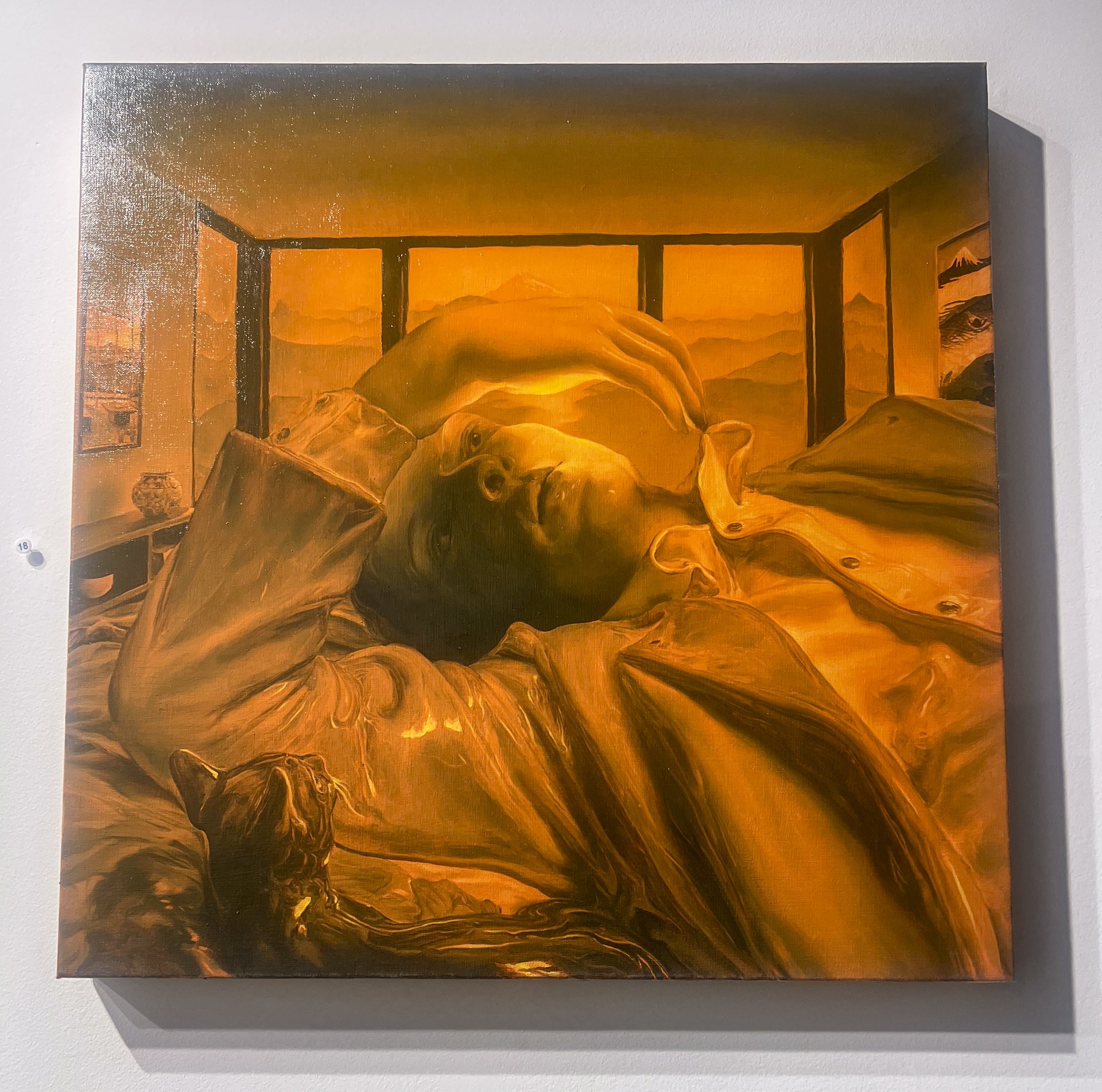
Gabriel Zea's portrait gave me a different kind of realization.
It wasn't just a beautiful portrait.
It felt as though the person was carrying a story I wasn't fully being told.
That's probably where my curiosity is leading me next.
Most of my portraits zoom in on subtle facial expressions. I've always loved that intimacy, but it doesn't leave much room for obvious storytelling.
So lately I've been wondering:
How do you create a narrative without stepping away from the face?
It's a question I don't have an answer to yet.
But after seeing these artists, I feel like it's the next question my work wants me to explore.
One Conversation That Stayed With Me
Not everything I brought home from the Seattle Art Fair came from looking at paintings.
One of my favorite moments actually started with someone adjusting a painting.
I noticed a man carefully fiddling with a large piece on the wall, trying to get it perfectly straight before eventually pulling out a spirit level.
I smiled and asked,
"Are you the artist?"
He said yes.
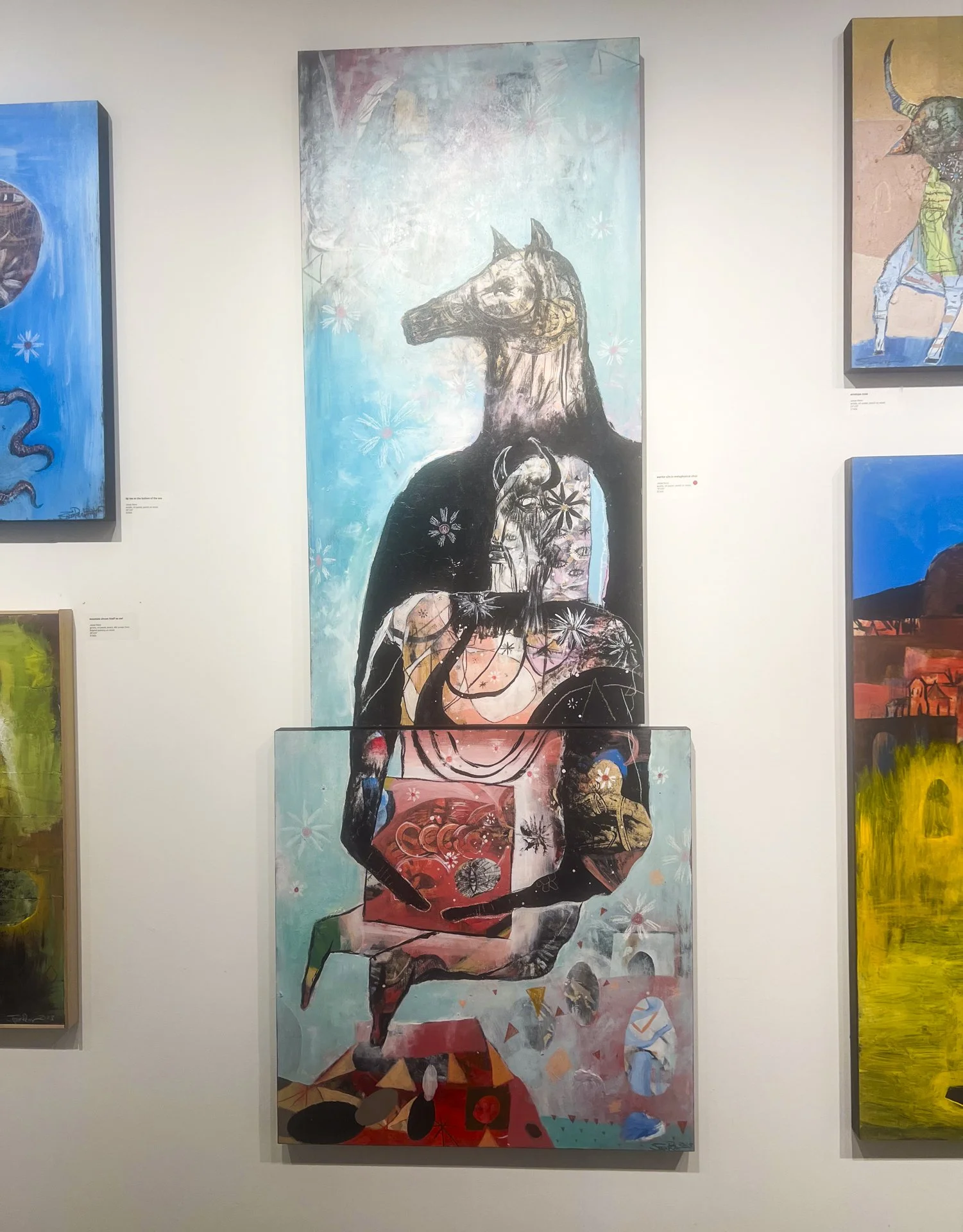
That was my introduction to Portland painter Jesse Reno.
What I thought would be a quick chat turned into a much longer conversation.
We talked about his paintings, his process, and life in the studio. One thing that fascinated me was hearing that he often has ten or more paintings going at once. I remember trying to guess which ones had been painted together.
I also asked him how he begins a painting.
His answer surprised me.
He doesn't sketch.
He simply starts.
He talked about being drawn to primitive art because there's something mysterious about it. We don't really know what those artists were thinking, and he loves that sense of freedom.
Another thing I noticed almost immediately was how enthusiastic he was.
Ideas seemed to pour out of him faster than he could finish explaining them.
Normally I think that amount of energy might have overwhelmed me.
Instead, I found myself smiling.
I thought,
"I know this kind of brain."
Not because we're the same.
If anything, Jesse's creative energy seems to move even faster than mine.
But I recognized that excitement of someone who simply can't stop making things.
His paintings are nothing like mine. He describes them as contemporary primitive, and I found myself noticing hints of Picasso, Basquiat, and Francis Bacon.
I didn't leave wanting to paint like Jesse.
In fact, I think that's why the conversation stayed with me.
What I admired wasn't his style.
It was the confidence behind it.
After more than twenty-four years of making art full time, his paintings don't feel like they're asking permission to exist. They simply do.
That kind of confidence is something I hope grows with time.
And one day, when our walls are a little fuller and my savings account is a little healthier, I'd genuinely love to own one of his paintings—not because I want to paint like Jesse Reno, but because it reminds me what trusting your own voice can look like.

Watching What Sold Was Just as Interesting
Another thing I found myself paying attention to was the little red dots.
Whenever I saw one, I stopped.
Not because I assumed it was the "best" painting, but because I wanted to understand what someone else had fallen in love with.
One painting that kept coming back to me was Cristina Martinez's There's Still So Much I Wanted to Tell You, which had sold for $16,500 at Avery Barnes Gallery.
Seeing it there was fun for another reason too. Avery Barnes, the gallery owner, had recently been one of the jurors for Unwavering Hope at Columbia City Gallery, where I'm a member, so it was nice to recognize a familiar face.
At first glance, Cristina's painting didn't strike me as the kind of work that impresses through meticulous rendering.
Instead, what stayed with me was its clarity.
The composition was memorable. The symbolism was personal. The color relationships were simple but unmistakably hers.
Later, I learned more about Cristina's career. Beyond her gallery exhibitions, she's created public murals, been recognized as a Neddy Award finalist, collaborated with Nordstrom, and steadily built a recognizable body of work.
It reminded me that collectors aren't responding only to an individual painting.
They're also responding to years of an artist consistently developing their own visual language.
That felt like an important distinction.
Watching what sold became less about asking, "Would I paint like this?"
And more about asking,
"What makes this artist unmistakably themselves?"
That question stayed with me throughout the rest of the fair.
What I'm Taking Back to the Studio
The Seattle Art Fair didn't send me home wanting to reinvent myself.
If anything, it reminded me to keep following the things that already feel natural to me.
At the same time, I have to admit I also left feeling slightly unsettled.
Walking through the fair, I didn't often think, "My work could sit here tomorrow."
More often, I found myself thinking,
"I still have some way to go."
Not because I wanted to paint like someone else, but because many of the artists had something I don't feel I've fully developed yet—a body of work that feels unmistakably theirs.
That realization wasn't discouraging.
It felt motivating.
It reminded me that I still have experiments waiting for me.
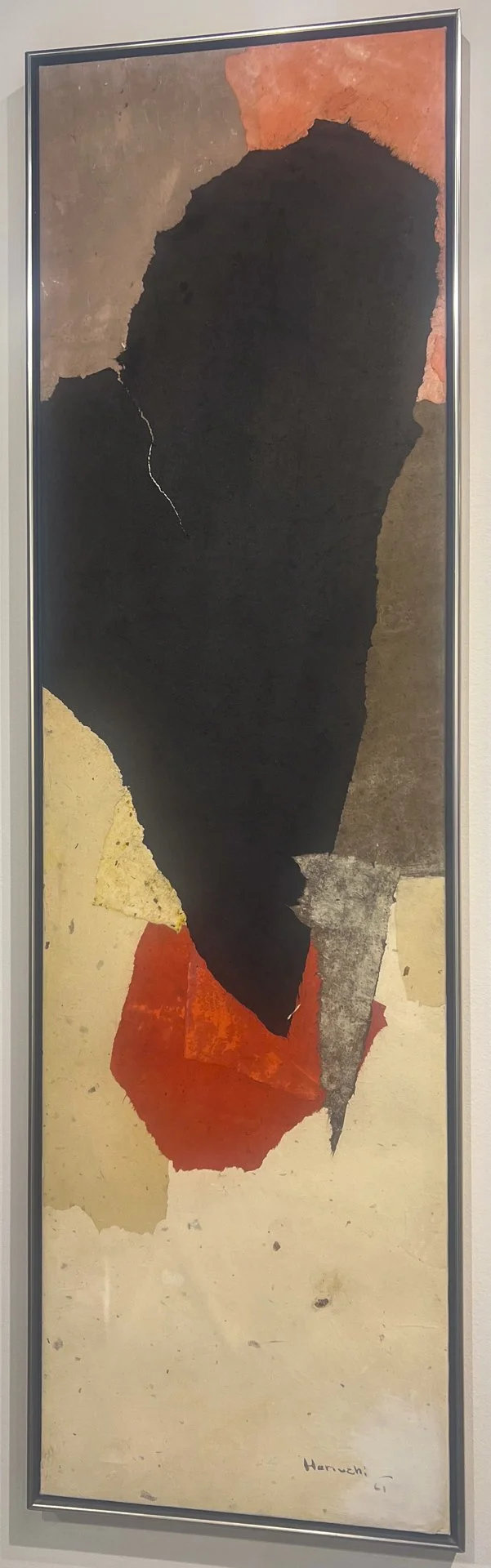
I want to explore mounting Japanese paper onto wood panels instead of automatically framing everything behind glass.
I want to push beyond a flat surface and see what happens when watercolor meets gold leaf, dimensional elements, or even the panel itself.
Presentation doesn't have to be something I think about after the painting is finished.
It can become part of the painting.
Jesse Reno also gave me another practical idea. Rather than seeing the size of watercolor paper as a limitation, I loved how he builds larger works from multiple wood panels. It reminded me that practical constraints don't always have to become creative ones.
More than anything, I want to keep following the qualities that kept making me stop at the fair.
Restrained color.
Surfaces with a physical presence.
Portraits that leave room for interpretation instead of explaining everything.
And perhaps most importantly, I want to keep searching for the visual language that feels unmistakably mine.
I don't think I found it completely at the Seattle Art Fair.
But I think I left with a much clearer sense of the direction it's pointing.