Why Selling Art Feels Different Depending on Where You Live
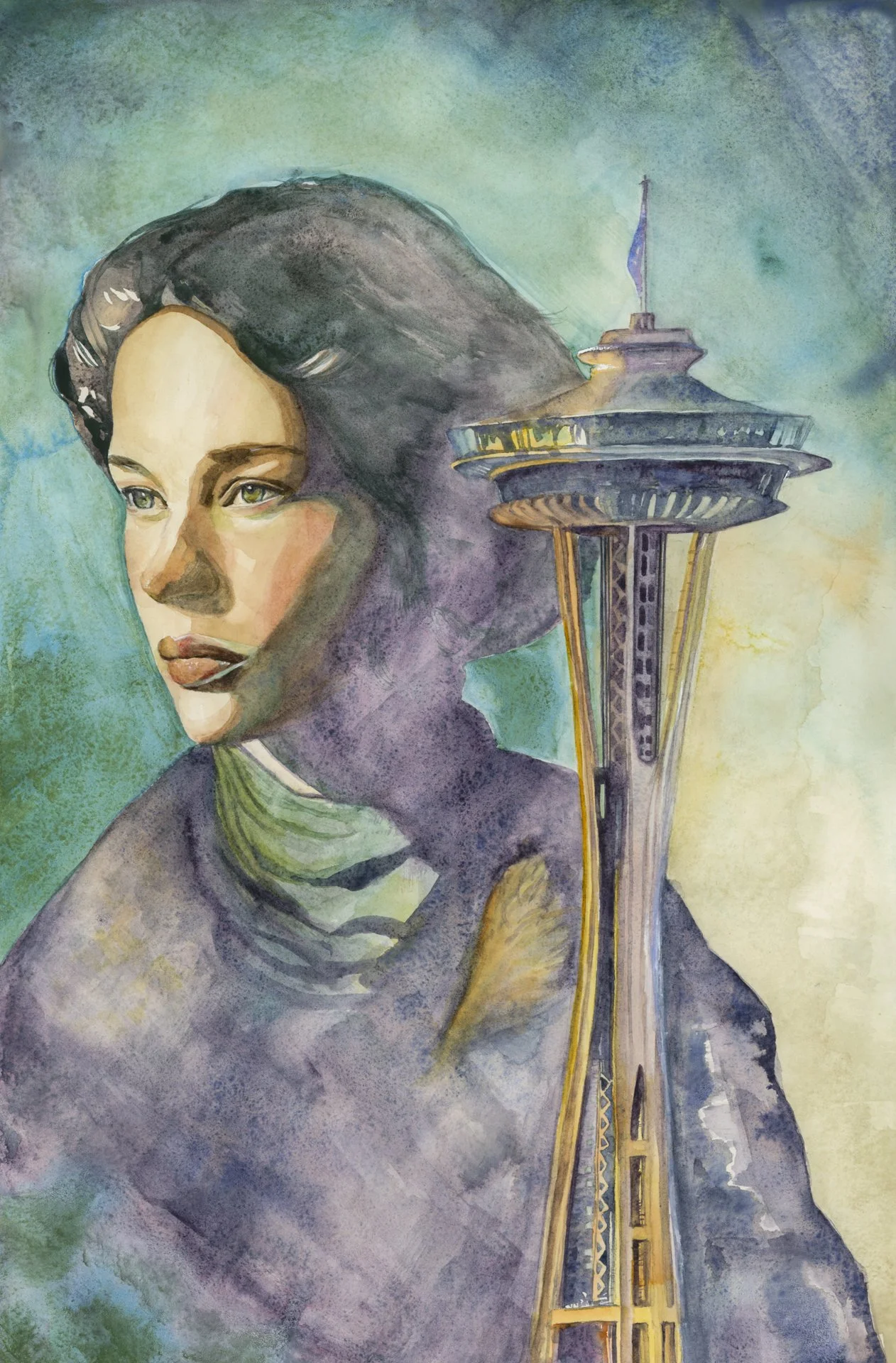
Space and Sound-Miwa Gardner
For a while, something about Seattle confused me.
There is so much creativity here.
So much education.
So many people who value handmade things, design, nature, and thoughtful work.
And also — let's be honest — many people who technically have the ability to buy original art.
So why can selling artwork still feel so slow?
That question sent me down a rabbit hole.
At first I thought selling art was mostly about the artwork itself.
Make stronger paintings.
Improve your skills.
Find your voice.
And yes, all of those things matter.
But I started realizing there was another layer I wasn't thinking about:
Where your art exists changes how people interact with it.
Not because one city has better artists than another.
But because every place has its own relationship with art.
Its own history.
Its own pace.
Its own way people decide what has value.
Different cities have different art personalities
Once I started looking, I realized how different art communities actually are.
Santa Fe fascinated me because buying original artwork is part of the culture there. People travel there expecting to see and collect art. There is already a relationship between the city and the idea of living with original work.
New York is something completely different. It has the galleries, museums, critics, and history. It is a place where art exists inside a much larger conversation.
Los Angeles has its own energy — connecting fine art, entertainment, design, and visual culture.
Other cities build differently.
Some through museums.
Some through universities.
Some through craft traditions.
Some through strong local communities.
And none of these paths are necessarily better.
They are just different ecosystems.
Which made me look closer at where I actually live.
Seattle.
The strange thing about Seattle

Market and Currents
Seattle is interesting because on paper, it seems like it should be an incredible art market.
There is creativity everywhere.
There are organizations supporting artists.
There are grants.
There are galleries.
There are people who care deeply about meaningful work.
And there is definitely not a lack of resources.
But many artists here notice something:
The collecting culture feels slower.
For a while, I couldn't understand why.
But the more I thought about it, the more I wondered if it connects to the type of city Seattle is.
A lot of Seattle's growth has come from technology.
And technology teaches people a very specific way of making decisions.
Research first.
Compare.
Look at reviews.
Find the best option.
Make an informed choice.
Honestly, I understand this because I do it too.
But original art doesn't work that way.
There is no perfect rating.
No list of specifications.
No objectively "best" painting.
A painting asks for a completely different kind of decision:
Does this mean something to me?
Do I want to live with this?
Do I feel connected to this?
And that kind of decision can feel unfamiliar.
Maybe the hesitation isn't about the artwork
This was the biggest shift for me.
Sometimes people aren't hesitating because they don't value art.
Sometimes they simply don't know how to enter the art world.
How does pricing work?
How do commissions work?
How do you choose a piece?
What makes an original different from a print?
How do you know if you're making a good decision?
And I realized maybe part of my role as an artist isn't just creating.
It is creating a bridge.
Teaching, writing, and sharing are not separate from being an artist
I used to separate everything.
Painting is the real work.
Teaching is something extra.
Writing is something extra.
Sharing my process is something extra.
But now I'm not sure I see it that way.
When someone watches the process of a painting coming together...
When they hear the story behind a piece...
When they understand why I made certain choices...
Their relationship with the artwork changes.
They aren't just buying paper and pigment.
They are connecting with the years of decisions, mistakes, experiments, and memories behind it.
In a slower, relationship-based market, maybe that trust-building is not a distraction from the art career.
Maybe it is part of the art career.
What we can actually control
I don't think understanding your local market means changing your artwork to fit it.
I don't want to paint something just because I think it will sell in Seattle.
That misses the point.
But understanding the room helps.
If people are curious but unsure, maybe education matters.
If people need time, maybe relationships matter.
If people want to understand the person behind the work, maybe sharing the process matters.
Different places need different bridges.
The more I learn about building an art career, the more I realize there is rarely one correct path.
The same painting might need a completely different introduction depending on where it lives.
And maybe that is okay.
The goal isn't to change who you are.
It's to understand where you are standing.
Because the place around your artwork becomes part of its story too.
Miwa Gardner — watercolor artist based in Seattle
Seattle has almost everything you'd want in an art market. Serious institutional support. Active grant culture through 4Culture and Artist Trust. A network of co-ops and nonprofits. Collectors with real means. And an aesthetic sensibility — thoughtful, nature-connected, emotionally understated — that maps well onto a lot of serious contemporary work.
And yet, many artists here find the sales side frustratingly slow. The wealth doesn't convert the way you'd expect.
The reason, I think, is that Seattle's money is mostly tech money. And tech culture has a specific relationship with value that doesn't always translate to original art.
People in tech are trained to research before buying, to find the objectively best version of a thing, to trust measurable signals of quality. Original art gives you almost none of that. It's subjective, emotional, non-repeatable. There's no spec sheet. And for someone who's used to being a confident, well-informed buyer, that uncertainty is genuinely uncomfortable.
So the hesitation isn't really about the art. It's about not knowing how to begin — and not wanting to make an error in front of something they can't fully evaluate.
What this means practically for artists working here:
Education matters more than it does in traditional collector markets. Not lecturing people about art history — but demystifying the process. How pricing works. What makes an original different from a print. How commissions function. The more transparent and approachable you make the mechanics, the lower the psychological barrier.
Relationships take longer but run deeper. Seattle collectors, when they do buy, tend to become genuinely loyal. They follow careers over time. They come back. The conversion cycle is slower than Miami or Santa Fe, but the quality of the relationship is often better.
In-person experience is especially important here. Work that reads well online still needs to be seen in person before most Seattle buyers will commit. Open studios, events, workshops — anything that creates a real human encounter with the work — accelerates what the internet can't do alone.
Your workshop and teaching are part of your market strategy, not separate from it. People who learn to paint from you, or watch you demonstrate, or spend an afternoon in your studio develop a relationship with your practice. That relationship is the thing that eventually converts into a collector. Don't think of education as the thing you do in addition to your art career. It is your art career, in a market like this.
What You Can Actually Control
Wherever you are, here's what moves the needle regardless of city:
Know your buyer's psychology, not just your demographic. "Women 35–55 with disposable income" isn't useful. "People who are drawn to emotional depth but feel uncertain about how to enter the art world" is. The more precisely you understand the hesitation, the better you can address it.
Make the process legible. Clear pricing. Clear sizing. Clear information about what buying from you actually involves. Mystery might feel sophisticated, but it mostly creates friction.
Build visibility through substance, not just promotion. Writing about your practice, teaching, demonstrating, talking about your materials and process — these build the kind of trust that eventually produces sales, especially in slower, relationship-based markets.
Stack regional credibility before reaching for national. Juried shows, grants, institutional exhibitions, local press — these build the legitimacy that makes collectors feel confident. A 4Culture grant matters to a Seattle collector in a way that a distant art fair placement doesn't.
Price honestly and hold your prices. Erratic pricing — discounting inconsistently, underpricing out of anxiety — erodes collector confidence. People are more likely to buy from artists whose pricing feels considered and stable.
The Larger Point
The art market isn't a monolith. It's dozens of local cultures with different paces, different buyer psychologies, different relationships with original work.
Understanding your local market doesn't mean compromising your practice to fit it. It means knowing what you're working with — where the friction is, where the opportunities are, what the people around you actually need to feel confident engaging with original art.
That knowledge doesn't change what you make. But it changes almost everything about how you build a career.