What the Portrait Society Conference Actually Did to Me April 2026 — Atlanta, Georgia
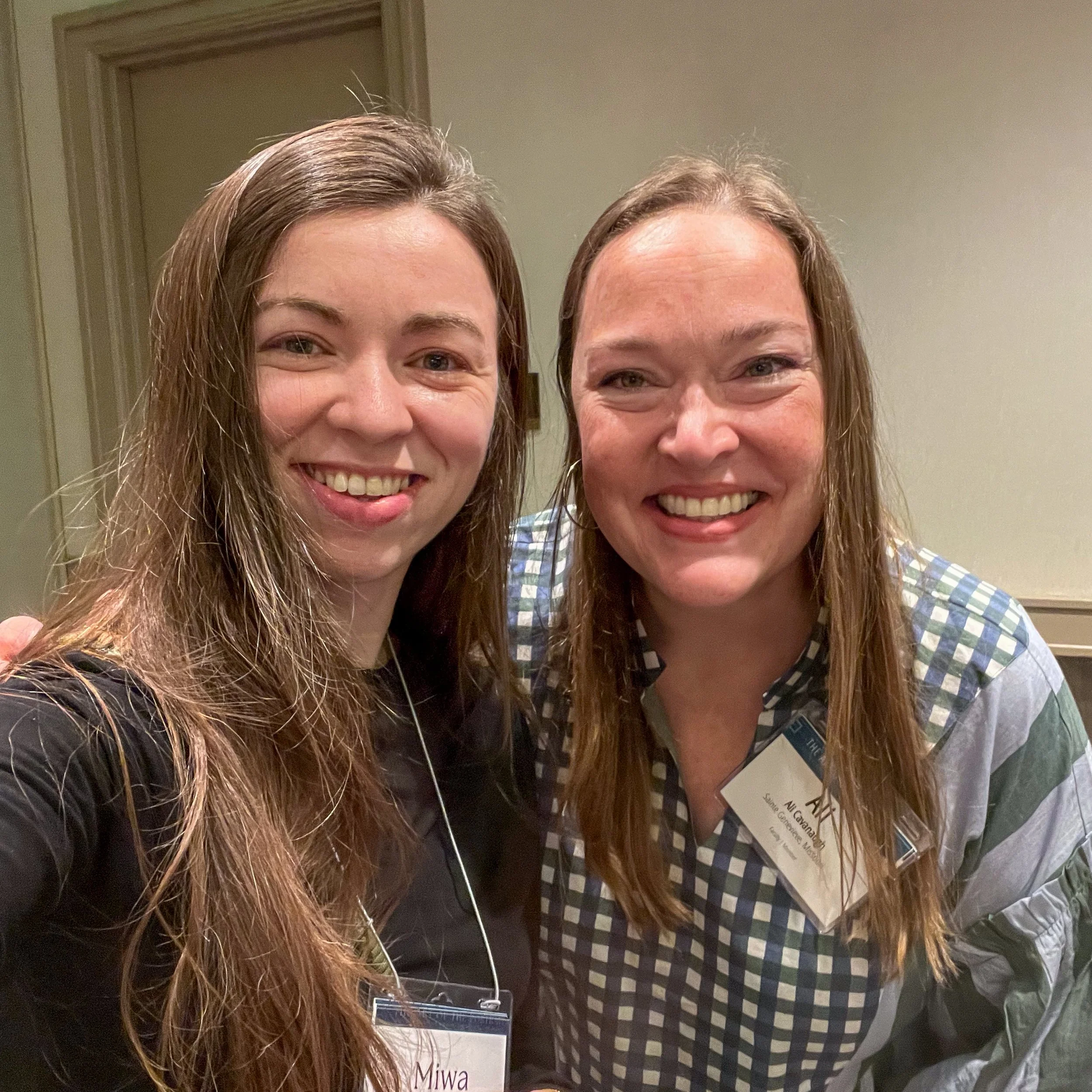
I got in on a scholarship. I want to say that upfront because it still feels a little surreal well um…. being 40, I did not think I will receieve such an honor. The Portrait Society of America's 28th Annual Conference — The Art of the Portrait — isn't the kind of thing I would have just signed myself up for without a push. And that scholarship was the push.
So I went. I packed a carry-on, flew to Atlanta, walked into the Grand Hyatt Buckhead, and for three days I was completely immersed in a world of portrait artists. Some of them are people I've watched on YouTube, followed on Instagram, and quietly studied for years. And suddenly they were just... there. In the same room. Painting in front of me.
I'm still processing it honestly. But I want to write it all down — not just the highlights but my honest raw version of what I experienced. The things that shifted something in me, the things that went sideways, and the things I'm still thinking 2 weeks later.
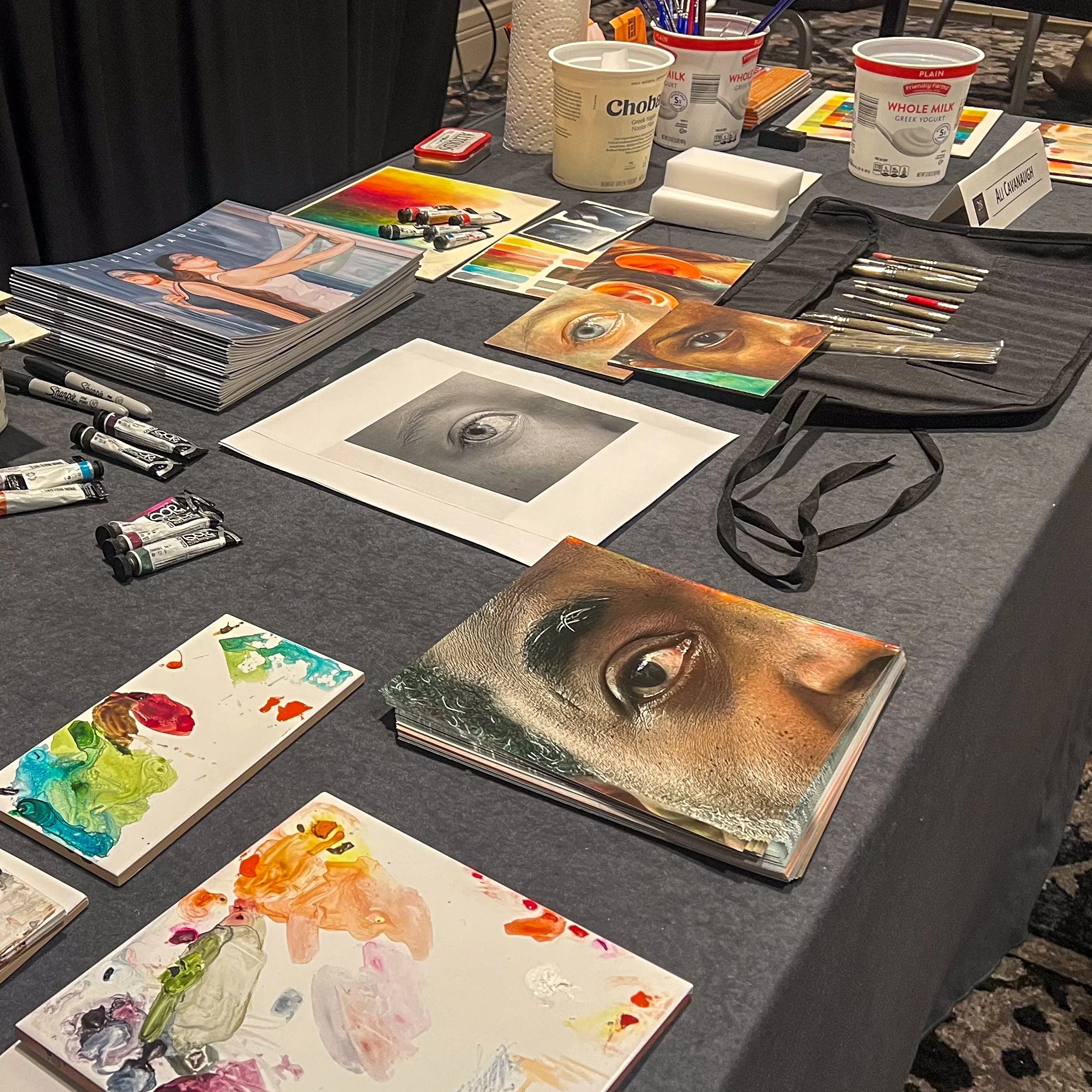
Thursday: Ali Cavanaugh — Seeing It In Person Changes Everything
I was on the waitlist for Ali’s pre-conference workshop. Nine to four, a full day. And I’m so glad I didn’t give up that spot.
One thing I didn’t fully understand beforehand was how the pre-conference workshop and the breakout sessions were structured. The pre-conference workshop is a separate ticket, but you can attend it even without registering for the full conference. It runs for a full day, which gives you the time to actually observe, absorb, and begin applying what’s being taught.
The breakout session, on the other hand, is much shorter, about two hours, and included within the main conference. It’s more of a condensed look into the artist’s process rather than a full working session. In Ali’s case, it leaned more toward discussion and explanation rather than watching her paint from start to finish.
Knowing that now, if I were to go again specifically to learn from Ali, I would prioritize the full pre-conference workshop and use the breakout slots to explore other artists.
Here’s the thing about Ali’s work. I thought I already understood her approach. I’d been in her Patreon, I’d watched her videos, I’d taken tons of notes. I knew the palette, I knew the aquabord, I knew the layering concept. So I was honestly a little curious whether a whole day would teach me anything new.
It did. Not in the way I expected though.
What I couldn’t get from a screen was how little water she actually uses. And how the brush isn’t really painting. It’s placing. Almost drawing. She loads the brush with pigment, and then she moves it with this kind of quiet precision that looks effortless but clearly isn’t. Every mark is intentional. There’s no fussing.
Watching that in person, the amount of water, the angle, the pressure, I suddenly understood why my own attempts at her technique never felt quite right. I was using too much water. I was treating the brush like a paintbrush instead of a drawing tool.
And then I bought the Escoda brushes.
Later I learned that the brushes Ali uses are made with highly engineered white Toray synthetic fibers — not the stiff “cheap nylon” most people picture when they hear synthetic brushes. Growing up in Japan, hearing “Toray” attached to materials actually wasn’t unusual to me, so I never thought too deeply about it until this workshop. But I finally understood what people meant when they talked about how different high-end synthetic fibers can feel from basic craft-store brushes.
I know, I know. The search of an artist for the “perfect” brush. But genuinely, the difference was immediate. I used them in the Saturday breakout session and it felt like someone finally handed me the right instrument. My synthetic brushes weren’t bad. They just weren’t doing the same thing. The Escoda brushes held less water, moved more cleanly across the slightly textured surface of aquabord, and gave me a level of control I hadn’t experienced before.
That’s actually the bigger lesson from Ali’s workshop for me. Sometimes the growth isn’t a new technique. It’s a tool finally unlocking what you already know and making it easier to manipulate.
I also want to be honest. Aquabord might not be for everyone. I felt that in myself, but I’m still really interested in pushing through and exploring it further. I want to keep learning different ways of working within watercolor, whether that’s through surface, materials, or process, and seeing what each one can offer.
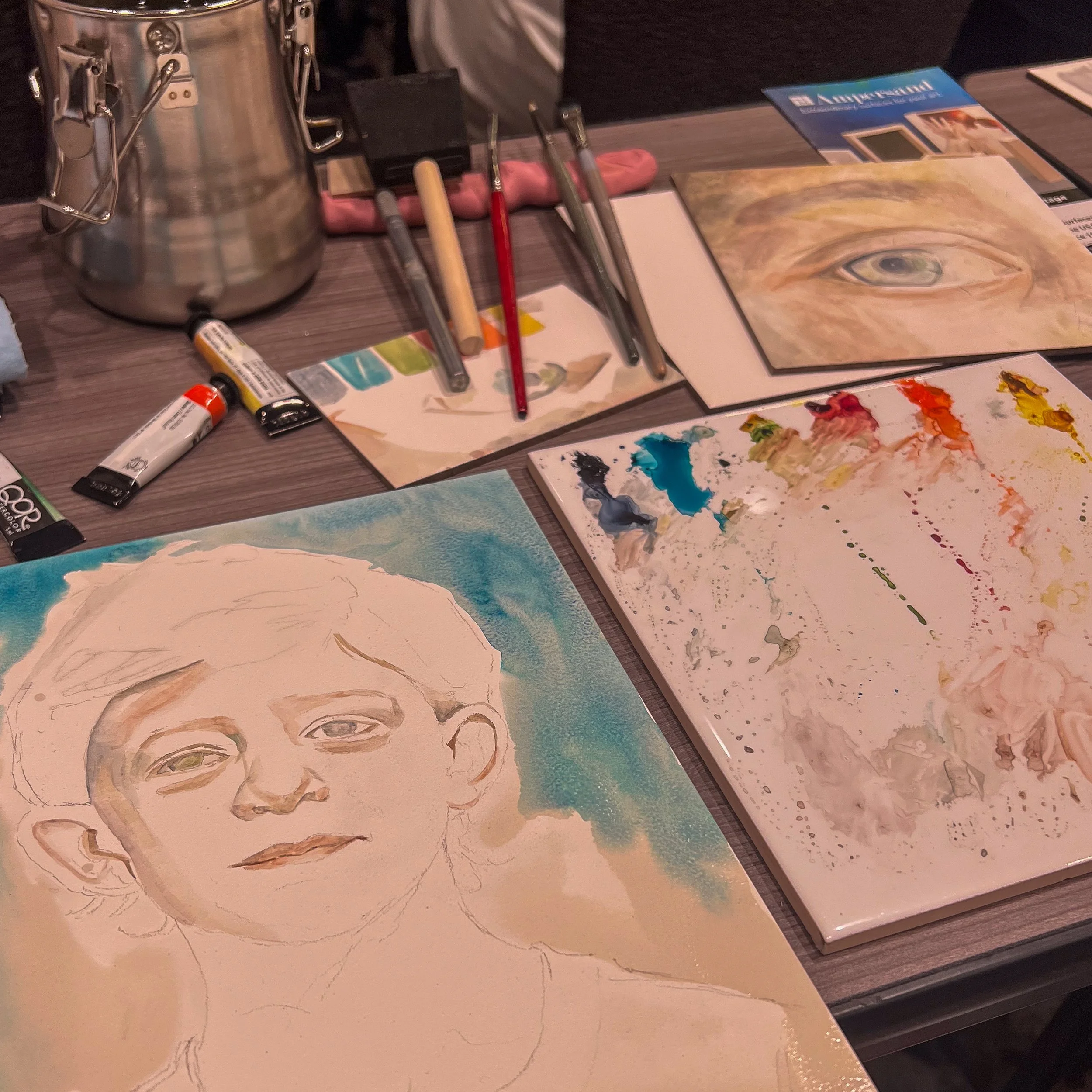
The stacking process requires a lot of patience and time between layers, so within a two-hour session, you’re really just getting started. I didn’t finish an eye study, not even close. But that didn’t feel like a failure. It felt like understanding the nature of the surface. It asks for a different pace, and there’s something valuable in learning to work within that.
One practical note she mentioned that I found really helpful: QoR pigments tend to adhere best to aquabord. If you want to use other brands, she recommended mixing in a binder called Aquazol to help the paint properly bond to the surface over time.
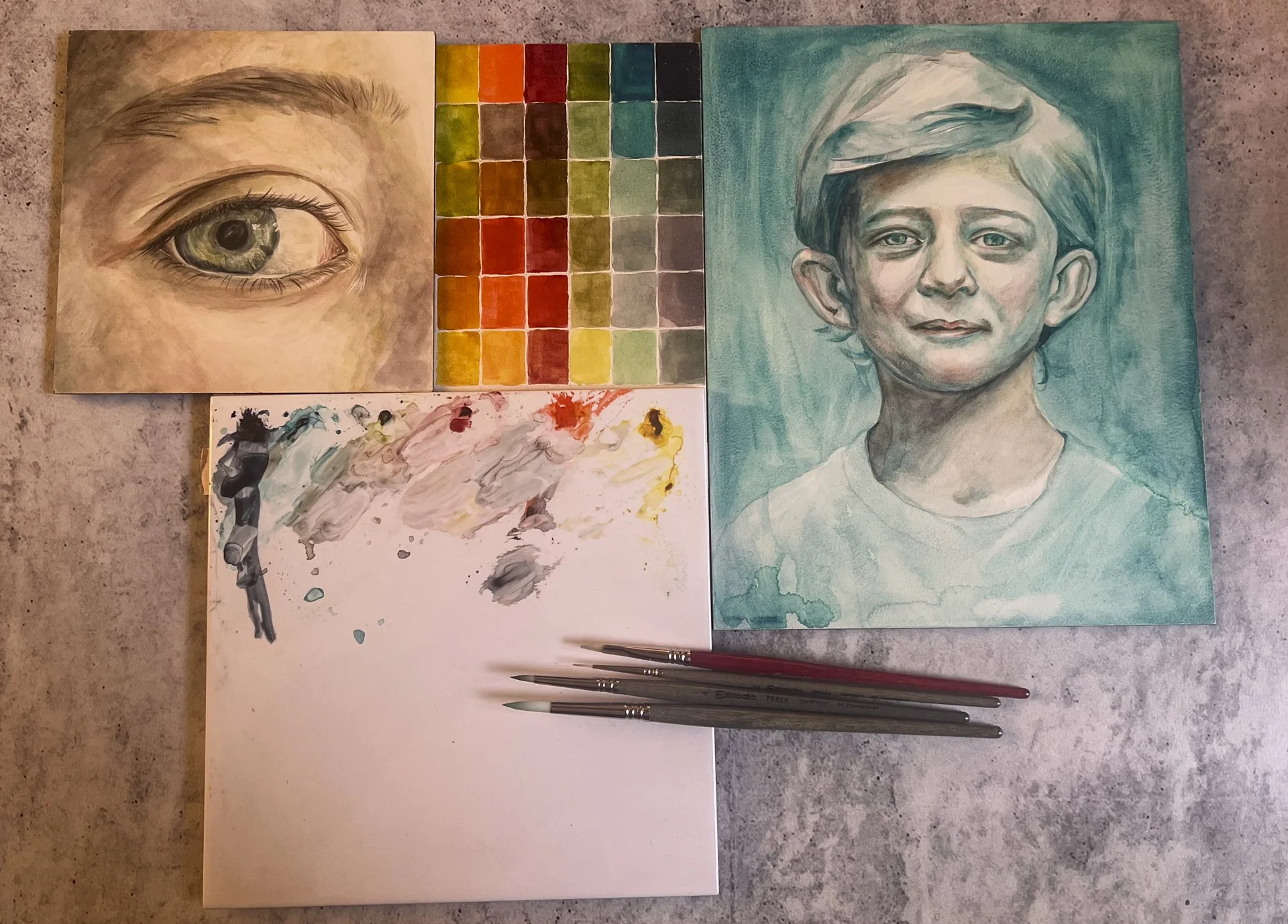
Learning never stops! I worked on more layers back home!
Ali's key things I want to remember:
The six-color portrait set she uses — and that we all worked from — goes in this order on the tile: Payne's Gray → Ultramarine Turquoise → Sap Green → Pyrrole Crimson → Transparent Orange → Nickel Azo Yellow
Sap green and pyrrole crimson mixed together gives you the darkest skin tone base. Add Payne's Gray and you're near black.
If you're using non-QoR paints on aquabord, add aquazol binder or they'll chip over time.
Don't over-burnish the aquabord with the magic eraser. You'll scrape the surface and it will show.
And the most important reminder I wrote down: don't ask yourself what paint did she use. Ask yourself when did she place that layer, and how wet was it. I believe that's where her whole approach lives — in the timing, not the color. (Although I love her immerse series:))
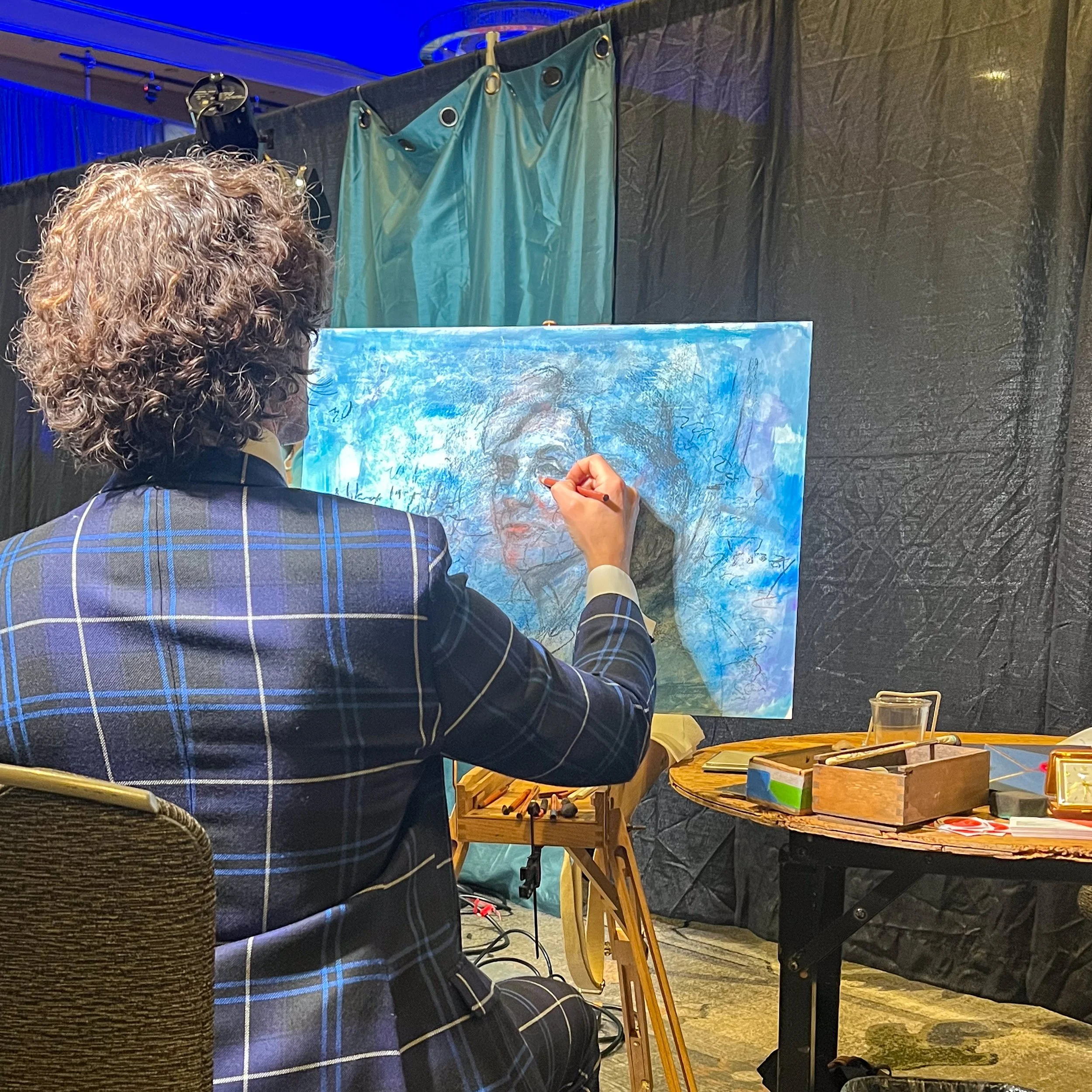
Shane in his process. Excellent!
Friday: Shane Wolf — I Didn't Expect to Feel Small (In a Good Way)
I sat behind Shane Wolf for three hours during the Face-Off and just watched.
He brought in an Artefex canvas with a blue gouache ground and started drawing with charcoal—but not the way most people use it. He wasn’t outlining anything. He was blocking value masses. Big shapes of light and shadow, not lines around forms. The whole approach was simple: structure first, everything else follows.
He writes on the canvas—words, fragments, things people say to him during the session. He wipes his hands directly onto the surface. He uses the edge of the canvas to sharpen his charcoal, and the marks it leaves are beautiful. Completely accidental, totally intentional. It’s one of the most physically engaged drawing processes I’ve ever seen.
What hit me hardest was his anatomy talk on Saturday—Lending a Hand. He broke it down so clearly. When drawing the hand, start with a mitten shape. Get the big gesture first. The middle finger is the boss. Knuckle size equals the tip of your nose. Every joint has a tendon, and those subtle bumps on the dorsal side are what make a hand feel alive instead of stiff.
I left that session thinking: I want to be able to draw without always relying on reference. Not because reference is bad—it’s not—but because I want to understand what I’m seeing well enough to construct it. That’s what anatomy gives you. You stop copying shapes and start building forms.
And yes, a part of me thought… I would love to study in Florence the way he did.
His four-step process is something I keep coming back to:
Simplicity early → Listen to your work → Commit → Own your decisions
That’s it. And it’s harder than it sounds, because most of us hesitate. We correct too early. We don’t give a mark the chance to be right.
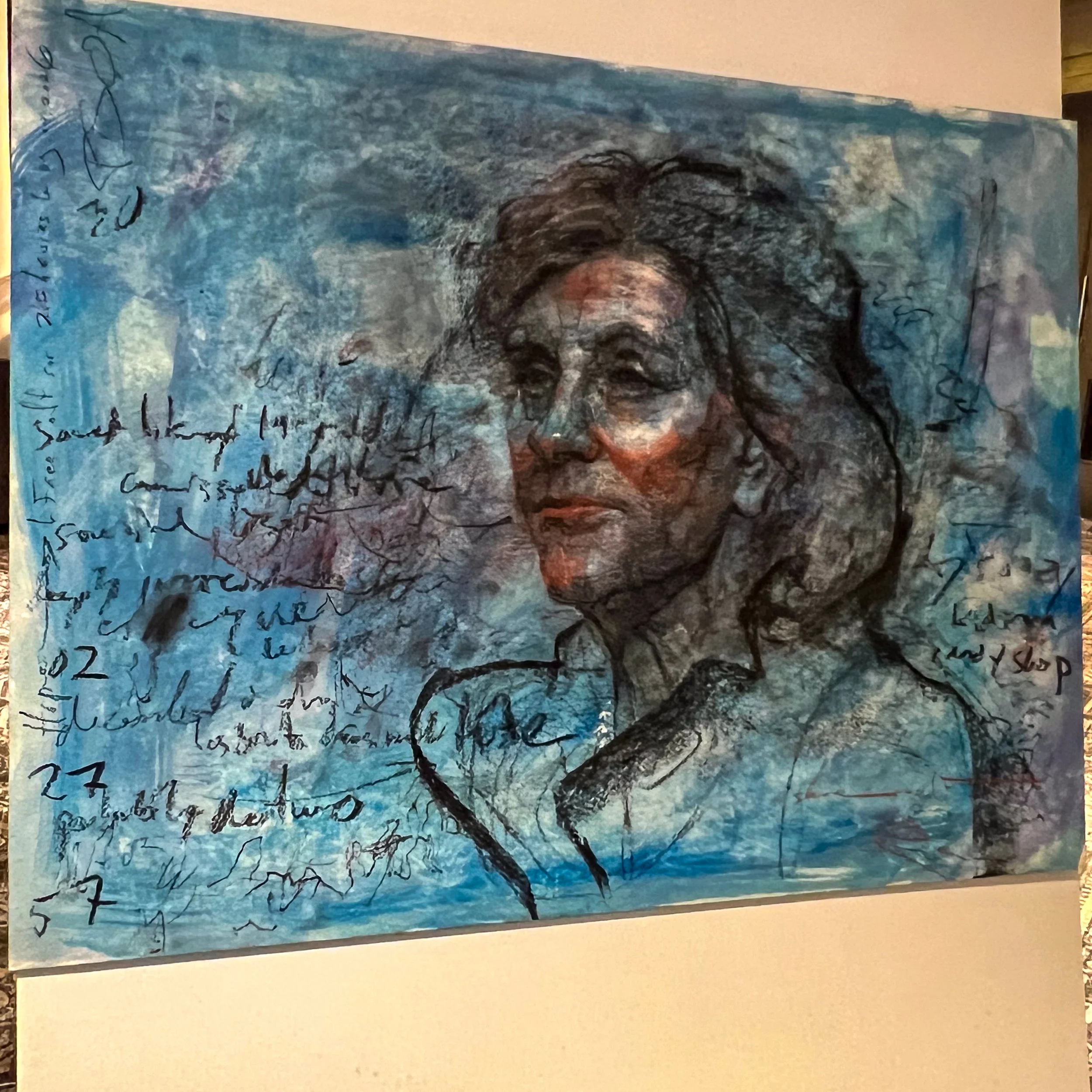
Oh—and I bid $700 on his Face-Off drawing.
And I won it.
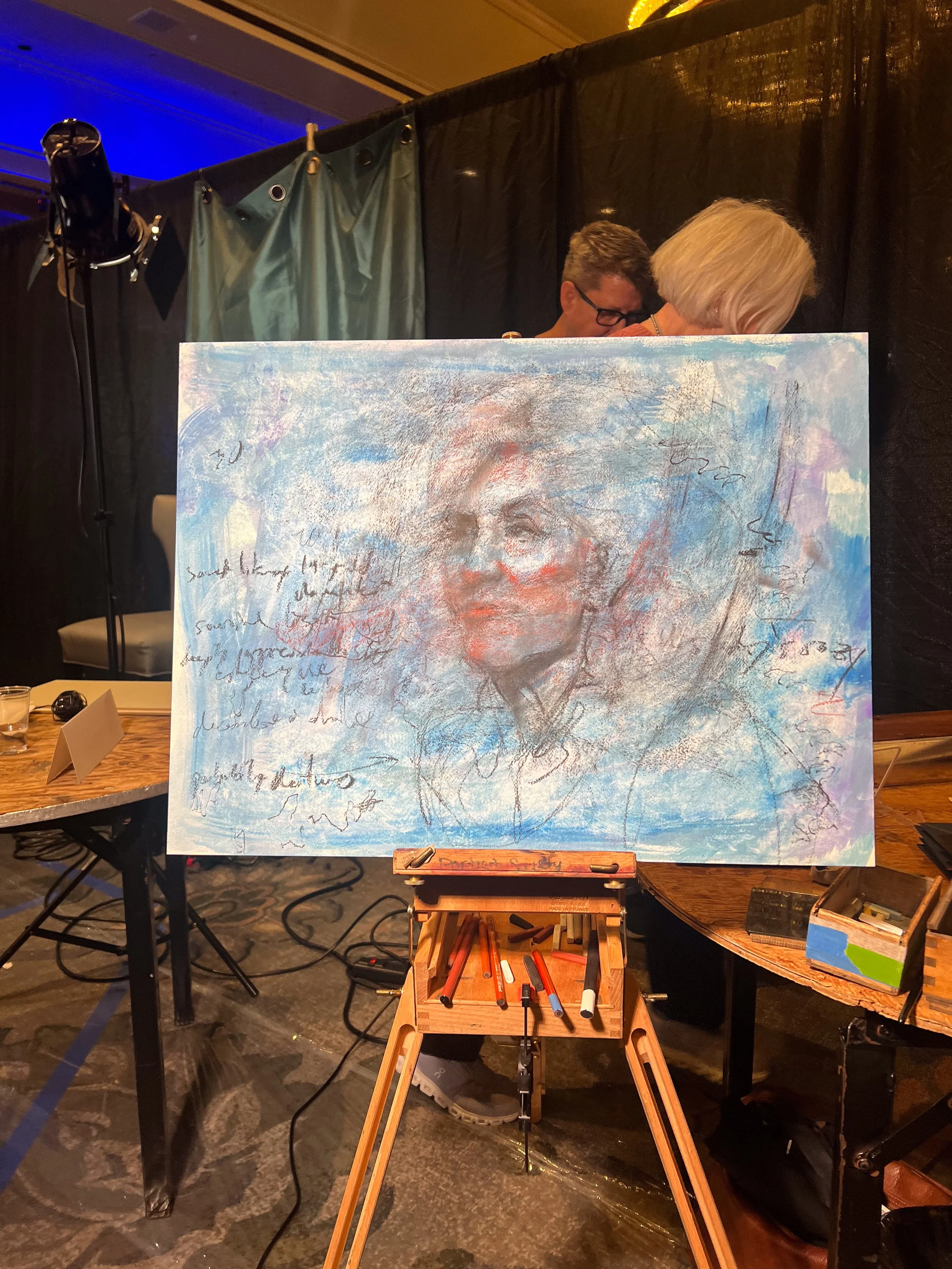
The Part Nobody Tells You About Buying Art at a Conference
I need to talk about this because it genuinely consumed the rest of my trip and I don't want anyone else to get caught off guard.
When you buy a large piece of artwork at an event like this — especially one that's unfixed charcoal — you need to be ready to deal with it immediately. I was flying home with carry-on only. The drawing was 24×18 inches. Nobody told me in advance what to expect about pickup, timing, or how it would be packaged.
I was told I had five minutes to collect it, and that a single box was all that was available. That was it.
So I spent most of Saturday — when I should have been at the portfolio critiques and at Michael Shane Neal's commission session — going to Blick Art downstairs (nothing useful there), then walking to Binder's Art and Frame (luckily 7 min walking distance from conference) to find fixative, glassine paper, tape, and a box. About $60 and several hours of mental bandwidth gone.
The drawing made it home. It's on my wall. I love it. But I missed sessions I really wanted to attend, and I was stressed in a way that didn't need to happen.
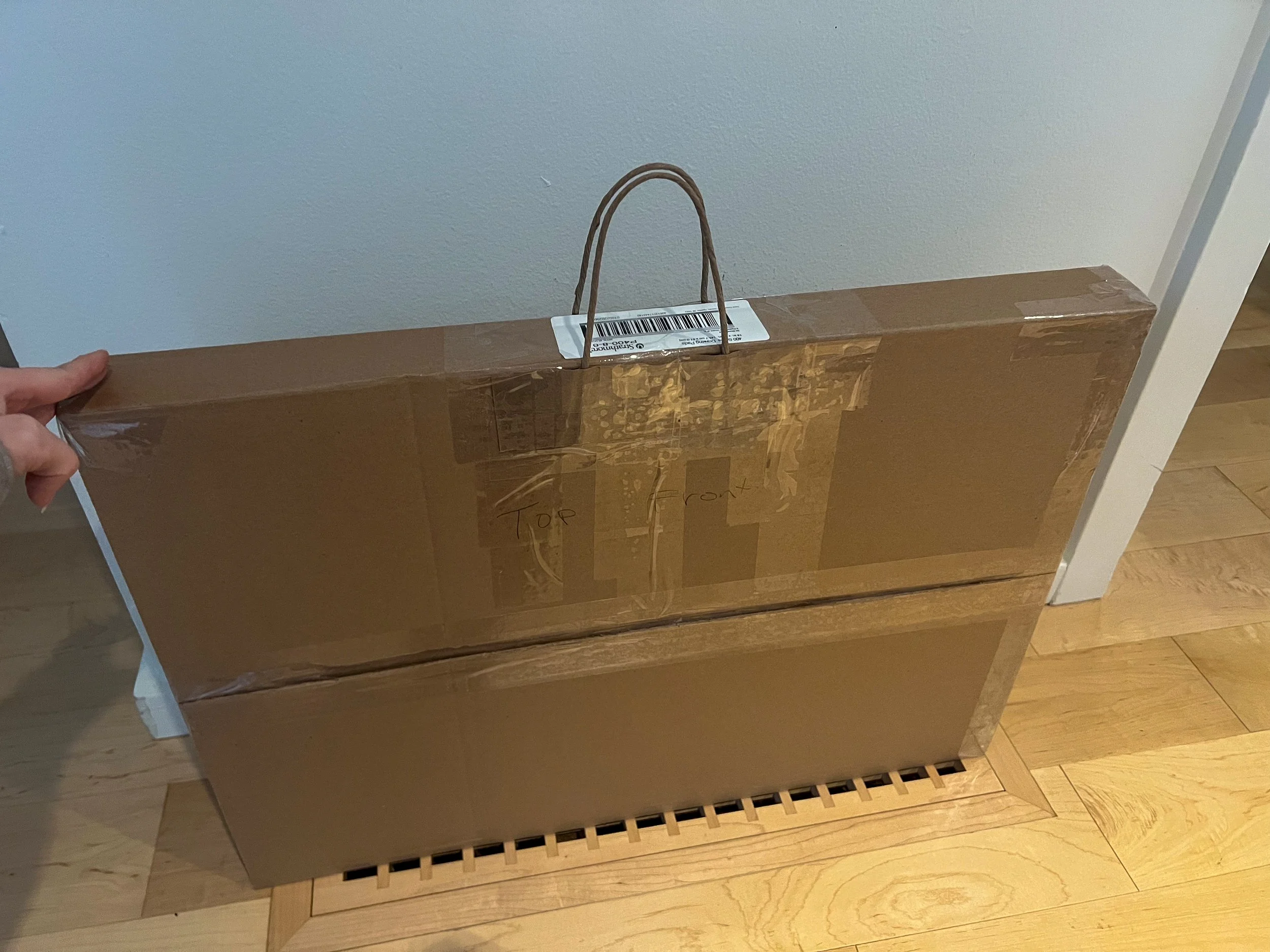
How I packed my work eventually through the fuss! ;)
If you go to this conference and plan to bid on anything, bring glassine, packing tape, and plan ahead for fixative, since it can be tricky to travel with by air. Either pack what you can in checked luggage or consider shipping supplies to your hotel in advance. Plan your transport before bidding on a work, not after you’ve won.
I did give feedback to the Portrait Society about this, and I was genuinely touched that the CEO responded personally. That meant a lot. I share this not as a complaint, but because it’s practical information that would have helped me enormously as a first-timer.
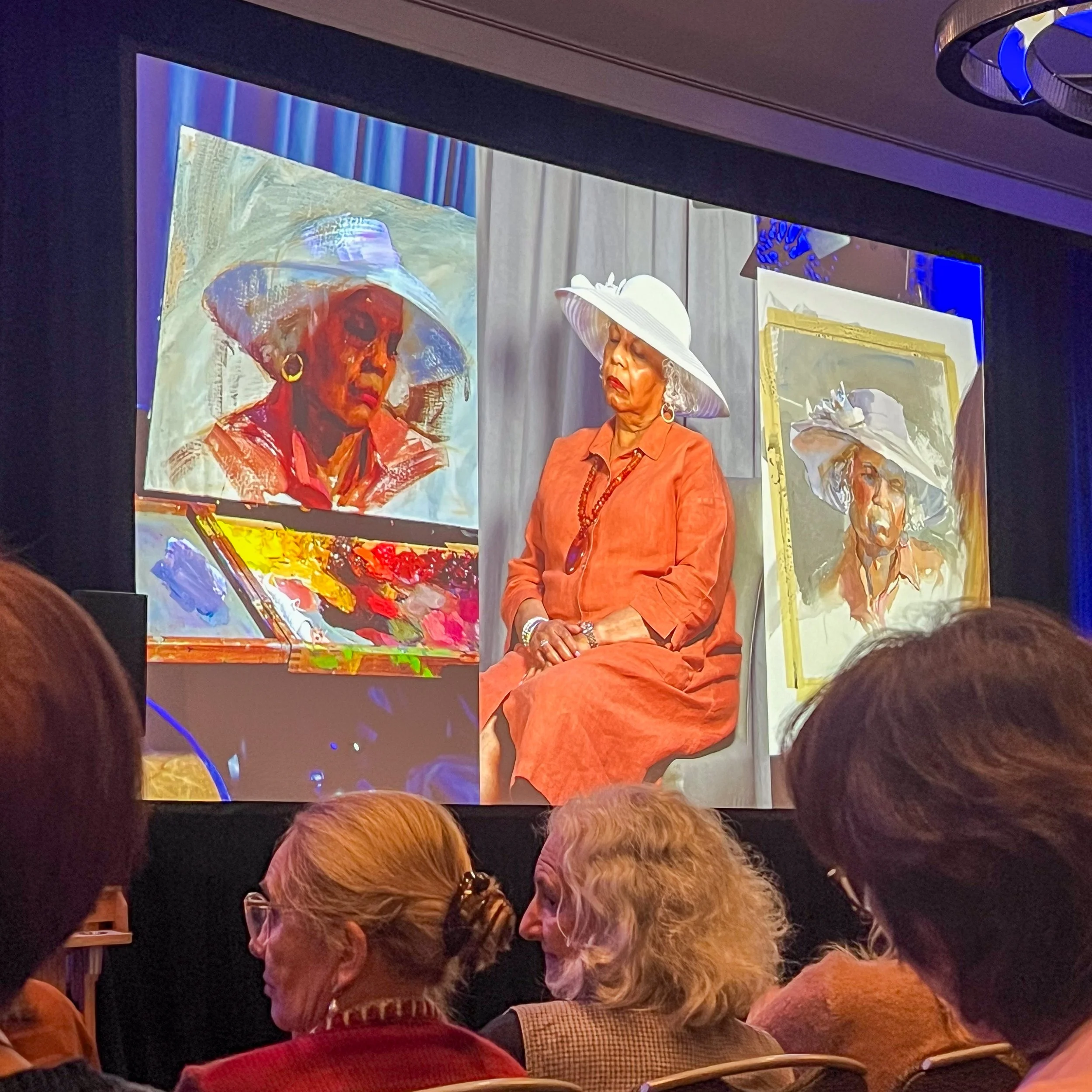
Friday: Mary Whyte and Daniel Keys — Watching Two Completely Different Minds Work
This session was one of the most enjoyable of the whole conference, and I think it's because of the contrast.
Mary Whyte is all about shapes. Not inventory — shapes. She says it and she means it. She's not looking at an eye and thinking about an eye. She's looking at a dark shape that sits next to a lighter shape, and she's asking: what is the relationship between these two things?
Her shadow technique was the thing that genuinely surprised me. She lays down ultramarine blue first in the shadow area. Then, while it's still wet, she glazes quinacridone rose over it. Then sienna. She doesn't premix on the palette. She builds the colour directly on the surface, and the result is this rich, living shadow that breathes in a way that a pre-mixed grey never could.
I normally mix everything on the palette or layer very carefully after drying. Watching her do this — this almost risky, confident layering while wet — made me want to be bolder. The wrong-looking move turned out to be exactly right.
Also: skin tones run cool in her work. Almost blue in places. Green under the nose and mouth. Purple-grey for whites like a hat. She works warms and cools simultaneously rather than resolving one and then the other.
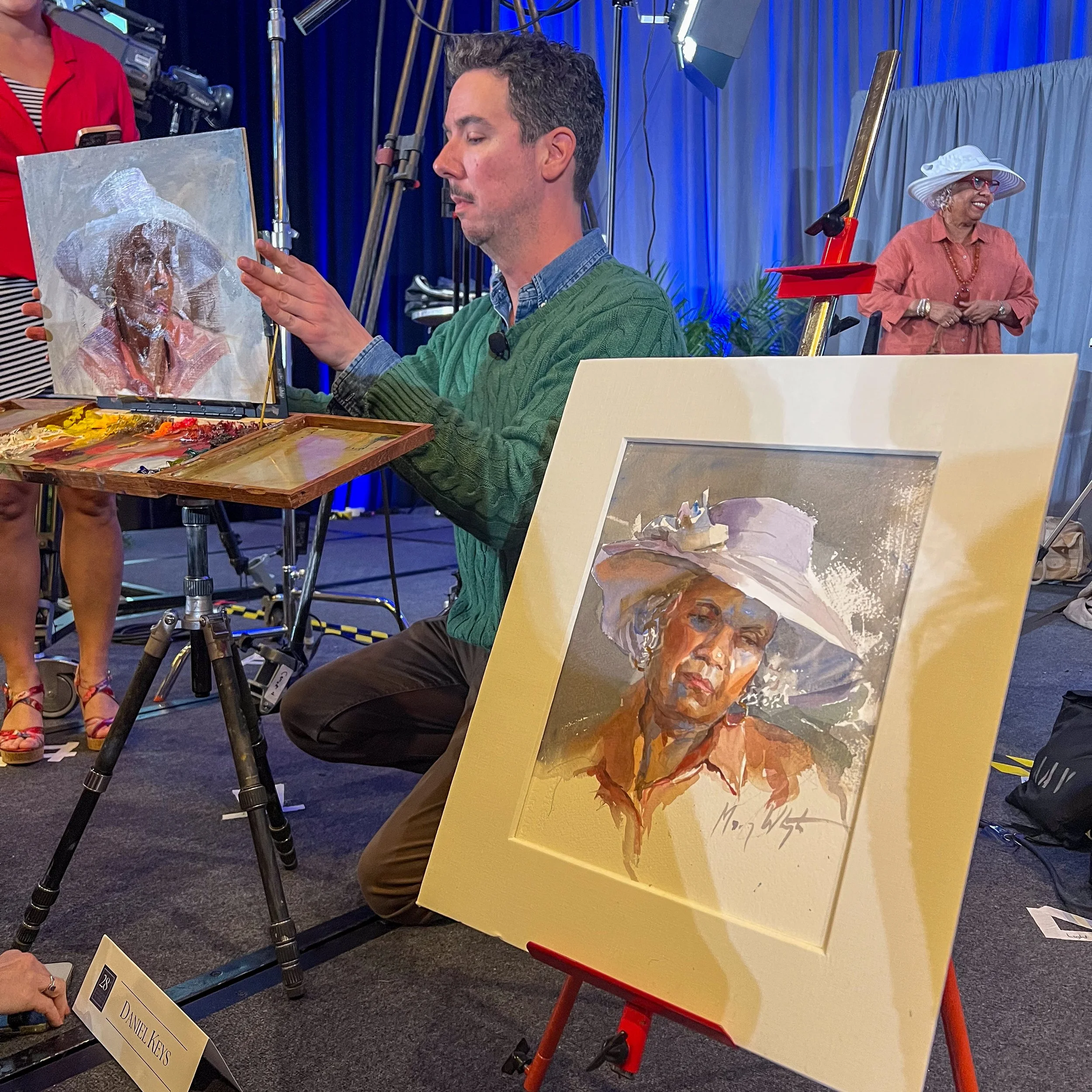
Daniel Keys came at it from the opposite direction — oil, very structural, very clear about process hierarchy: drawing first, then value, then colour, then you can think about composition. His point was that if your fundamentals are solid, composition can be adjusted. You have flexibility at the end. But you can't fix a drawing problem with colour.
He steps back twelve feet from his work to look at it. Twelve feet. I've never done that in my life!
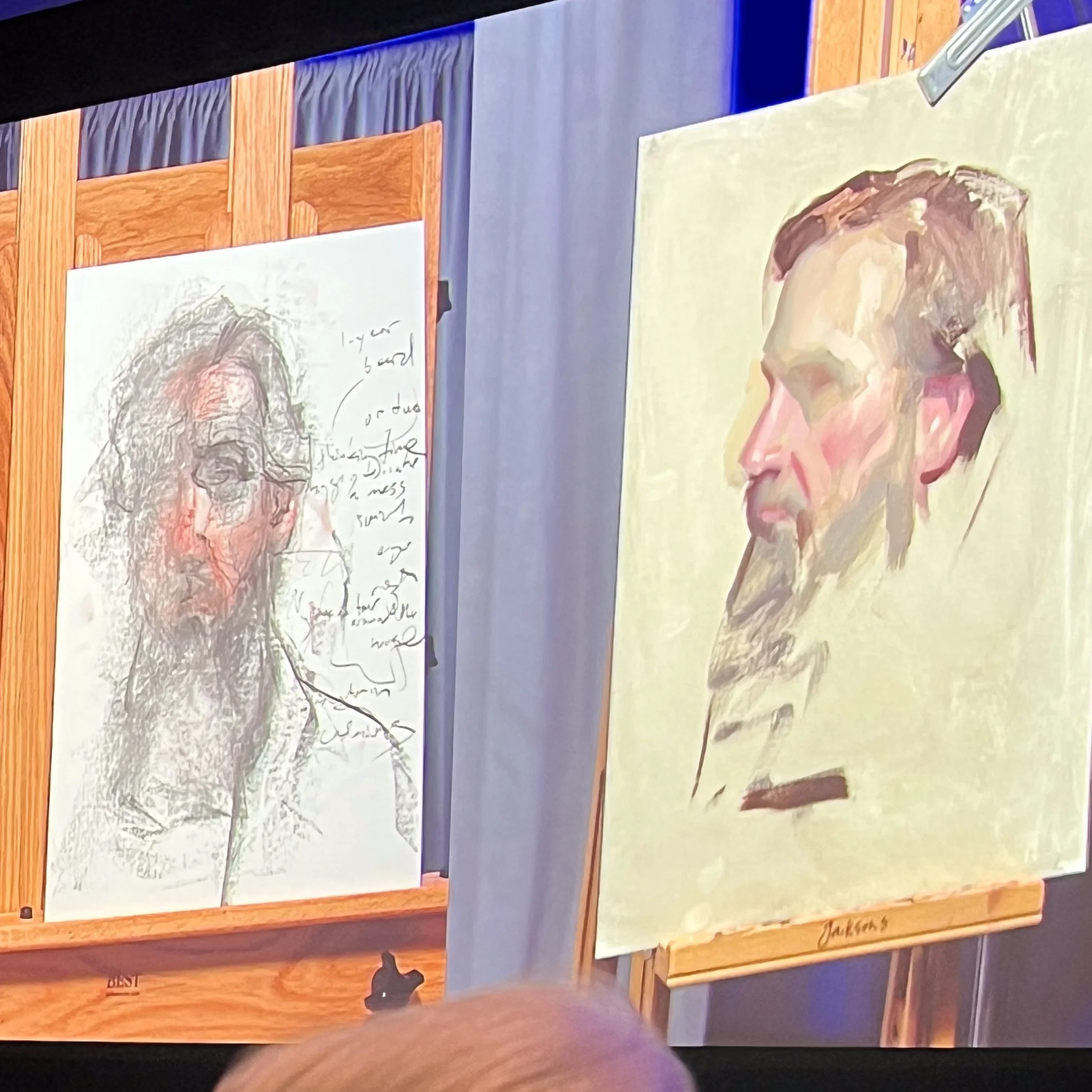
Frances Bell and Shane (Again) — The Permission to Slow Down
Frances Bell was a quiet revelation. She uses about twenty brushes per painting — one per colour, all held in her non-painting hand along with her palette — which sounds excessive until you watch her work and realise she never gets muddy because she never mixes between colours.
But the thing I keep thinking about is this: she leaves a painting for a week when she's not sure. She moves it around the house. Different walls, different light, different times of day. She observes it. She doesn't touch it.
And Shane said something similar — there are moments that look like doing nothing, but are actually reflecting. That time is part of the process, not a break from it.
I think I needed to hear that. I push through when I'm unsure. I add more instead of stepping away. These artists — across all of them, not just Frances — reflect constantly. They observe more than they paint. And that's not hesitation. That's how the work gets even better.
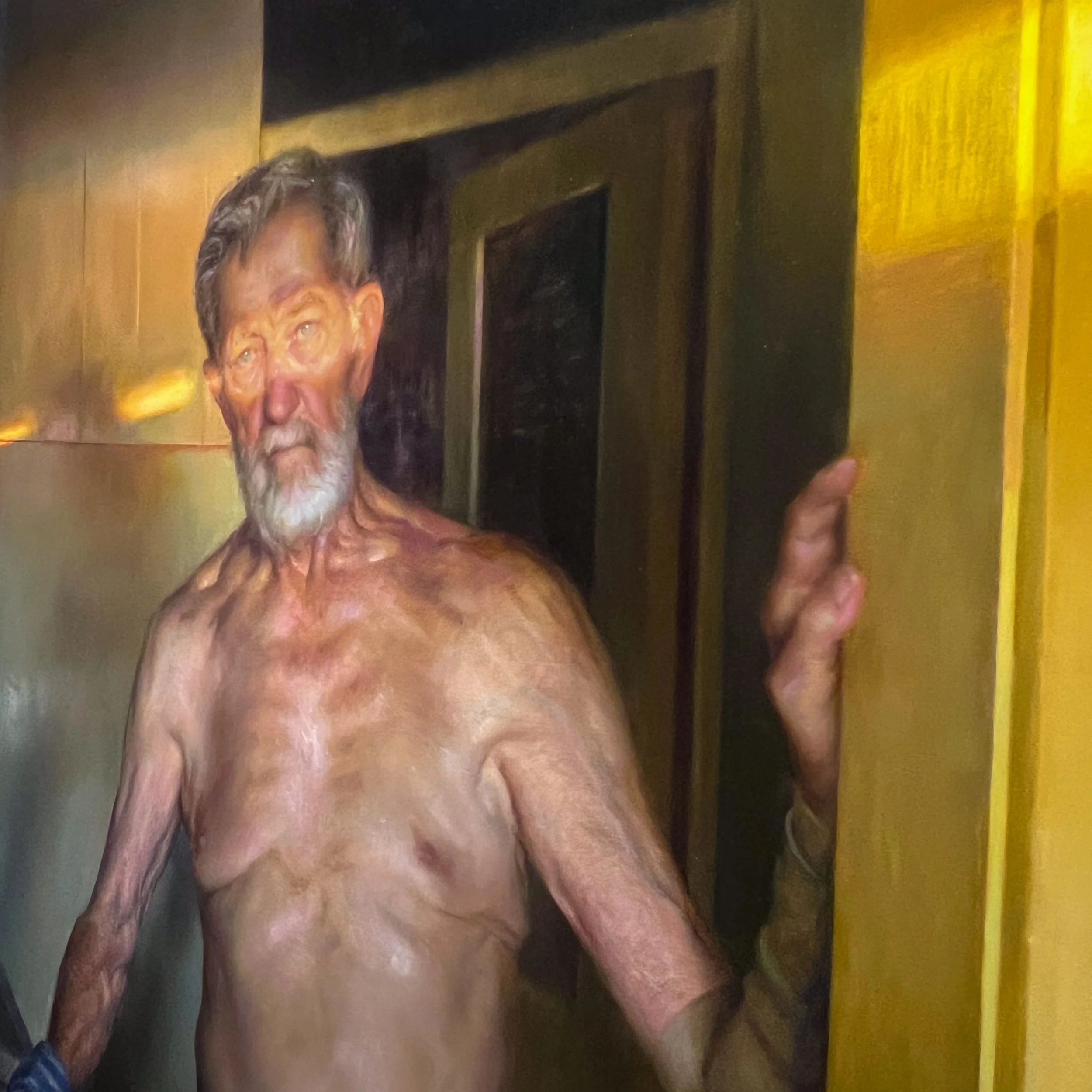
Captivating work by finalist Rose Franktzen. I sure voted for her!
The Community Was the Surprise
I want to be honest: I went in focused on the learning. The technique, the sessions, the demos. I wasn't expecting the people to matter as much as they did.
Ali added me to the Aligators — her Patreon group attending the conference — and we had dinner together on Thursday and Friday night. I sat around a table with artists from all over, talking about work, about materials, about the strange experience of caring this deeply about something most people don't understand. It was one of the best parts of the whole trip. I almost can't believe I would have missed it if I hadn't shown up.
I met Rhonda from Washington State, and I have to start with her because she was such a big part of my experience. We ended up spending a lot of time together over the course of the conference, talking about our work, our insecurities as artists, and everything in between. When I was dealing with the whole situation of packing the artwork, she was incredibly kind and even offered me the use of her room at the Grand Hyatt so I could sort things out. That level of generosity stayed with me.
I also met Diana who was funny from the first five minutes, Katherine from Oregon who I really connected with, Pat whose tapestry work and sense of color stayed with me, and Anthony who I immediately felt a sense of ease with—we spoke about color and painting in a way that just clicked. Real people with real practices, all figuring it out in their own way. That doesn't happen online.
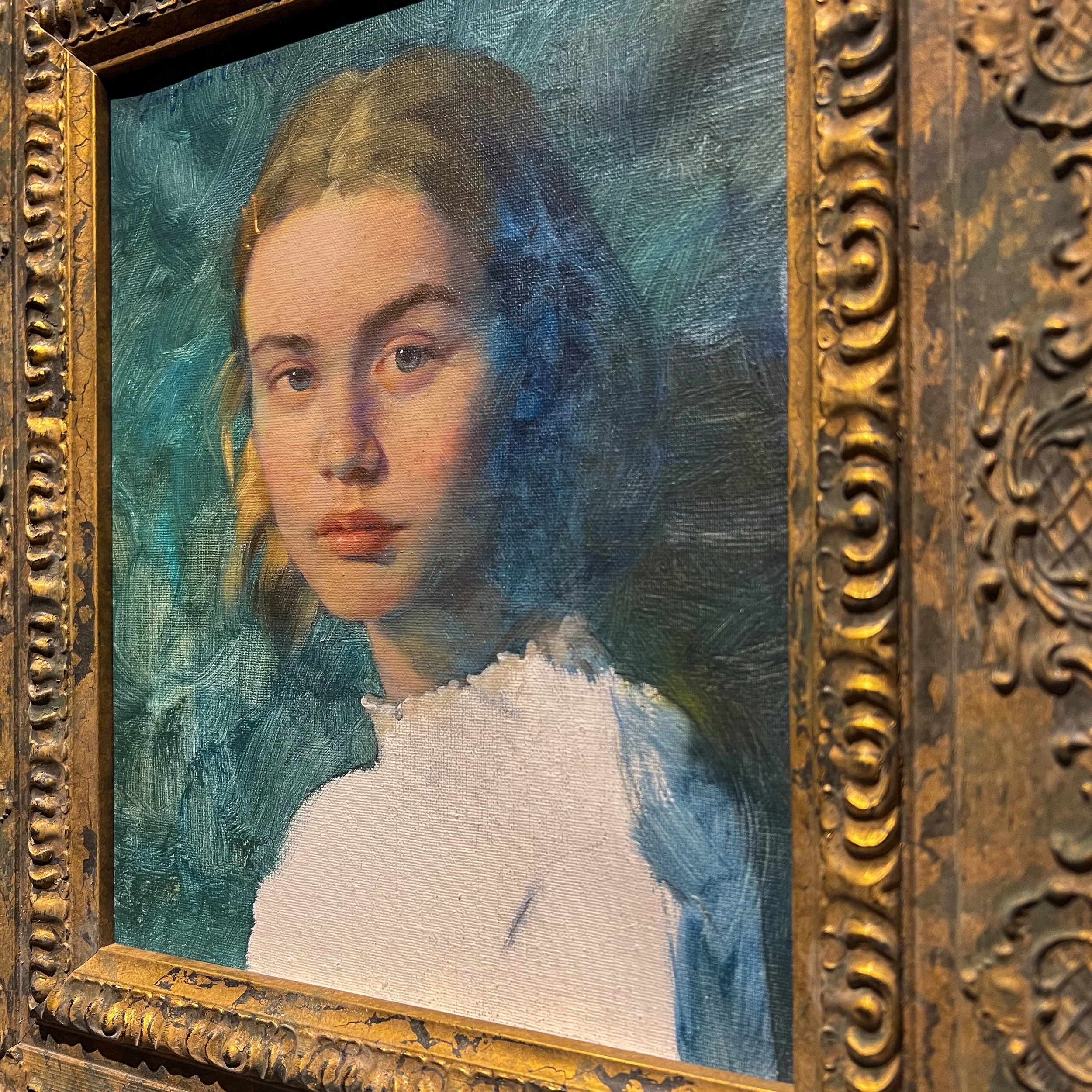
Portrait Society 2026 Finalists Jungchan Chang’s work.
What Actually Changed
Here's what I keep coming back to when I think about what the conference did to me.
I didn't come home with completely new information. A lot of what I heard, I had encountered before in some form. But there's a difference between knowing something conceptually and having it land in your body. Watching Ali's brush in real time, watching Shane commit to a mark and own it, watching Mary Whyte put blue into a shadow while it was still wet and not panic — that lands differently.
The Escoda brushes changed something practical. Mary Whyte changed something about boldness. Shane Wolf made me aware of a depth of structural knowledge that I want to spend years building toward.
And the conference itself reminded me that this community — these people who show up to a hotel in Atlanta to watch other people paint for four days — they are my people. That's not nothing. That's actually everything.
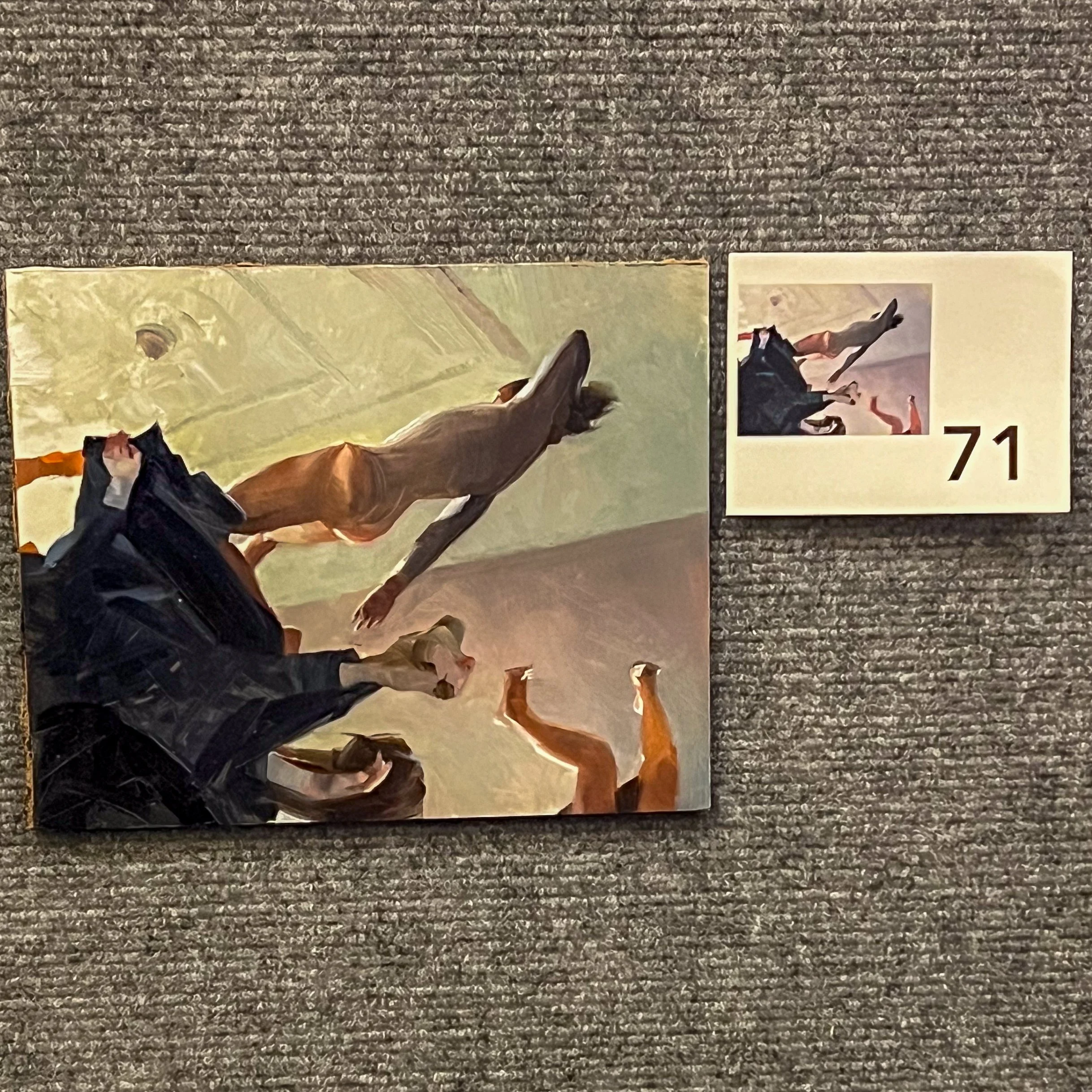
This was from the mystery sale that I really loved. Does anybody know whos work it is?
Things to remember for next time (and there will be a next time)
Grid and sketch aquabord before the workshop. Use session time for layering, not setup.
Bring Escoda brushes already broken in.
Pack glassine, fixative, and packing tape no matter what.
Protect the critique and commission sessions — they're the first to fall when logistics take over.
Say yes to the dinners.
If you've been thinking about going to the Portrait Society conference and wondering whether it's worth it — it is. Not just for the technique. For the perspective. For the reminder of what it feels like to be around people who take this as seriously as you do.
Even if you end up spending Saturday hunting for glassine paper at an art supply store in Buckhead. Maybe especially then.
* Some links in this post are affiliate links — no extra cost to you, ever!!!

After a month from having gone to the portrait society, I have finally I BELIEVE I have finished the Ali’s workshop painting!
Somehow I just feel like playing around with colors more or something but not too sure what it is! SOMETHING feels missing!
Abandoning it for now! :)