I Was Once, Too, a Child
How a comment under a video became the project I didn't know I needed to make.
I don't really know how to start this, so I'll just start at the beginning.
A while back I was scrolling online — you know how it goes, one video leads to another — and I ended up watching a reel on Instagram. It was a young woman, probably in her 20s, outside someone's house. Someone was filming her from inside. She was going through withdrawal. What disturbed me wasn't just what I was seeing, but the fact that someone chose to film it instead of helping. So I went into the comments. And there was one line that stayed with me: "Can't you see that this was somebody's baby?"
That sentence just sat in me. I couldn't shake it.
"Can't you see that this was somebody's baby?"
Around the same time, I was driving regularly from Kirkland to Columbia City Gallery for my shifts — twice a month, same route, same rhythm. Living in Kirkland, you don't see this as much. But driving into Columbia City, especially coming off the highway, you do. And something shifted. I started noticing people I hadn't really seen before. Not dramatically. More like — I couldn't unsee them anymore. People on the street. Sitting. Waiting. Existing. Visible, but also somehow invisible at the same time.
And once you see that, it's hard to go back.
So I started looking things up, reading more, falling into research I hadn't planned on doing. And at some point I thought: I'm a portrait artist. This is what I do — I paint people. If I'm going to paint people, I need to actually look at what's happening around me. And try to draw out something human. Something that brings us back to empathy.
I'll be honest — this was uncomfortable. There was fear. It felt unknown, not just about the subject but about myself too. I was entering a space I didn't fully understand, and part of me wasn't even sure I had the right to ask certain questions. But that tension — that discomfort — that's usually where something begins.
Then a very practical thought came in. I had a featured exhibition coming up in April at Columbia City Gallery, and this was a big deal for me. Since moving to Washington from Munich in 2024 and really putting my work out there, I'd never had the opportunity to build a full body of work from concept to finish and show it as a series in a gallery space. This was the first time. And I had never paid models before. That mattered. Because if I was going to do this properly — respectfully — then collaboration couldn't be an afterthought. I wanted to offer an honorarium. That had to be built into the process, which meant I needed resources.
That's when I came across 4Culture. I didn't overthink it. I just thought: why not try? Not because I was certain — but because I wasn't. Because I wanted to understand more. So I applied.
On February 18th, I got the email: congratulations, you got the grant. That was the moment the project became real. Up until then it was just a direction. A question. Now it had weight. And a deadline.
Two months is not a lot of time. Especially for a project like this. Building trust takes time. Connecting with people — some without stable access to phones, with schedules that aren't predictable, who might be having a hard day when you show up — all of that takes patience and flexibility. There wasn't room to hesitate. So I didn't.
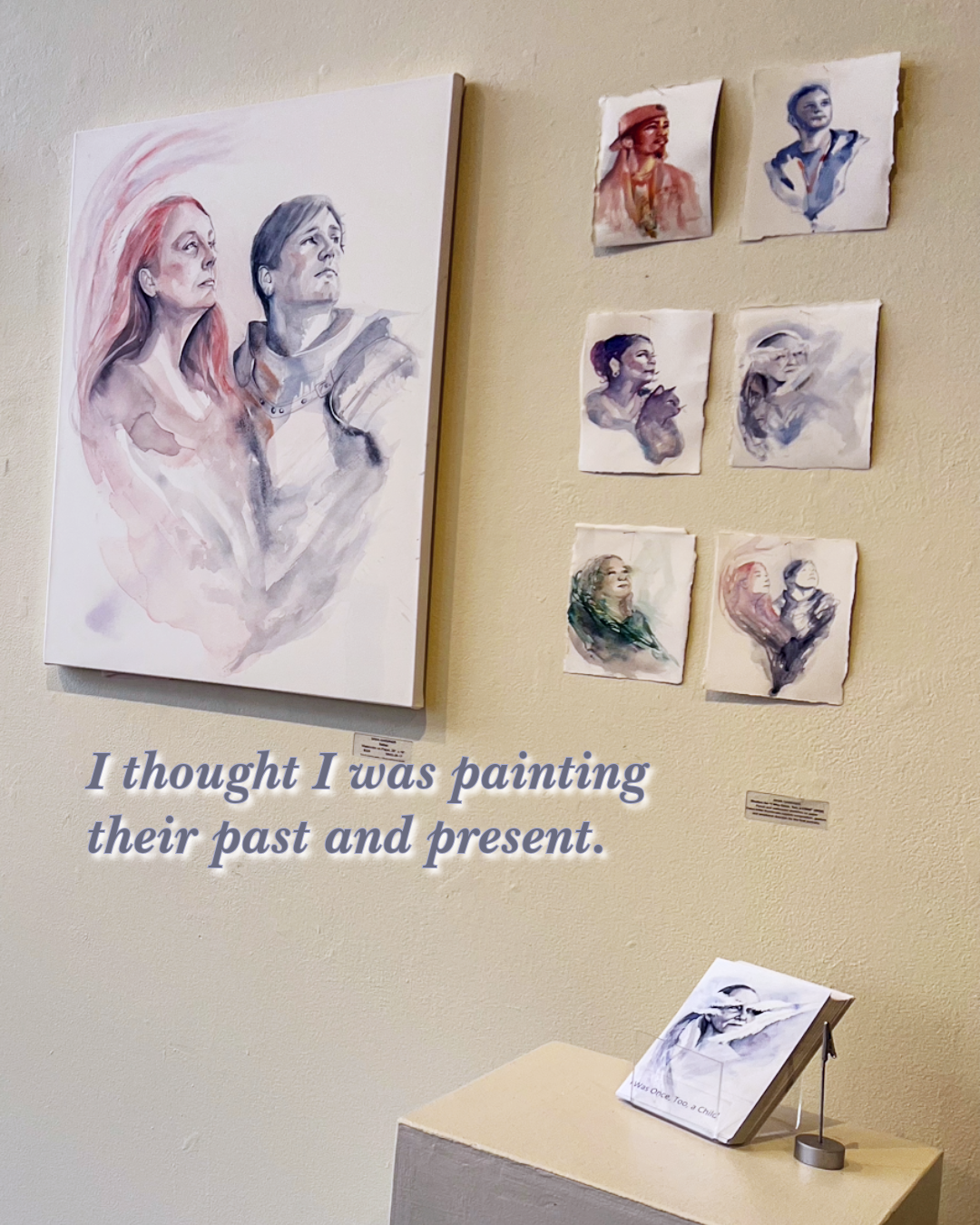
At the beginning, I thought I would paint two versions of each person — their past and their present, side by side. Because of the title I Was Once, Too, a Child, I imagined showing their childhood alongside who they are now. A kind of maternal gaze, a way for the viewer to feel: they were once a child too. It felt structured. Like a way to explain a life.
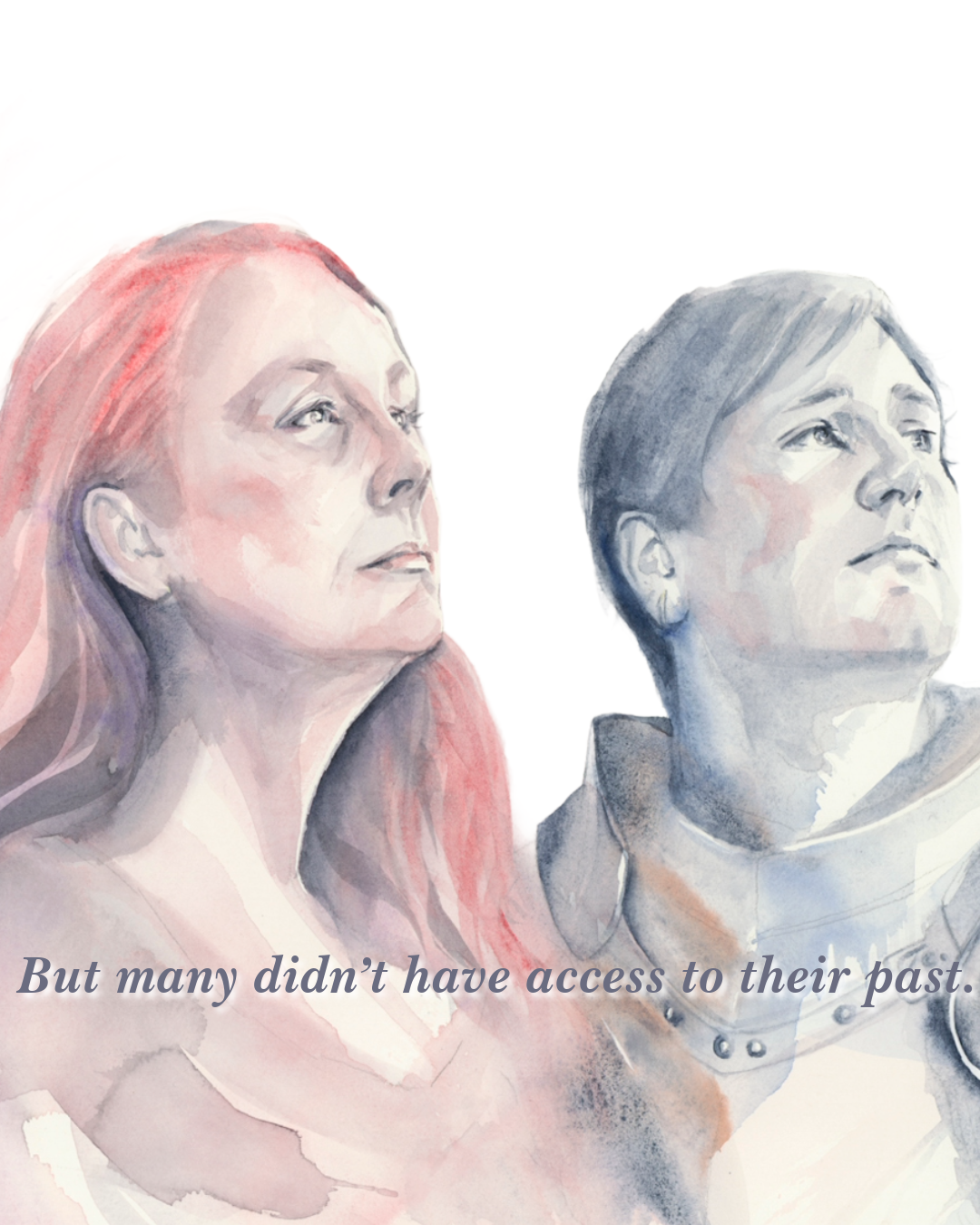
But the past wasn't always accessible. Photos didn't exist. Memories weren't always something people wanted to revisit. Some things weren't meant to be reconstructed, and it wasn't my place to push. So slowly, that idea fell away. At some point I just let it go.
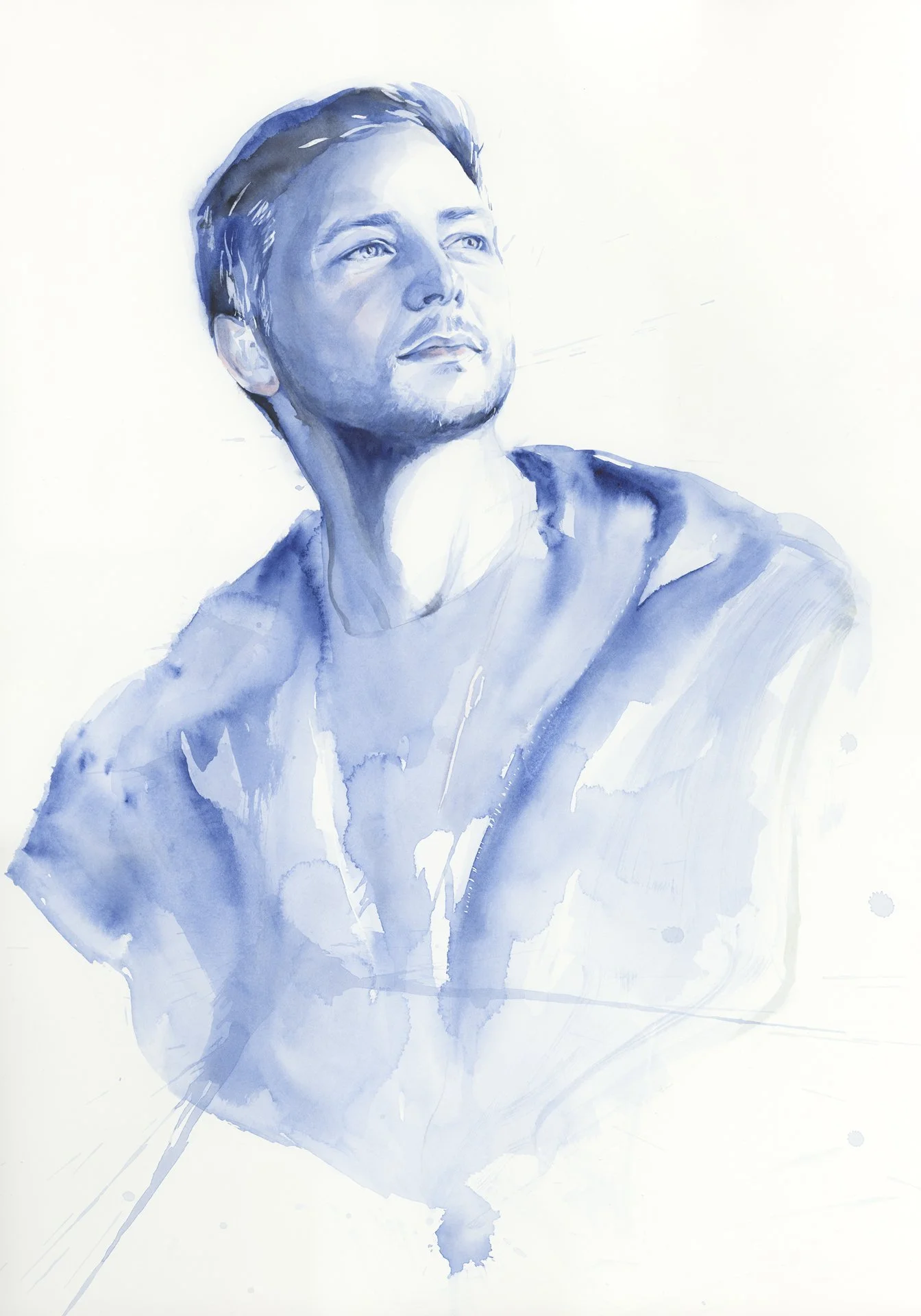
What I found instead was something much quieter. Every person I met was facing forward. Not because the past didn't matter — it clearly did — but because staying oriented toward what comes next was part of how they kept going. That became the series. Every portrait faces left, toward the future. And each person carries something with them — an object, a presence, a belief, sometimes visible, sometimes not — something that makes the next step possible.
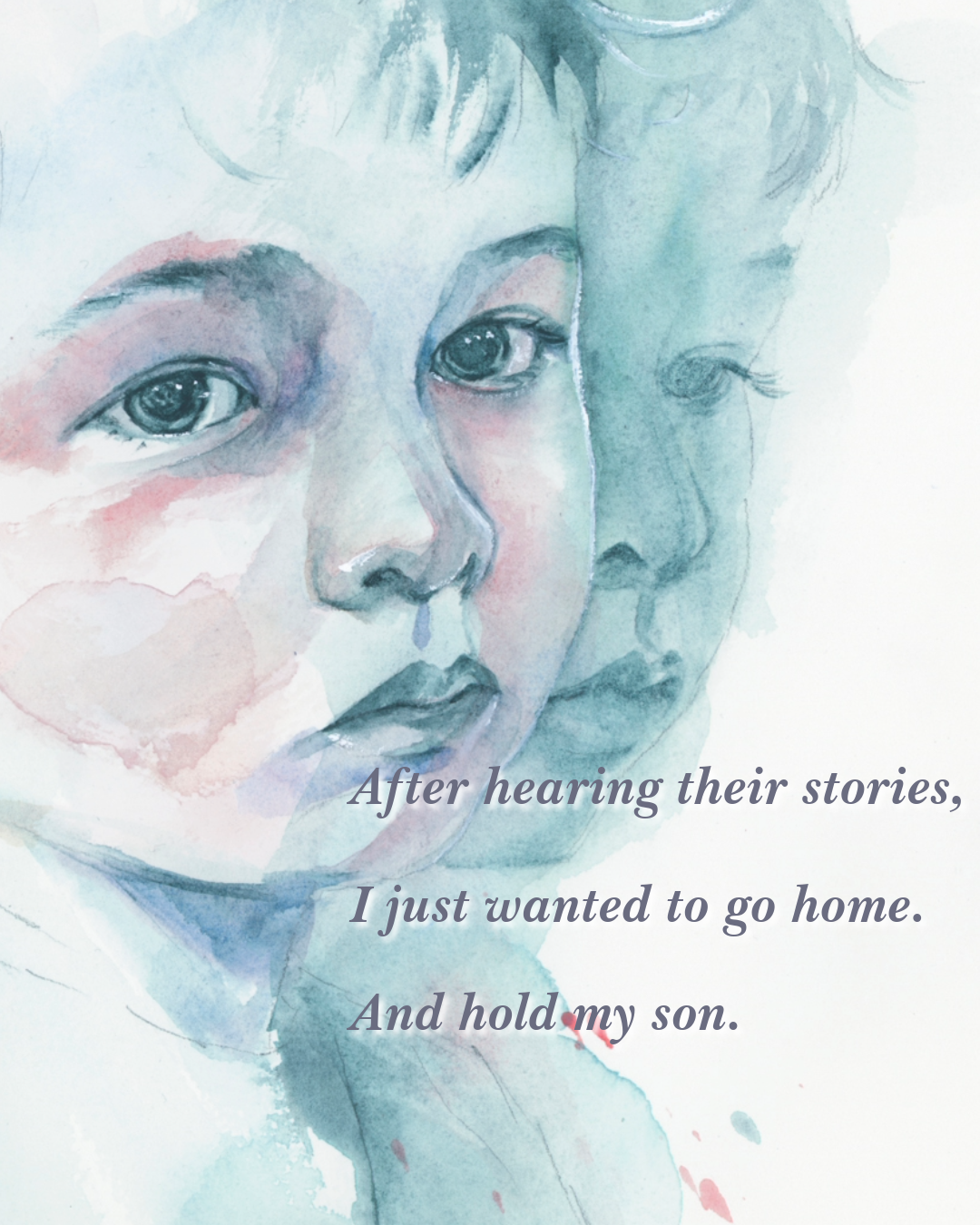
Harbor
I worked with six people connected to recovery and harm-reduction communities across King County, and I also made a seventh piece — Harbor — which is more personal. The six collaborative portraits are: Amulet, Stave , Charm, Rootstock, Zephyr, and Tether.
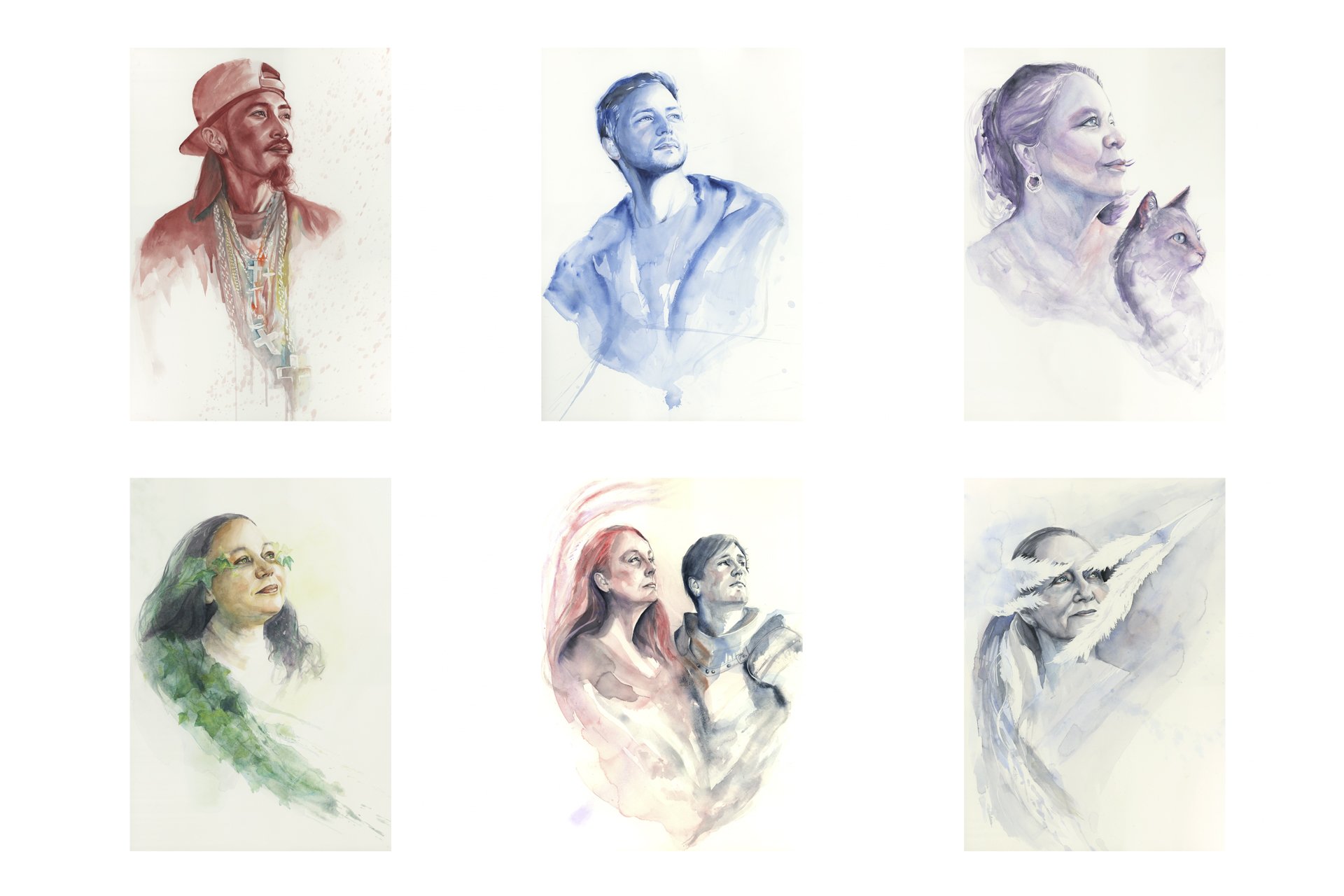
From top left to right bottom, Amulet, Stave , Charm, Rootstock, Zephyr, and Tether.
Before painting, I asked each person two questions about color: what's your favorite, and — once they started opening up and sharing more of their story — what color feels difficult? Color carries memory in a way words don't. Some people answered quickly. Some needed time. Some had to reconnect with something they hadn't thought about in a while.
I also asked each person to leave a mark on the painting. Some didn't hesitate. Some were unsure. Some tiptoed around it. But that moment — it revealed so much about their personality, about how they take up space. And for me it was important, because I didn't want full control. I wanted to lose control a little. I wanted the painting to begin with them, not just me. That their hands touched the work — that mattered.
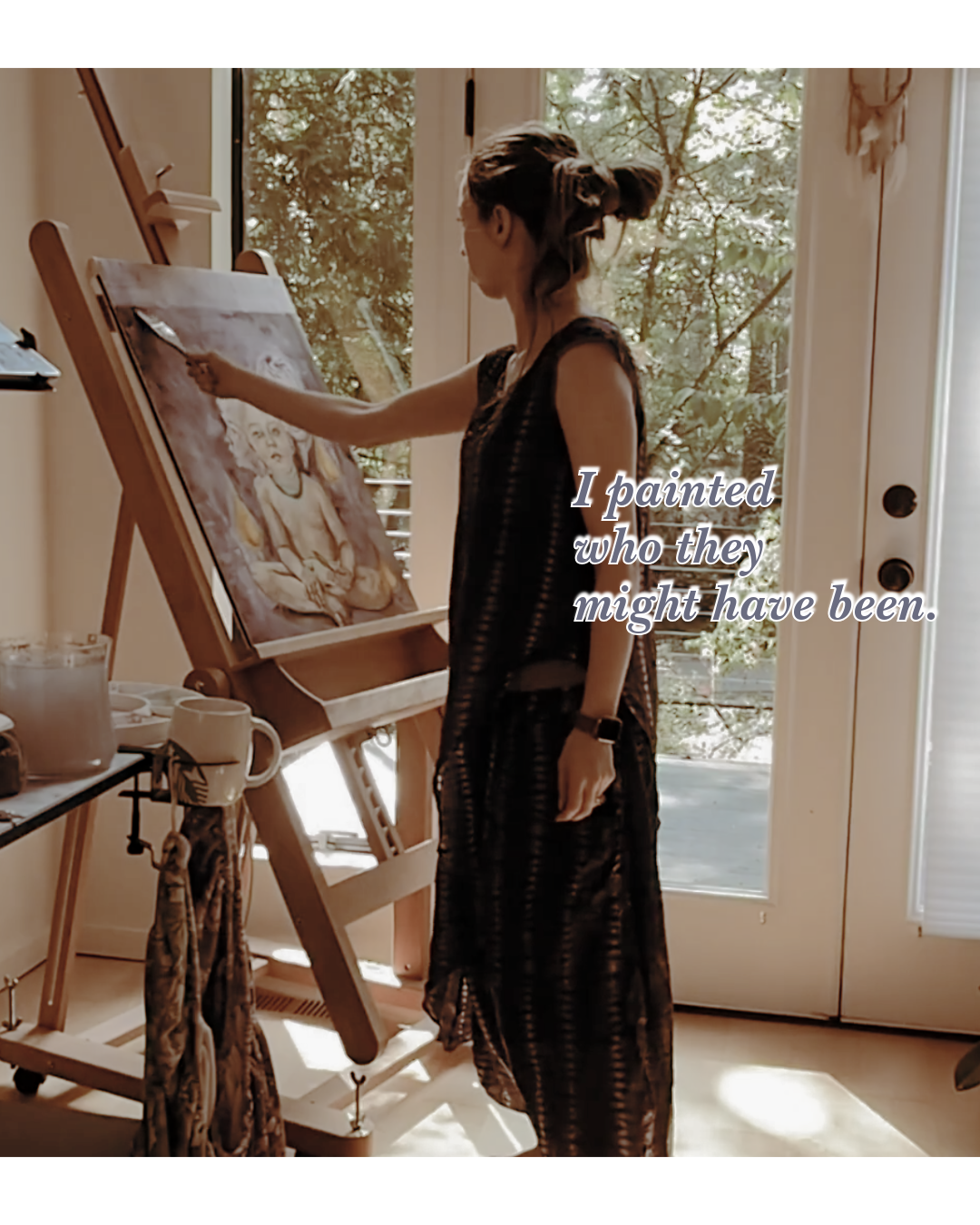
I grew up in Japan, and one of the concepts I carry from that is 空気を読む — kuuki wo yomu — which roughly translates to "reading the atmosphere." It means sensing what's felt but not spoken. As a kid who looked visibly foreign while also being Japanese, I was constantly navigating what wasn't being said. That trained me to pay attention to the quiet things. The tension in someone's mouth. What's happening around the eyes. What's almost hidden.
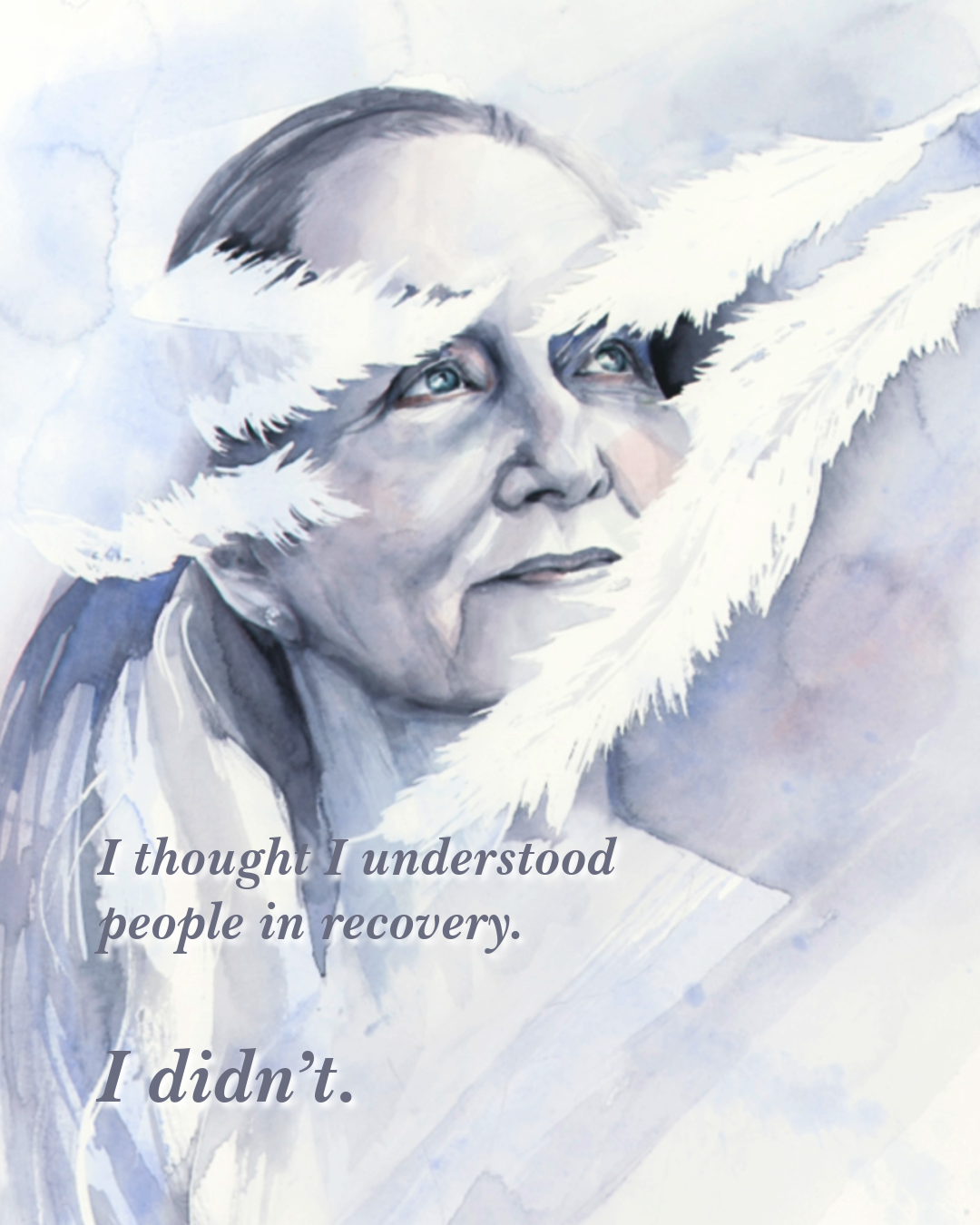
That's what I'm always looking for in a portrait. Not just likeness. What's underneath. With this series, that felt more important than ever. These are people who have been labeled and looked past and reduced to a single story. I wanted to sit across from them, look at them for real, and paint what I actually saw — which is full human beings with complexity and history and something they're moving toward.
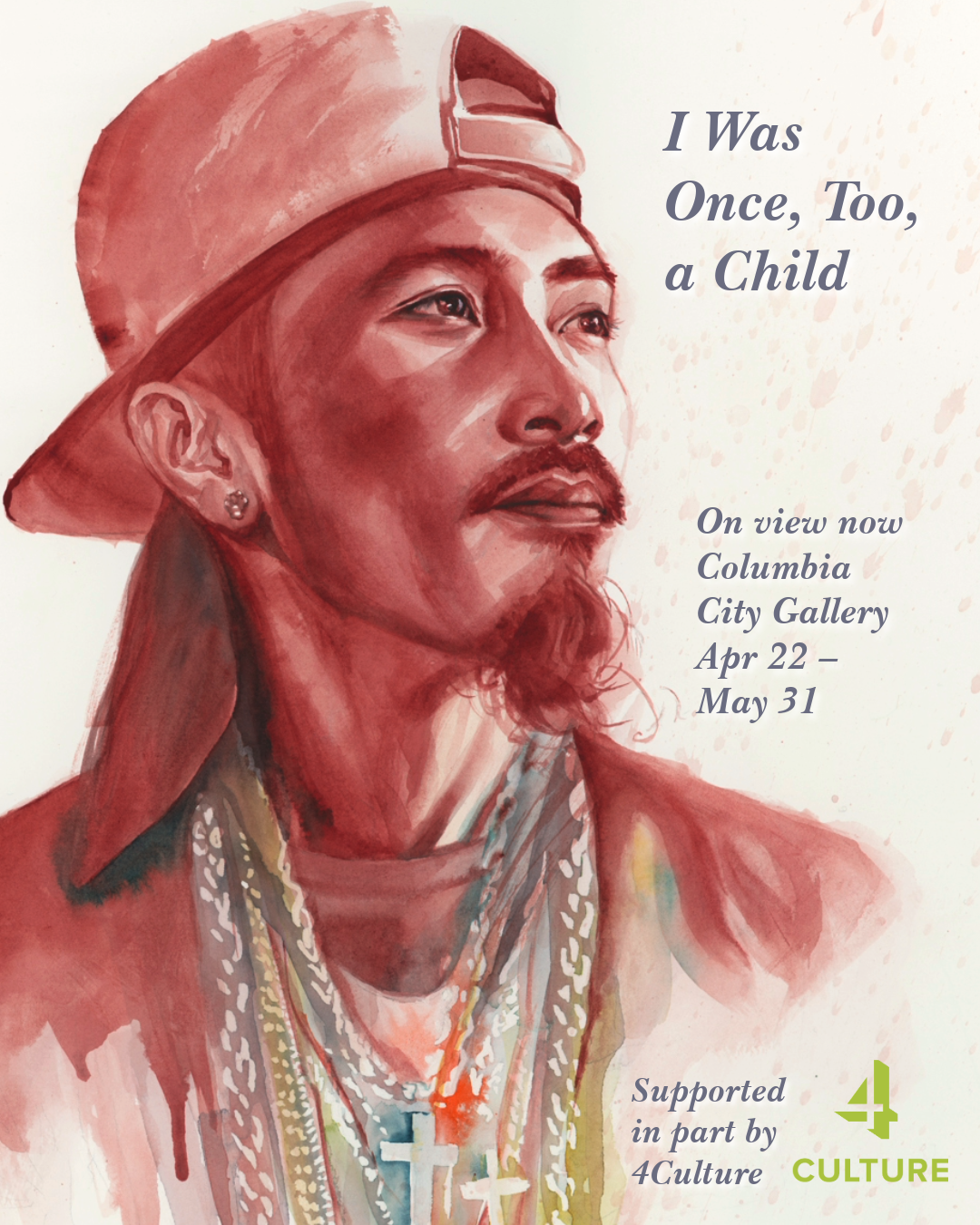
The show is called I Was Once, Too, a Child. It opens April 22, 2026 at Columbia City Gallery in WA, with an artist reception on April 25th. It runs through May 31st.
There will also be resource cards available at the gallery — connected to local recovery and harm-reduction services .
If you come, I just ask one thing: take a little longer than you normally would in front of each piece. Look at the eyes. I really mean it — look at the eyes. That's where everything is.
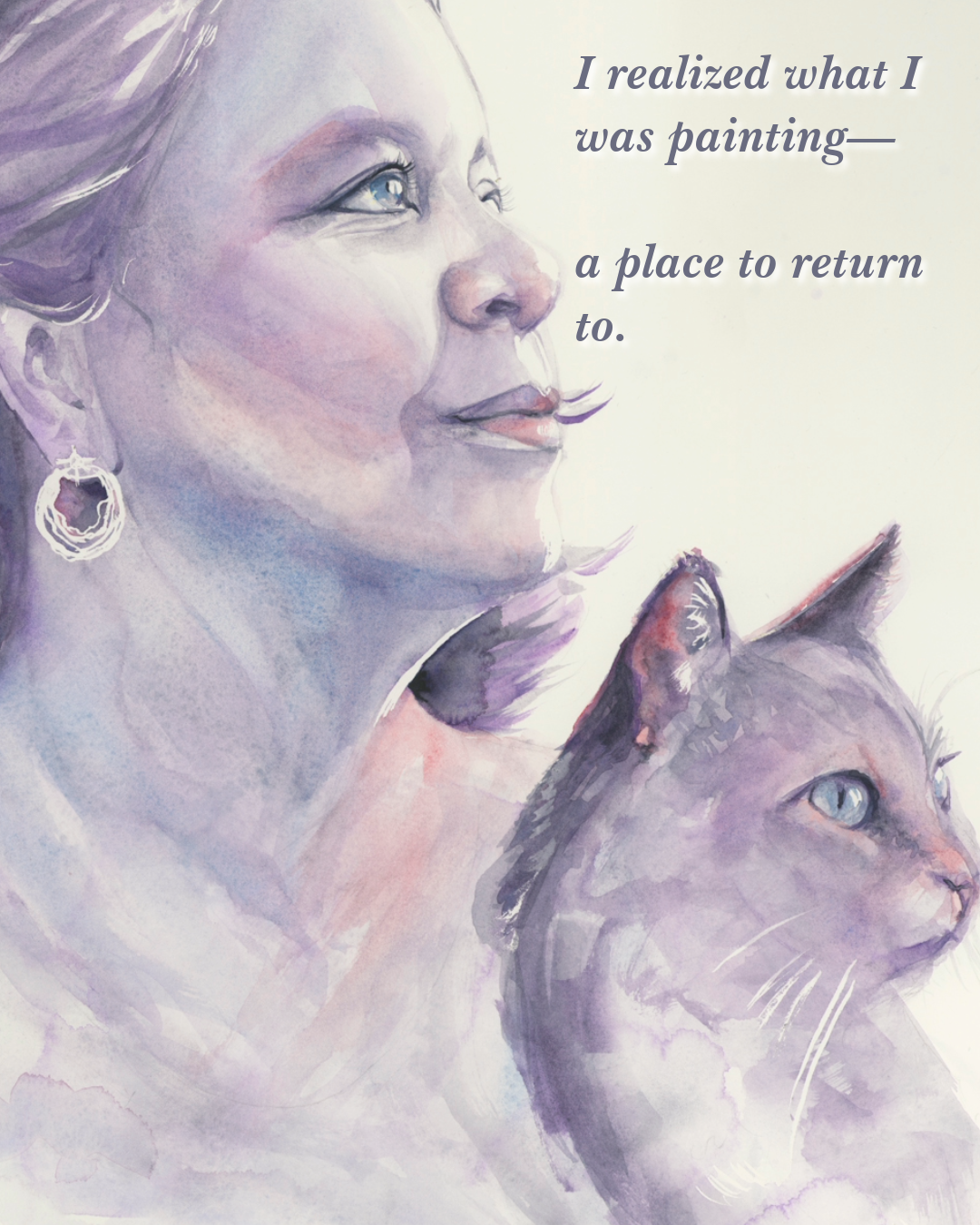
Charm
When I met the first participant and heard her story, I cried. I tried to hold it. But I couldn’t. It hit me somewhere deep. Because I found myself thinking about my father. Someone I never really knew, someone I have no real memory of. Someone who struggled with alcoholism and not even sure if he tried to get himself out of it. And I thought: why couldn't it have been him? Why did not he seek help?
I left that meeting and drove straight to pick up Kai from daycare. I just needed to hold him. Something protective came over me — that instinct you can't explain, you just feel it. Get to your kid. Hold your kid. That feeling didn't leave me.
And then with another participant, I found myself crying for a different reason. Hearing her story took me back to my own — to a relationship I stayed in longer than I should have. An abusive relationship where I got a black eye and stayed anyway. Because I thought that was normal. Because my mother had raised me on stories of her own strength — surviving my father, who was an alcoholic, who tried to kill her. She raised me alone. She survived things I can barely imagine. And somewhere along the way I think I internalized that I was supposed to endure too. That endurance was what strength looked like.
It took me a long time to understand that having a harbor — a safe place, a person who holds you —is everything. My mother was mine, even when I was running from her. Even when I thought I needed to escape her protection to feel free. She was the reason I had something to come back to.
My life could have looked completely different. That's not a small thing to sit with.
If we only had the eyes of a mother — would we be more empathetic to the ones who came before us?
This show is called I Was Once, Too, a Child, and it's part of a larger shared exhibition called Maternal Gaze — a show I'm sharing the space with artist Ramona Lee, who is also a mother. The title isn't incidental. A maternal gaze isn't just about being a mother. It's a way of seeing. It's the gaze that looks at a person and sees who they were before everything happened to them. It asks: what did this person need? What are they holding onto right now?
Because everyone I met was holding onto something. Recovery Cafe and Evergreen Treatment Services was that for many of them I believe— a place to belong, a harbor in the real sense of the word. And then beyond that, each person had something more specific. Something personal that helped them keep moving.
Peter wears jewelry layered all across his neck — amulets, in the truest sense. Objects that push away bad luck and keep him protected. The subject in Stave always had his earphones hanging around his neck, a way of staying connected and present, efficient at his work at Recovery Cafe. In Charm, the subject carries her cat — a companion she's had since she entered recovery ten years ago. There's something in that I keep coming back to: you can only take care of others when you're taken care of yourself. In tether, the couple has each other — their partnership is what keeps them from going back, a tether in the most literal sense. Rootstock is someone who knows her own roots, grounded in a way that tells you she'll find her path no matter what. And Zephyr carries freedom — that restless, searching quality that can get you into trouble. I recognized it because I know it in myself. But it's also exactly what makes her strong.
These aren't props. They aren't symbols I invented. They're what each person actually carries. I enjoyed paying attention to all of them.
I'm deeply grateful to Recovery Cafe and Evergreen Treatment Services for connecting me with the participants in this project. Without them, none of this would have been possible. And I'm grateful to 4Culture for the grant that made it real.
But mostly I'm grateful to the people who sat with me. Who let me look at them. Who left a mark on the paper. Who told me things they didn't have to tell me. You are the work. You are the reason someone will stand in that gallery and feel something shift.
If you come to the show, take a little longer than you normally would. Look at the eyes. Ask yourself what you see. And maybe, just for a moment, try to look at whoever is in front of you — on the canvas, or on the street — with those eyes. The ones that remember they were once somebody's baby.
I hope it does something for you. It already did something for me.
I Was Once, Too, a Child was part of Maternal Gaze, a shared exhibition with artist Ramona Lee.
Exhibited at Columbia City Gallery, Seattle
April 22–May 31, 2026
This project was supported, in part, by a grant from 4Culture.
More of my work
I Was Once, Too, a Child grew out of my wider portrait practice and my interest in the things people carry that aren’t always immediately visible.
You can see more of my artwork here, or learn more about commissioning a portrait of someone meaningful to you.