Japan Art Supply Haul: Tools You Can’t Find in the U.S.
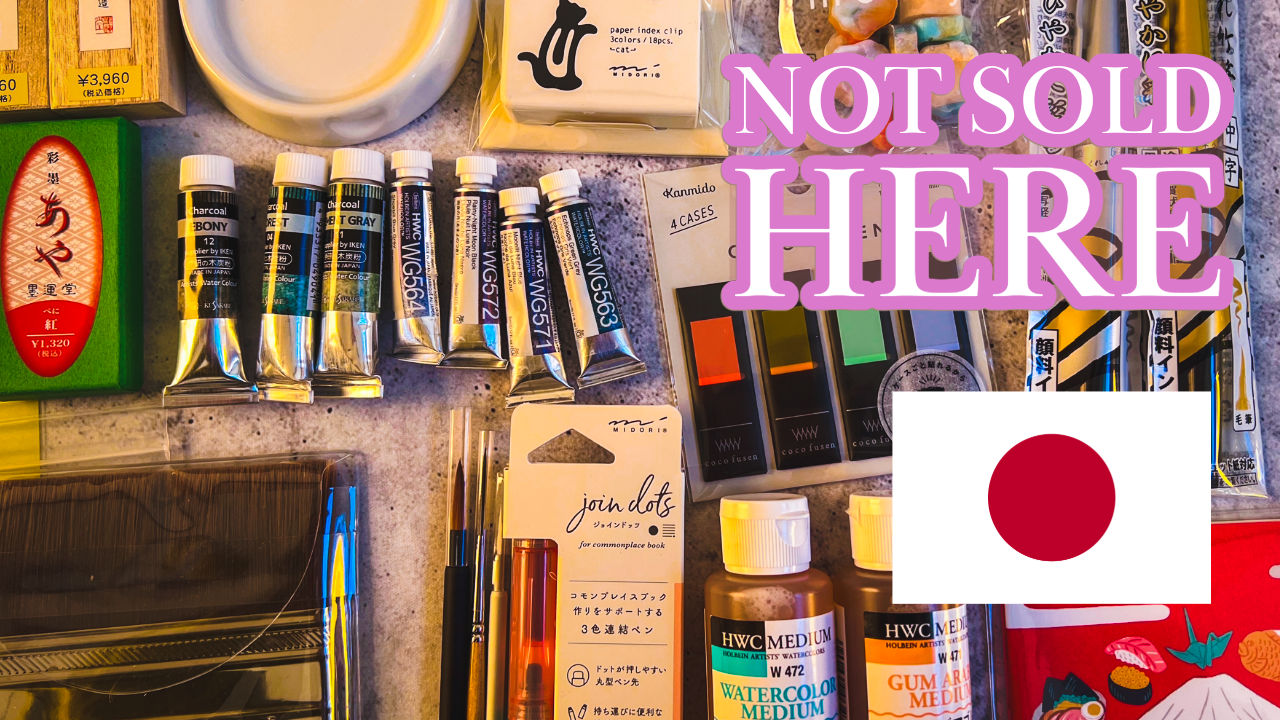
When I travel, I do not buy art supplies casually.
This time, I came back from Japan with tools I genuinely cannot source easily in the United States. Not because I needed more materials — but because Japan designs tools differently.
Each item had to answer a question in my studio.
Some were about control.
Some were about texture.
Some were about replacing tools that no longer fit how I paint.
This is not a review. It is a first look at what caught my attention — and what I’m curious enough to test properly.
Painting Tools I Bought on Instinct
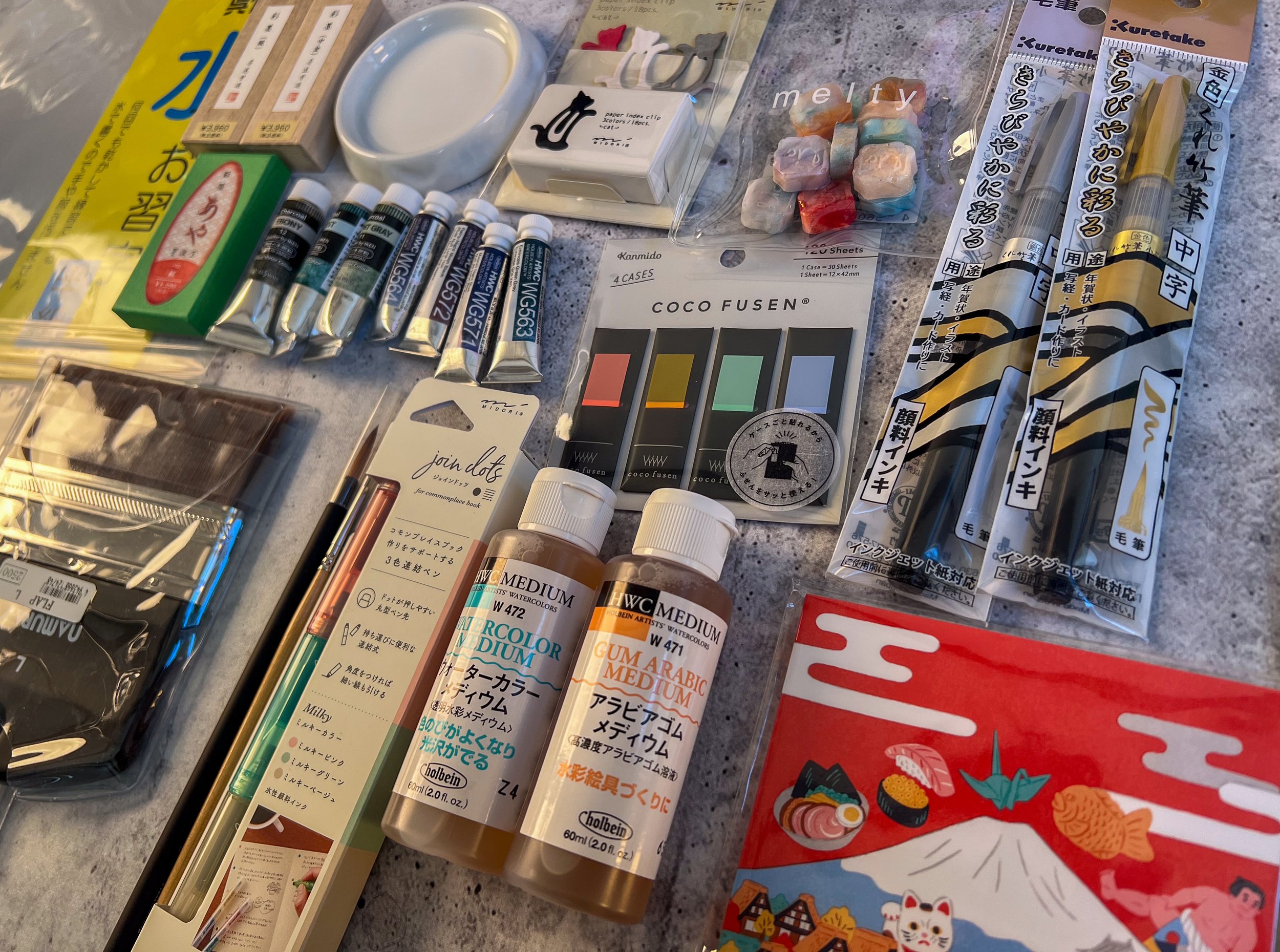
A few of these purchases were deliberate. A few were instinctive.
For example, I brought back:
A Namura large brush
Several Kusakabe charcoal-based watercolor pigments
Granulating colors and mediums from Holbein
I bought them because I suspect they might solve very specific frustrations I already have.
The Namura brush claims strong water retention with controlled snap. If it can hold large passages without collapsing or flooding the page, it could shift how I approach scale in portrait work.
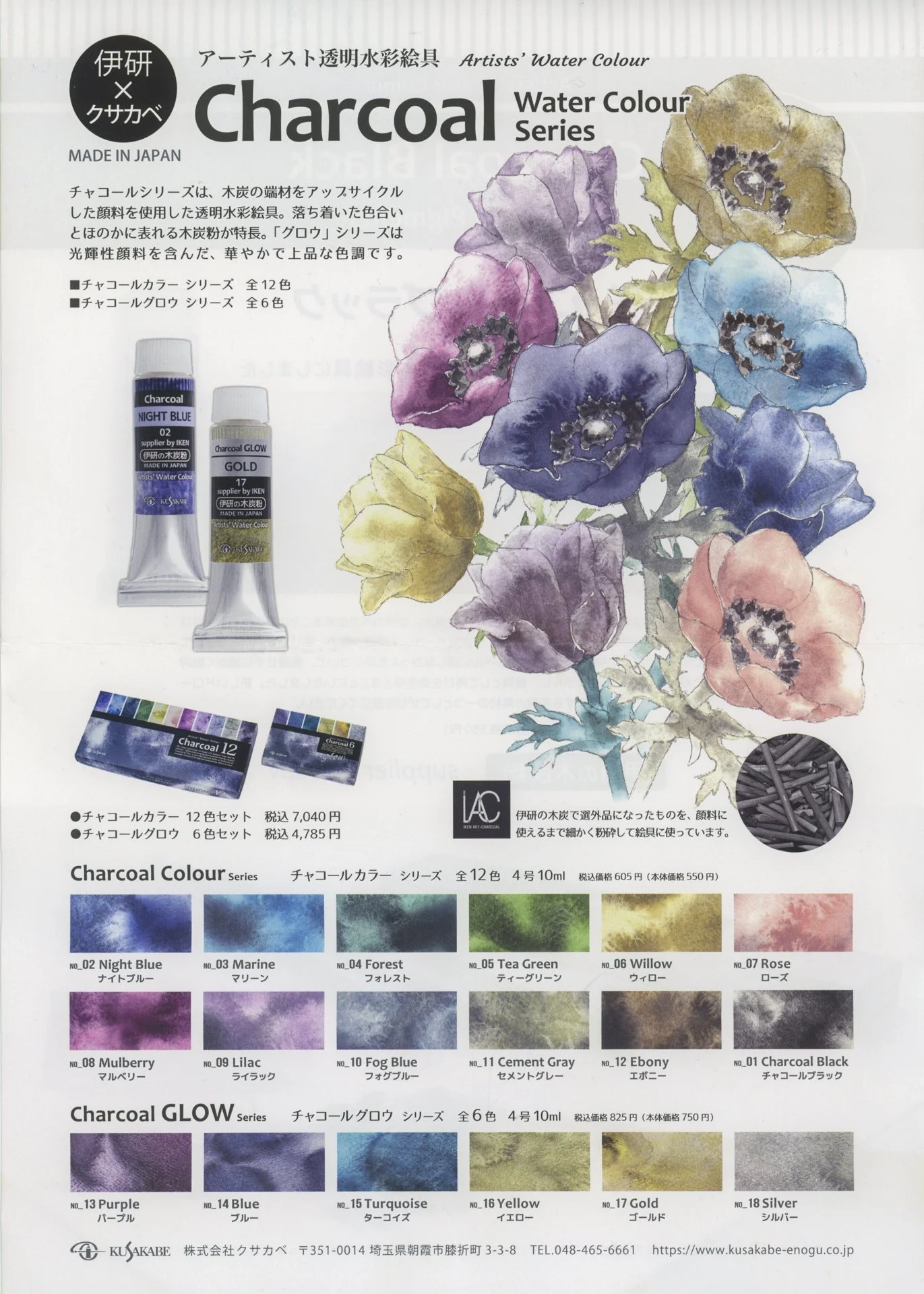
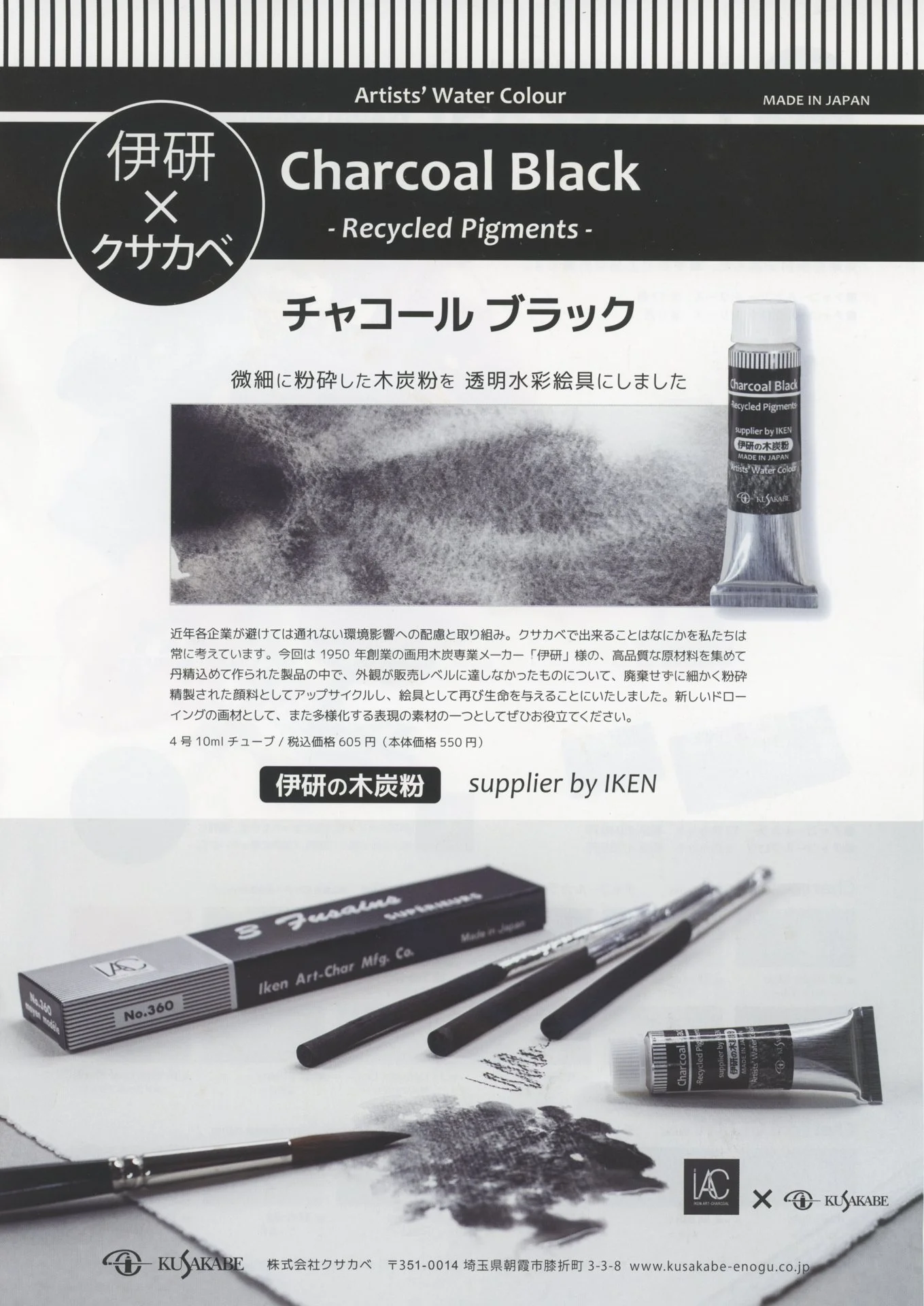
The Kusakabe charcoal colors lean mineral and muted. In portraiture, I’m less interested in bright saturation and more interested in atmospheric shadow — blue-grays, softened greens, tones that sit quietly under skin.
This isn’t about better or worse.
It’s about whether these tools integrate into the kind of work I am building toward.Synthetic brushes
I tested Japanese synthetic brushes that claim to hold water like animal hair.
As someone who uses quills, this matters. I need a brush that carries enough water for large passages without collapsing or flooding the page. If a synthetic can match that performance, it changes both cost and maintenance in my practice.
This was not about novelty. It was about whether a brush can support the scale and softness I need in portrait work.
Japanese Calligraphy & Ink Culture
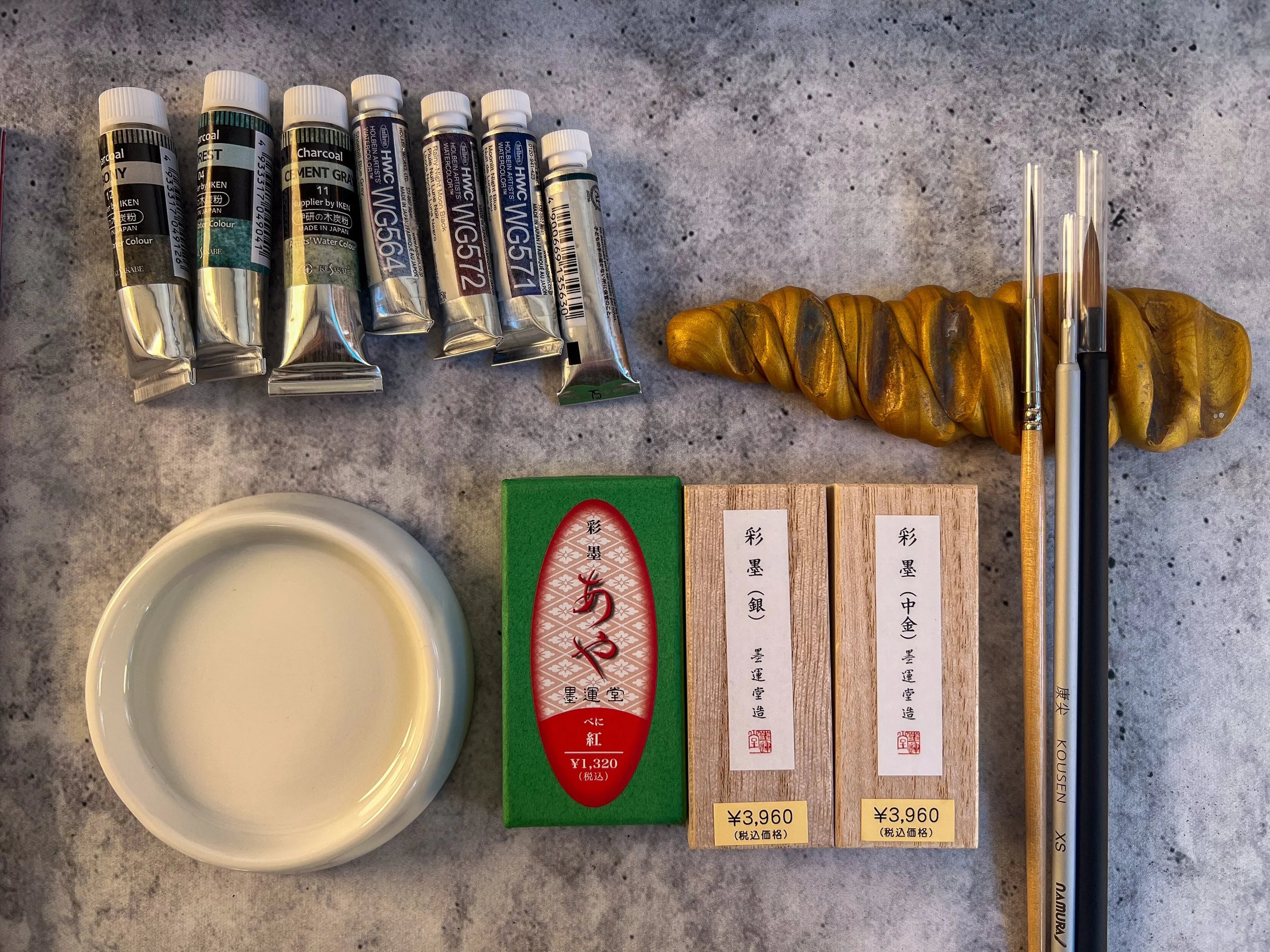
I also brought back traditional calligraphy materials:
Aya Beniro sumi ink
Gold and silver sumi
A suzuri (ink grinding stone)
Kuretake paper
These tools come from a tradition that prioritizes pressure, restraint, and intention — very different from Western watercolor training.
Grinding ink manually slows the process down. Mixing pigment on a stone creates a different rhythm than squeezing paint from a tube. That shift in pace changes how a mark begins.
As someone who grew up between Japan and the West, I’m curious what happens when those systems meet inside my portrait practice.
Not as decoration — but as structural influence.
Hard-to-Find Papers
Paper determines everything in watercolor.
Some of the papers I selected are difficult to source in the U.S. I chose them because of how they absorb, bloom, and hold an edge.
In portrait work, the difference between a paper that spreads unpredictably and one that contains a wash cleanly can change the emotional clarity of a face.
I want to see how they behave under layered skin tones and controlled shadow.
Metallics & Mark-Making Curiosities
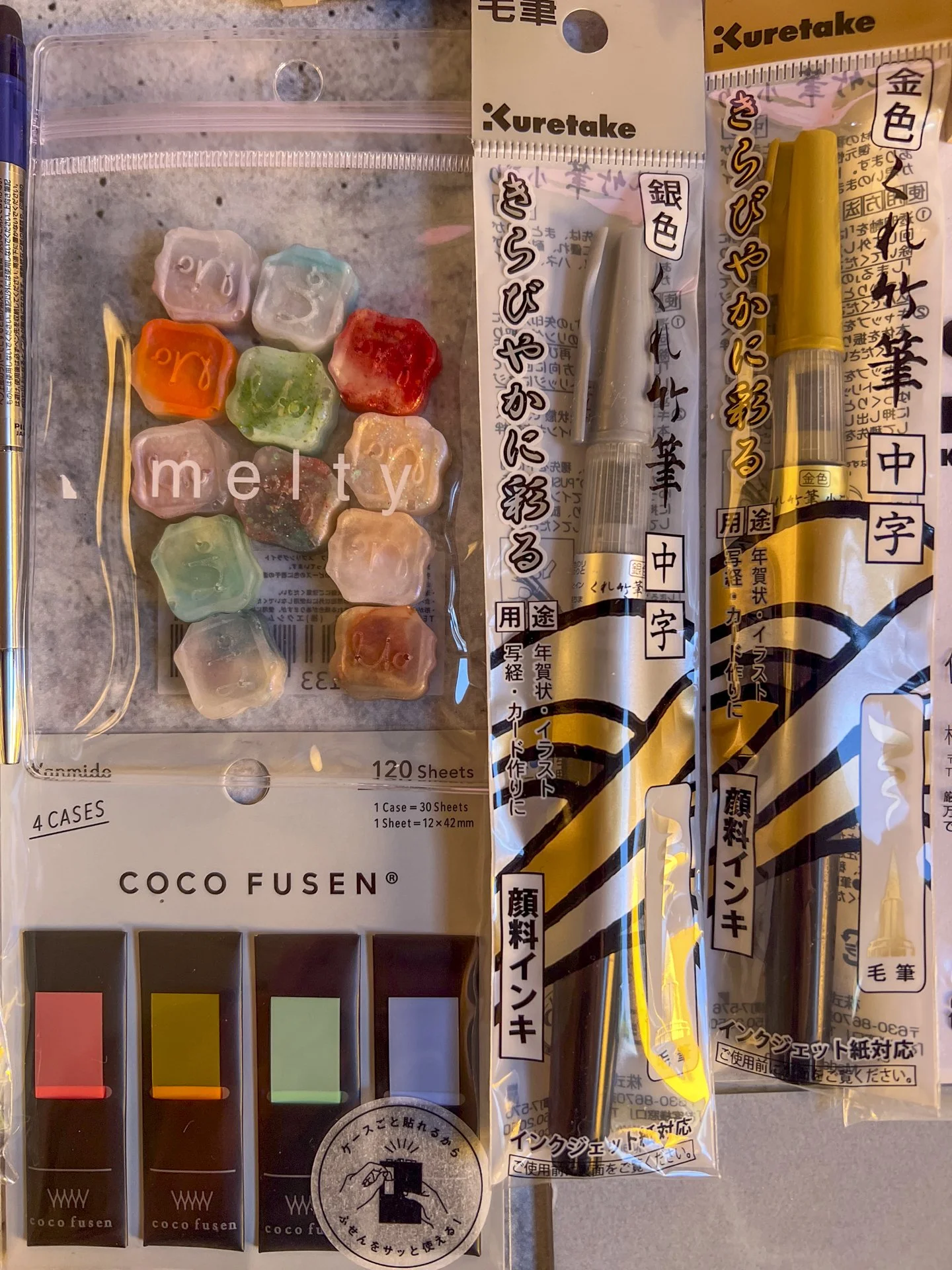
A few tools came home simply because something about them felt right:
Gold and silver fude brushes
Specialty pens
Vanishing practice paper
I don’t yet know how I’ll use them — and that’s the point.
Japan is very good at making experimentation feel low-risk. These tools invite play without demanding permanence.
Sometimes curiosity is enough of a reason.
Pure Stationery Joy
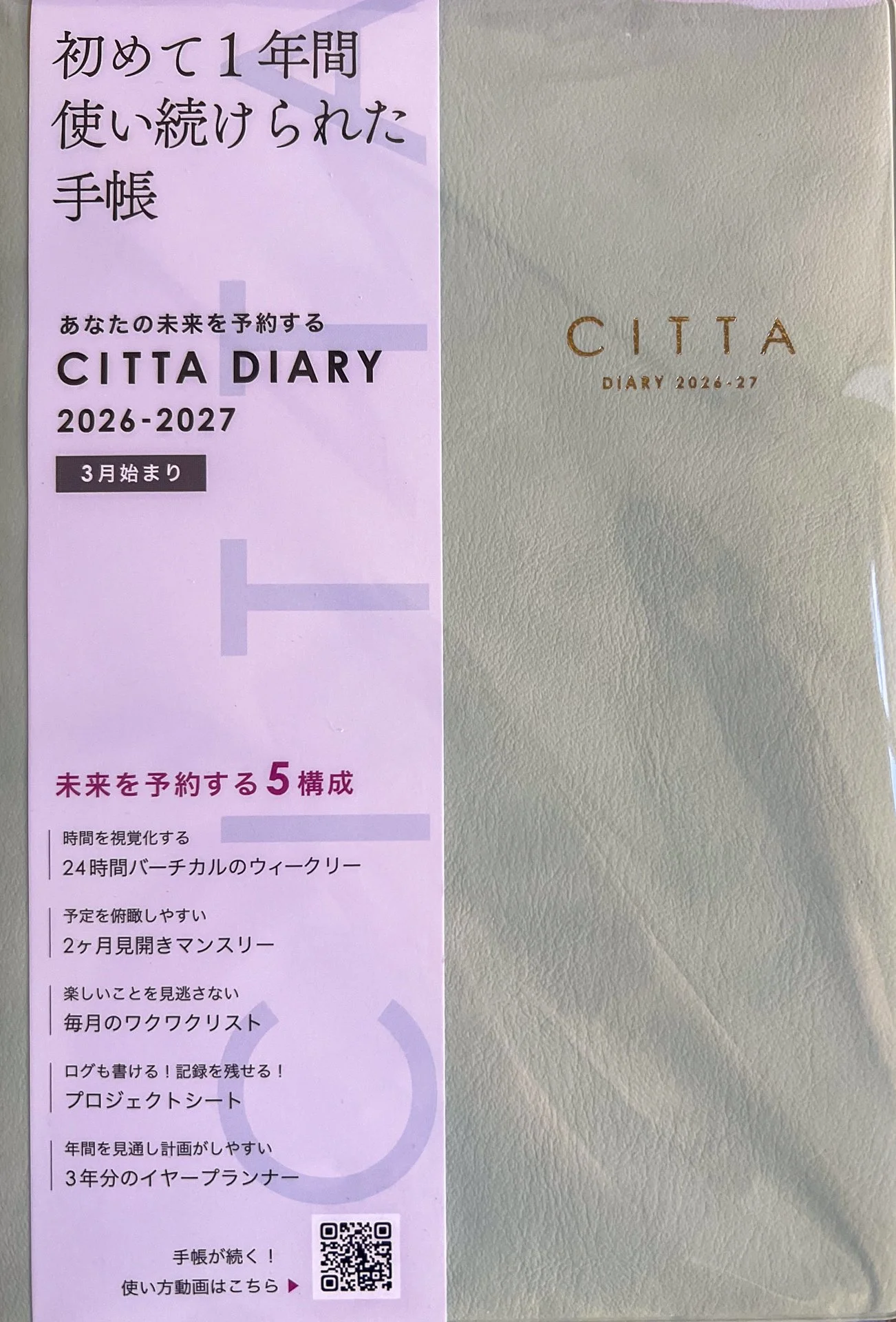
Not everything needs to justify itself technically.
I also brought back:
A Citta diary
Wax seals and a spoon stand
Koko Fusen sticky tabs
Small clips and paper goods
These don’t make better art — but they absolutely change how I approach my day.
There is something about Japanese design that treats everyday objects with the same care as professional tools. That mindset matters.
What Comes Next
In Part 2, I’ll move from intention to testing.
Swatches.
Layering.
Side-by-side comparisons.
Because bringing something home is easy.
Letting it earn its place in the work is harder.
If there’s one tool you’re curious to see tested first, tell me — I’ll start there.