What 2025 Actually Cost Me as a Full-Time Artist
In 2025, I decided to treat my art practice as a full-time commitment.
Not casually. Not experimentally. Fully.
That meant investing in materials, visibility, tools, and education in a way I had never done before. It also meant watching the numbers closely and asking a harder question than usual: not just what did I earn, but what did it cost to build this.
I shared the percentages in a recent video. Here, I want to document what they meant.
The Income Side
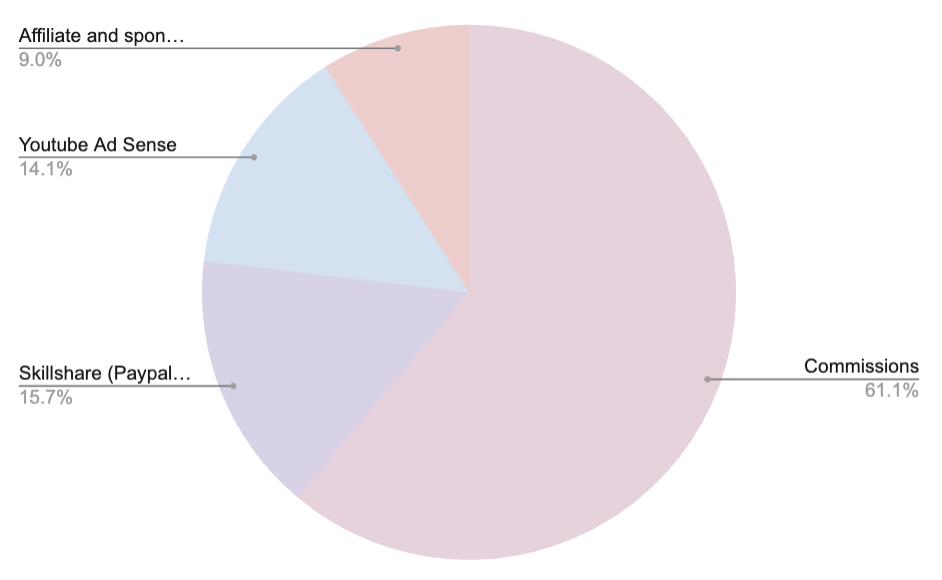
In 2025, most of my income came from commissions. Smaller portions came from teaching platforms, YouTube, and affiliate links.
It was not diversified in a dramatic way. It was concentrated.
That concentration created pressure. When one stream carries most of the weight, it affects how you choose projects and how you use your time. It also shapes your energy.
I learned that income concentration feels productive, but it is not stable.
The Expense Side
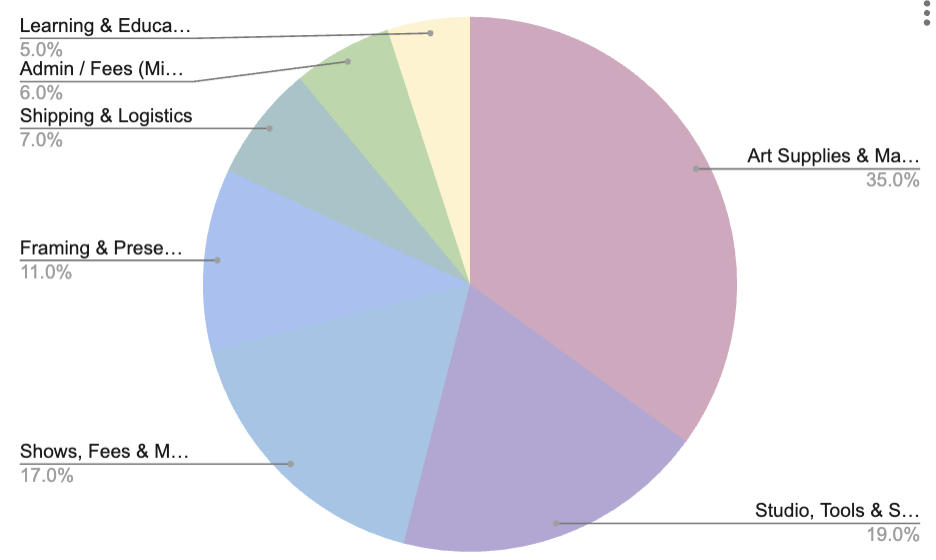
The largest portion of my expenses went to art supplies. That includes paper, paint, framing, and presentation materials. The second largest category was studio tools and visibility costs, including show fees and platform expenses.
This was intentional.
I was building.
But building has weight. High material output means physical output. Shipping and presentation costs accumulate quietly. Platform fees are invisible until you add them together.
The year was not profitable. It was an investment year.
That distinction matters to me.
What “Mission” Meant
My word for 2025 was Mission.
Mission meant pushing. Submitting. Producing. Showing up consistently. Saying yes more often than I said no.
It helped me move forward quickly.
It also compressed my margins, financially and energetically.
Mission built structure. It did not build balance.
What Changes in 2026
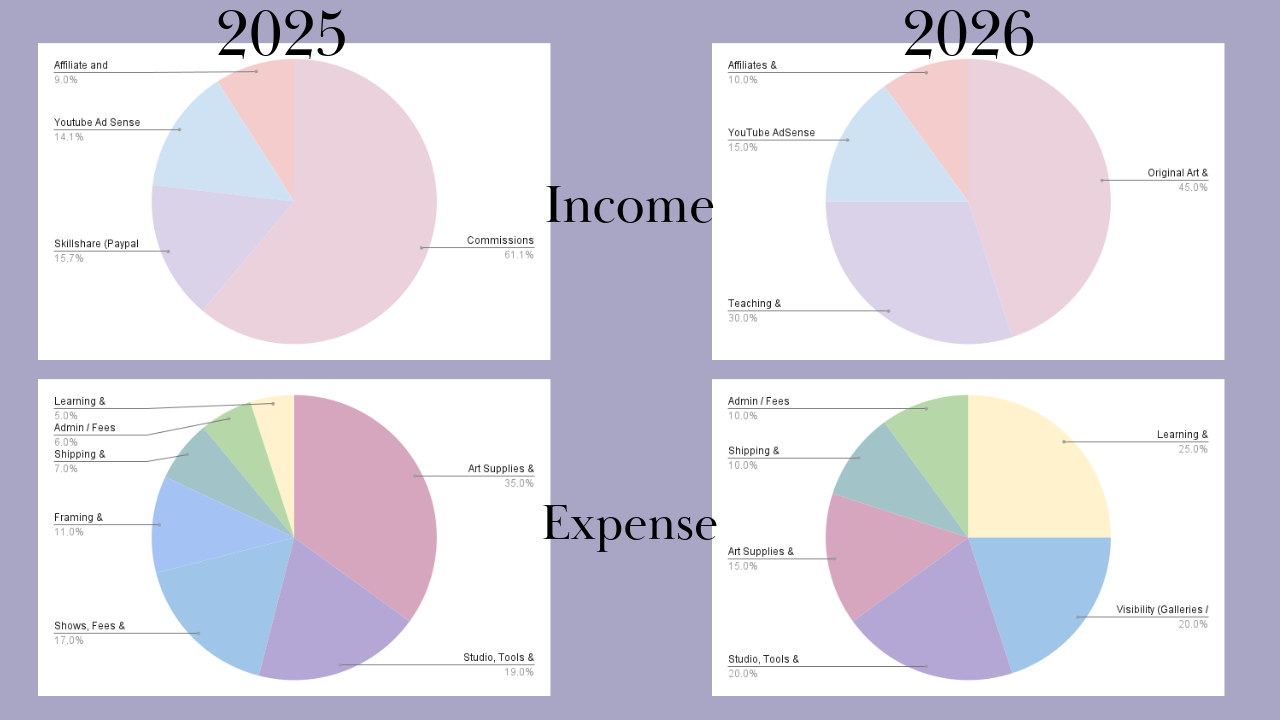
In 2026, my goal is not to retreat. It is to rebalance.
That means shifting income more toward original work and teaching. It means reducing material intensity. It means investing in learning with more intention rather than reacting to opportunities.
It also means setting a long-term goal of a sustainable salary, not as a line item on paper, but as a natural result of stability.
The numbers showed me something clear.
I do not need to push harder.
I need to distribute better.
This post is here so I can return to it later and see whether I followed through.