Stop Ruining Your Watercolors: Testing Dorland’s Wax vs Spray Varnish
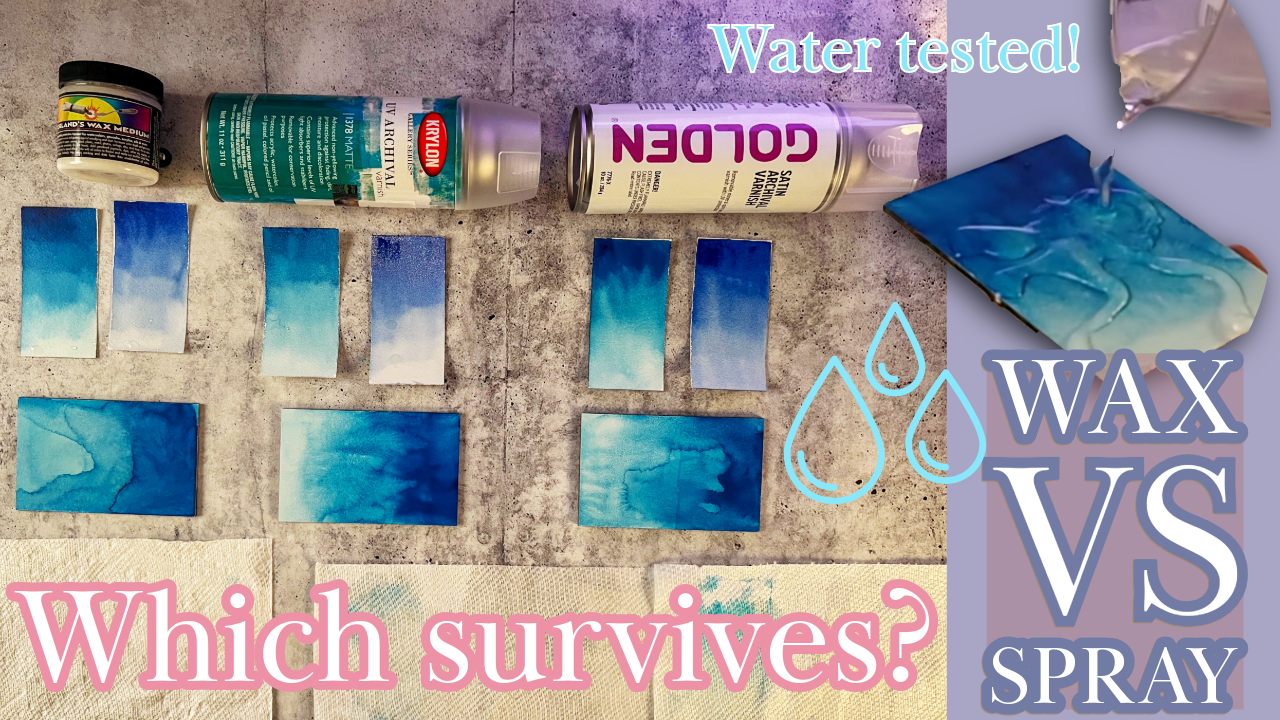
Stop Ruining Your Watercolors
Testing Dorland’s Wax vs Spray Varnish
Varnish sounds simple.
Seal the painting. Protect it. Move on.
In watercolor, it is never that simple.
Watercolor lives inside the paper fibers. It is absorbent, matte, and sensitive. Any coating changes not just protection, but the character of the surface itself.
I tested four approaches in my studio:
Dorland’s Wax Medium
Krylon Gallery Series Matte
Golden Archival MSA Spray
Golden MSA Brush-on
I tested them on both watercolor paper and Aquabord. I wanted to see three things clearly:
How the surface changes
What survives water
What I would realistically use on finished work
Before Anything Was Sealed
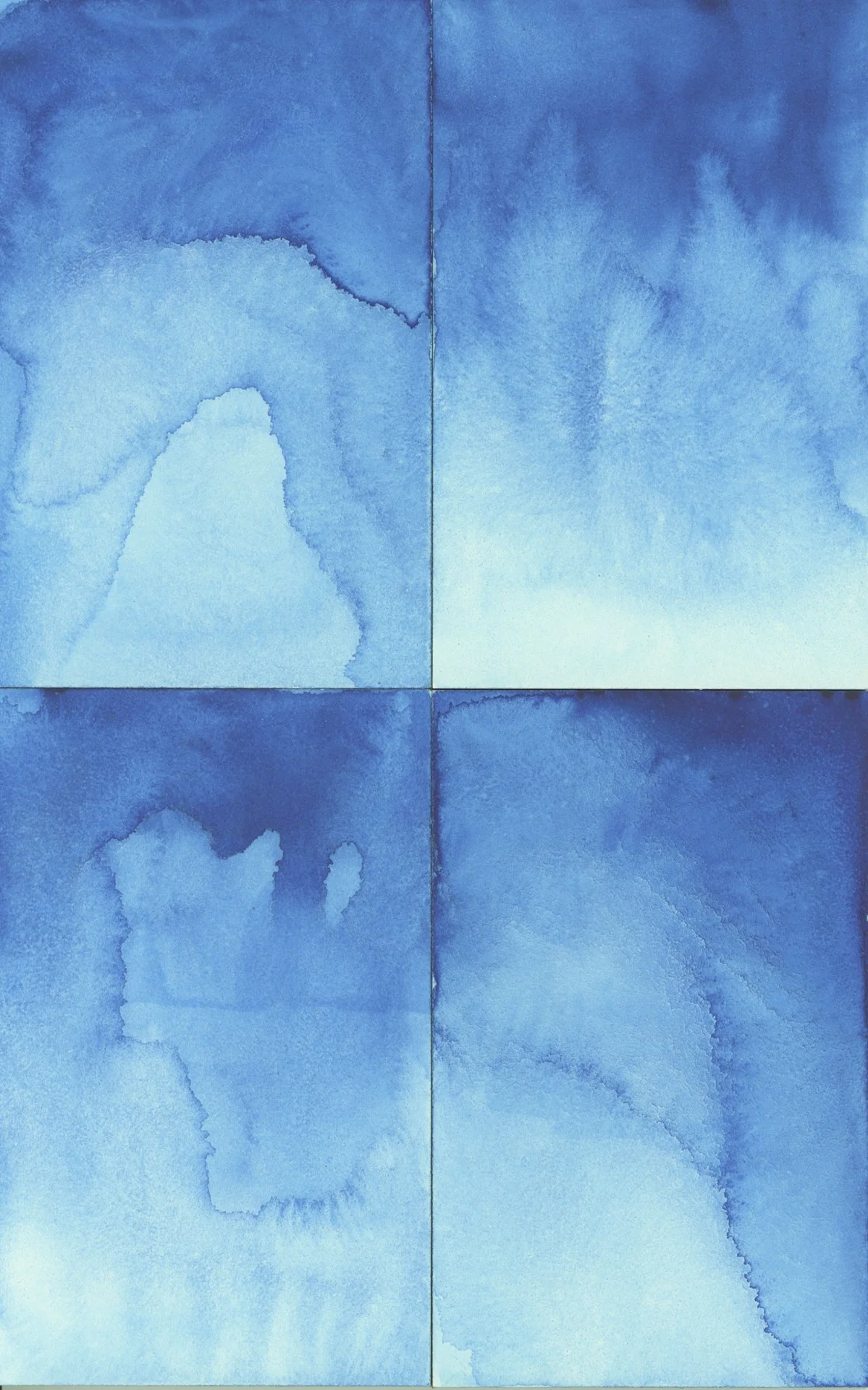
PB15 On Aquabord Before Varnishing.
This is the control.
Unsealed PB15 on Aquabord. Fully dry. No coating.
The surface is matte. Soft. Vulnerable.
On paper, the effect is even more delicate.
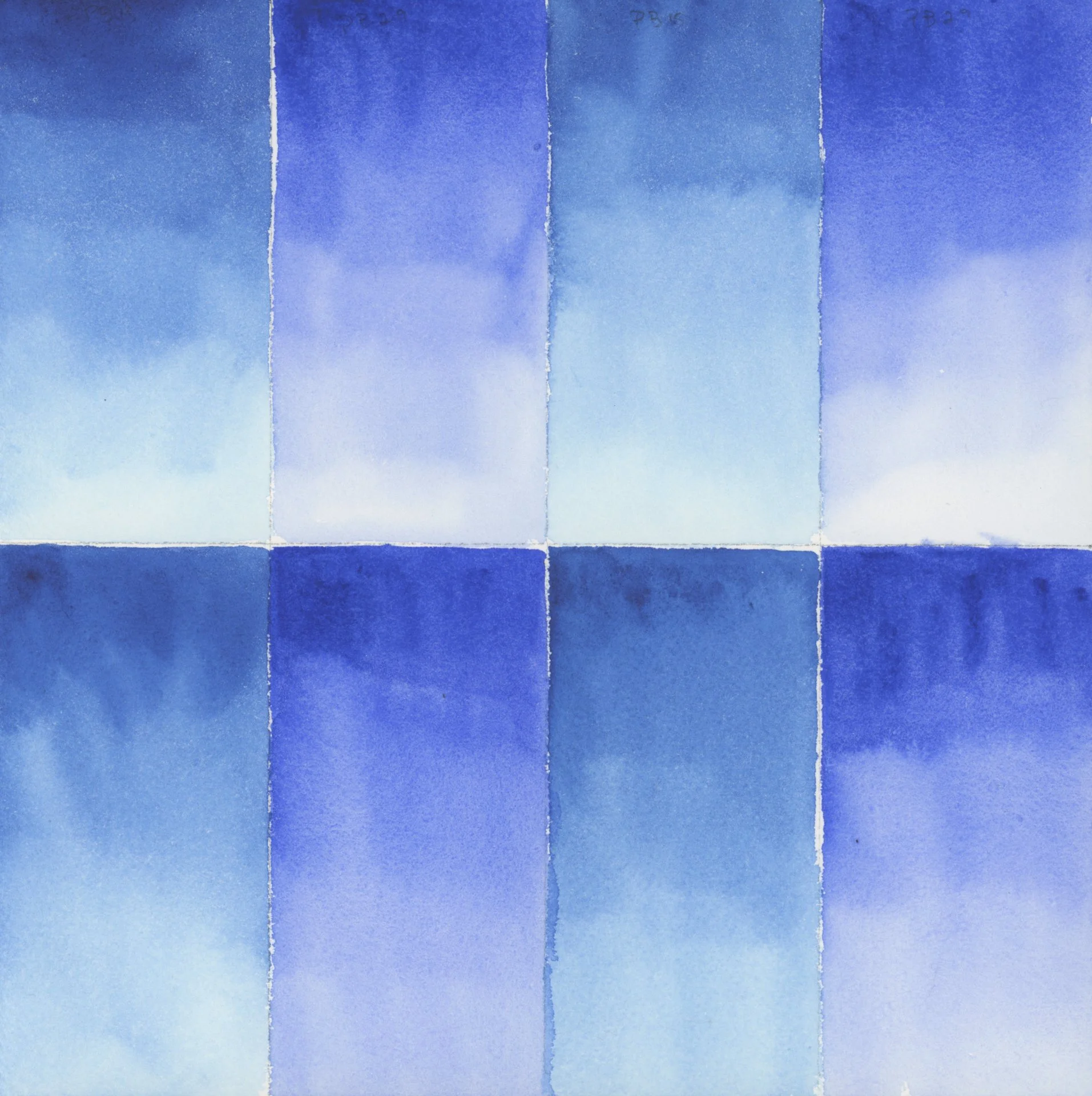
PB15&PB29 On Paper Before Varnishing.
This is PB15 & PB29 on PAPER.
Before sealing, watercolor behaves like watercolor. It lifts easily. It stains permanently in some areas. It holds memory of water movement.
This baseline matters. Without it, you cannot judge change.
After Varnishing: Surface Shift
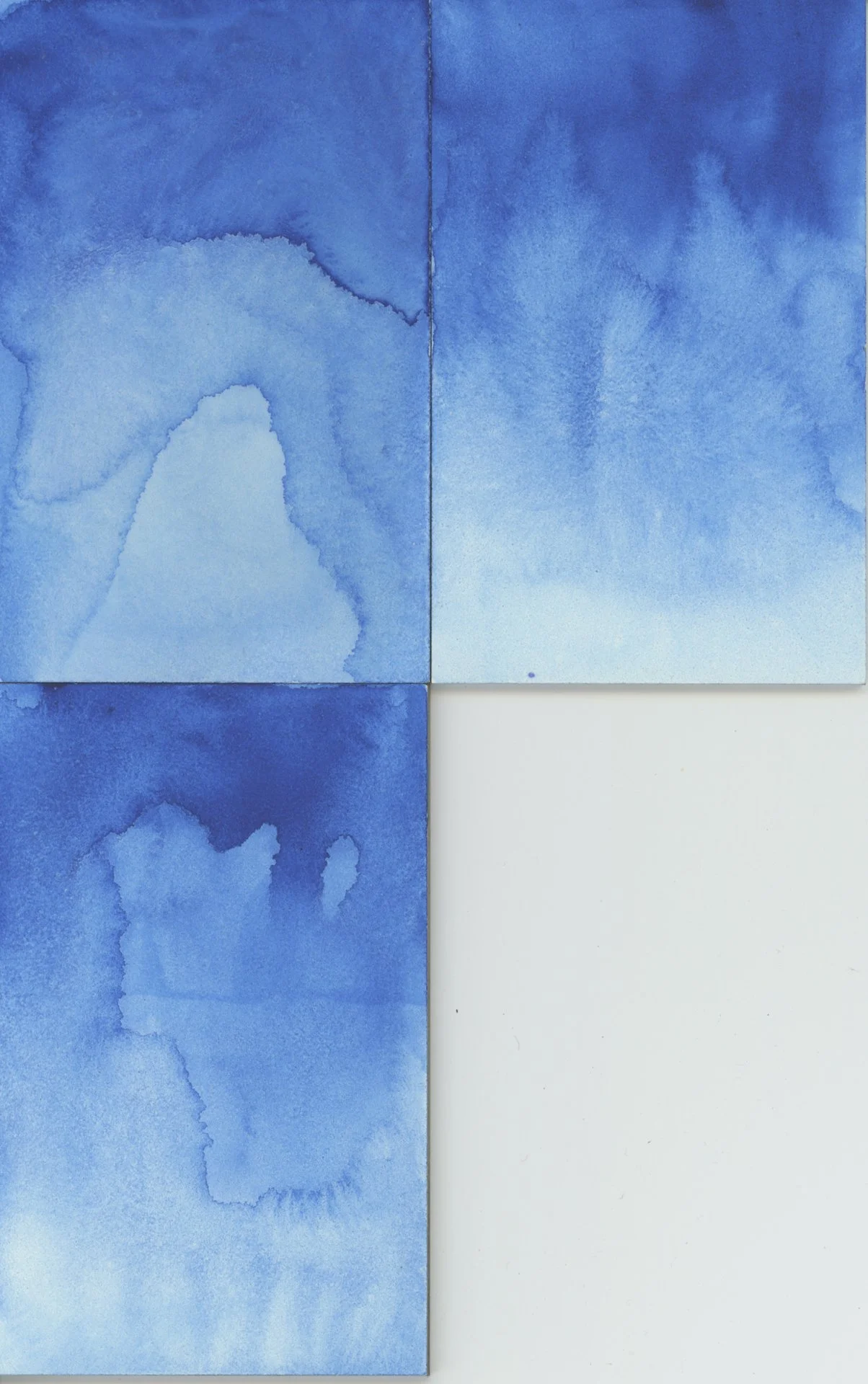
On Aquabord, Dorland’s Wax deepened the color slightly and unified the sheen. It reduced chalkiness and made the surface feel cohesive.
The Golden MSA spray created a more defined barrier. Slight satin shift. More reflective at certain angles.
The brush-on MSA introduced the most visible surface change. It requires careful application to avoid streaking.
On paper, the difference is subtler but still real.
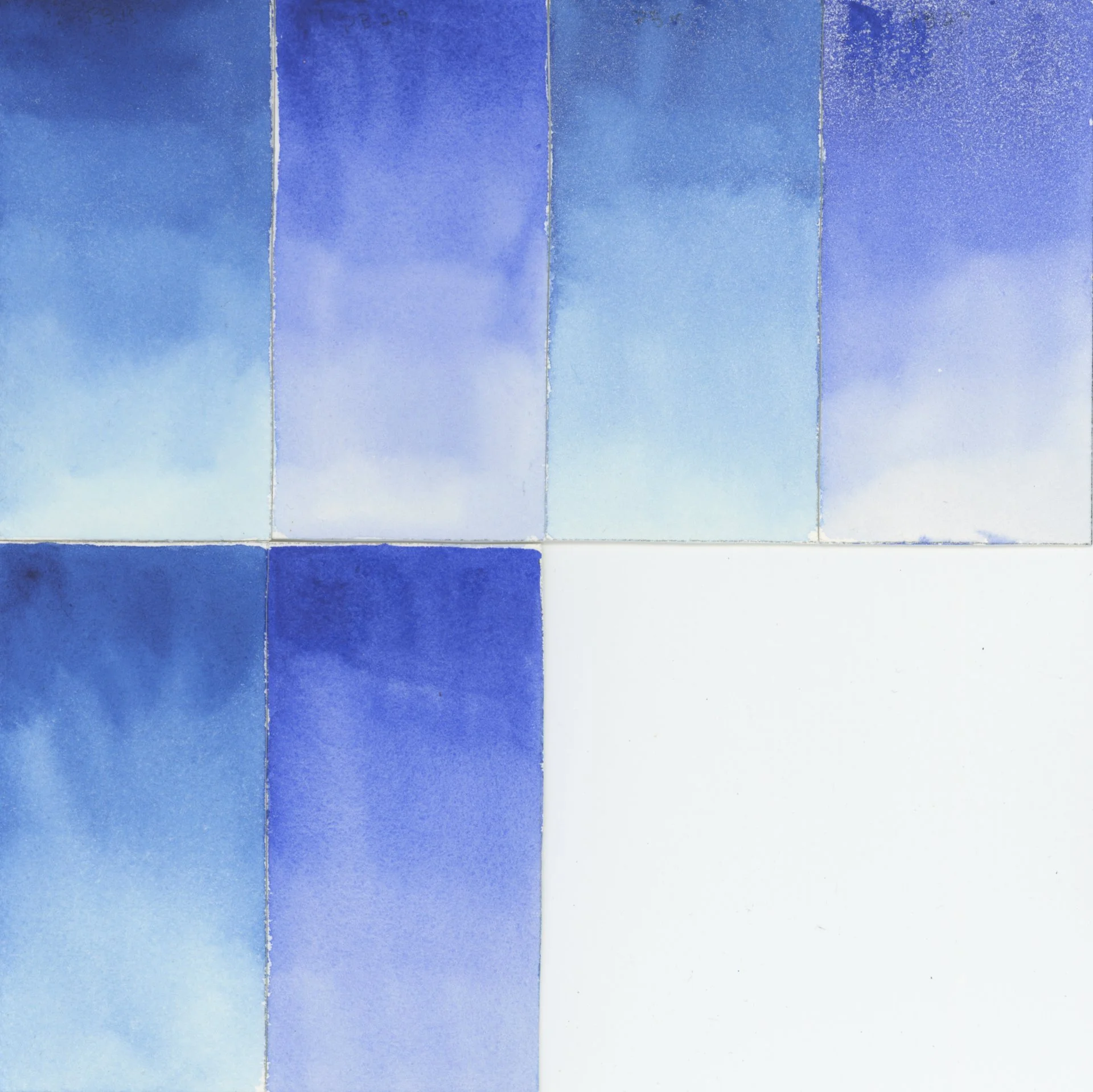
Paper absorbs. The coating sits differently. You feel it in the way light moves across the sheet.
This is the first tradeoff.
Protection always alters the surface.
The Water Test
This is where assumptions break.
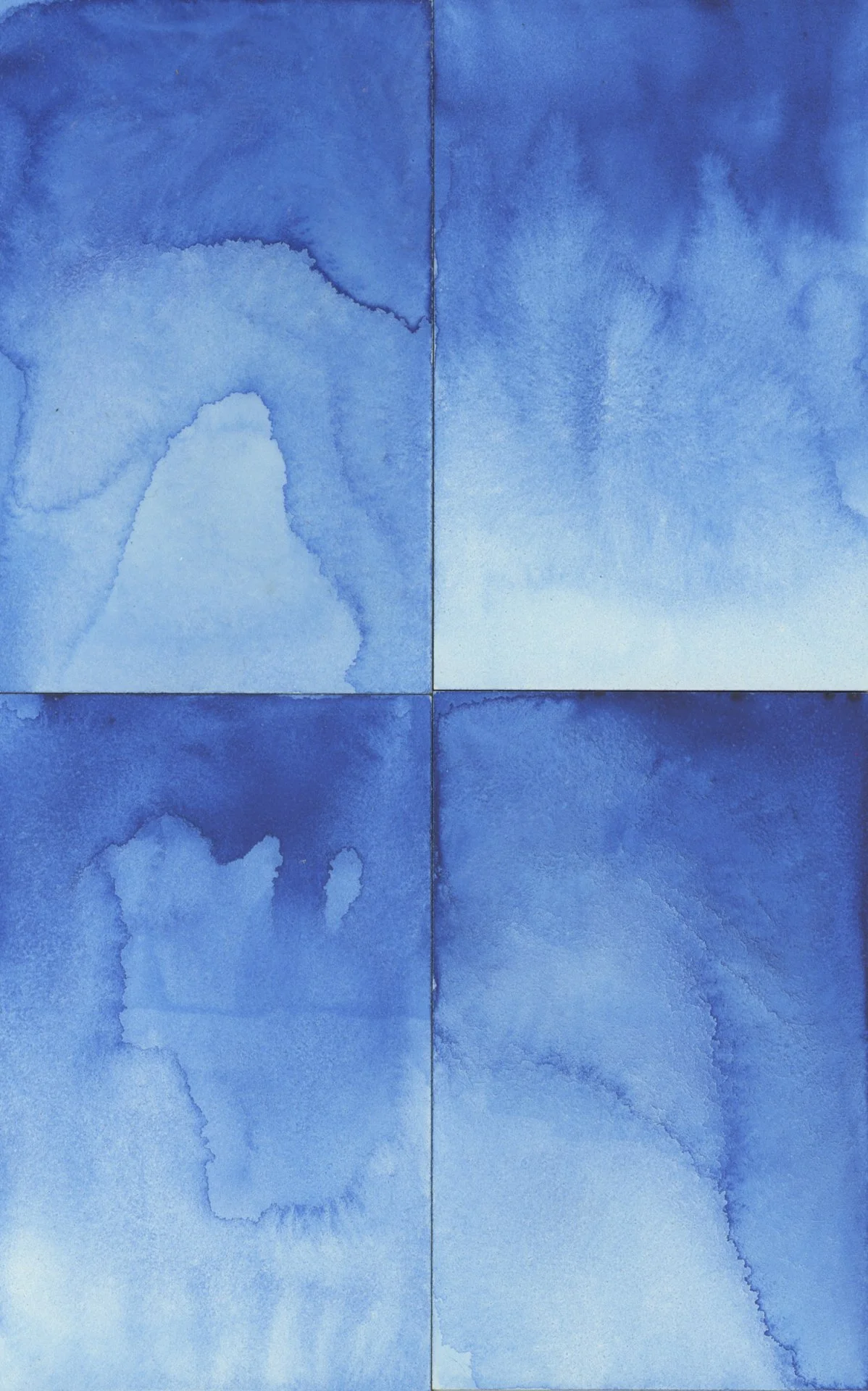
On Aquabord:
Golden MSA performed as a true barrier.
Krylon resisted well but is humidity-sensitive.
Dorland’s Wax resisted light moisture but softened under sustained water.
Wax is water-resistant. It is not waterproof.
On paper, vulnerability increases.
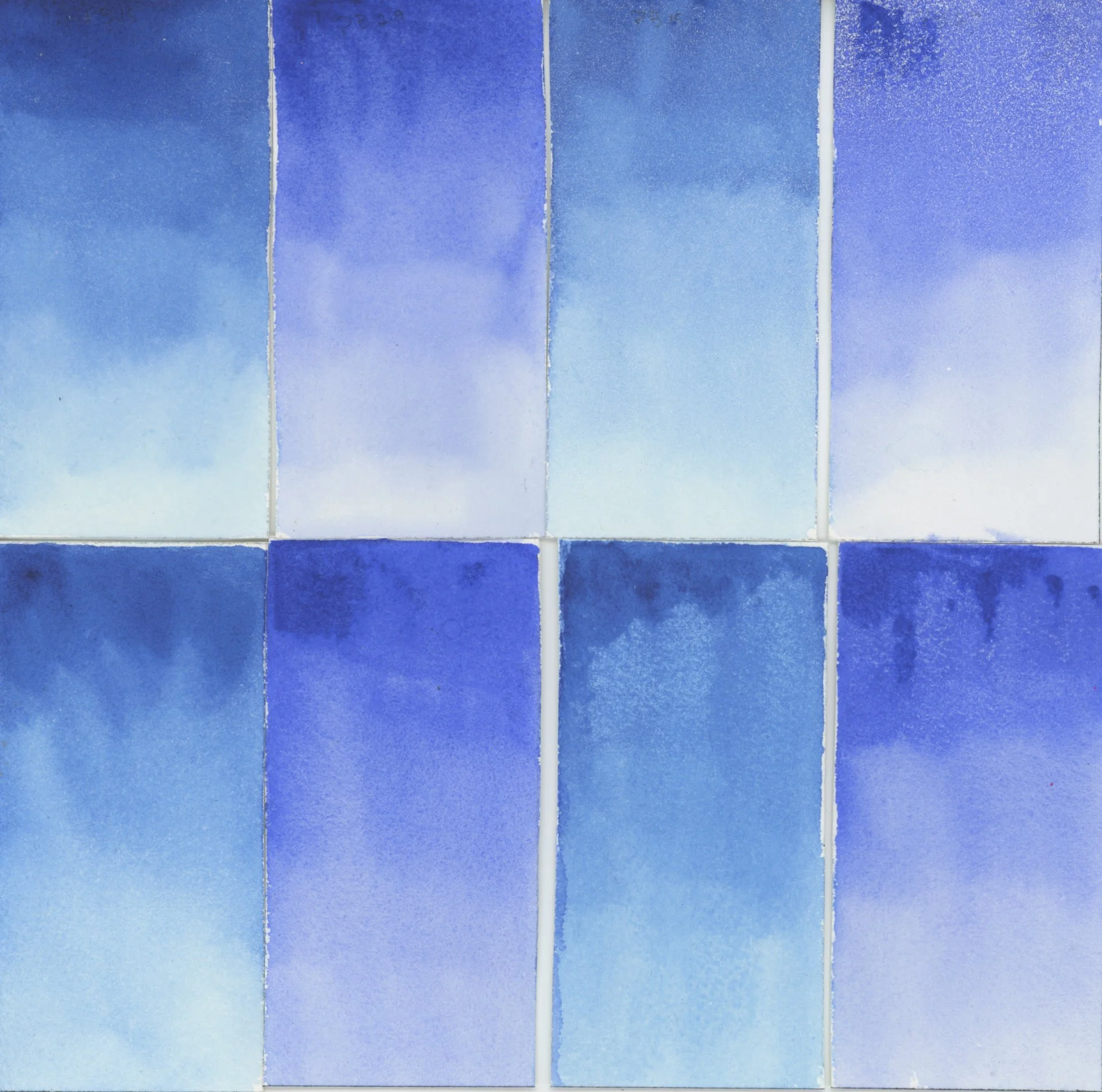
Paper and coating behave as a system. If moisture penetrates, the fibers respond.
This reinforced something important for me.
If the goal is glass-free presentation, the support matters as much as the varnish.
Side-by-Side Comparison

Seeing before and after side by side clarifies the emotional difference.
Some coatings preserve softness.
Some prioritize durability.
Some sit somewhere in between.
This is not about which is best.
It is about what you are willing to change.
Understanding What You Are Buying
Most confusion happens at the label.
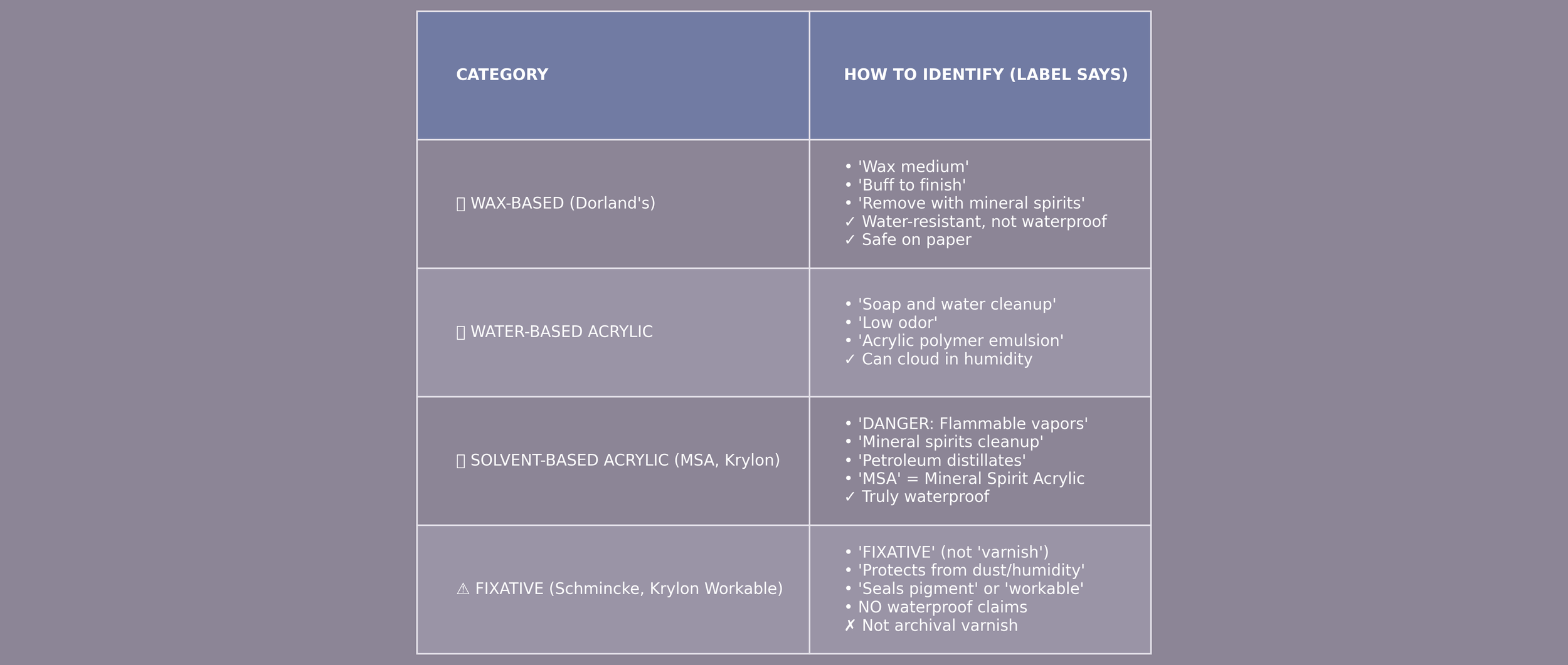
Wax-based products behave differently from water-based acrylics.
Solvent-based acrylics behave differently from fixatives.
The words on the can matter.
If it says:
“Fixative” — it is not archival varnish.
“Water-resistant” — it is not waterproof.
“MSA” — it is mineral spirit acrylic, solvent-based, and forms a stronger barrier.
Reading labels carefully prevents expensive mistakes.
Cost Per Painting
Protection is also a financial decision.
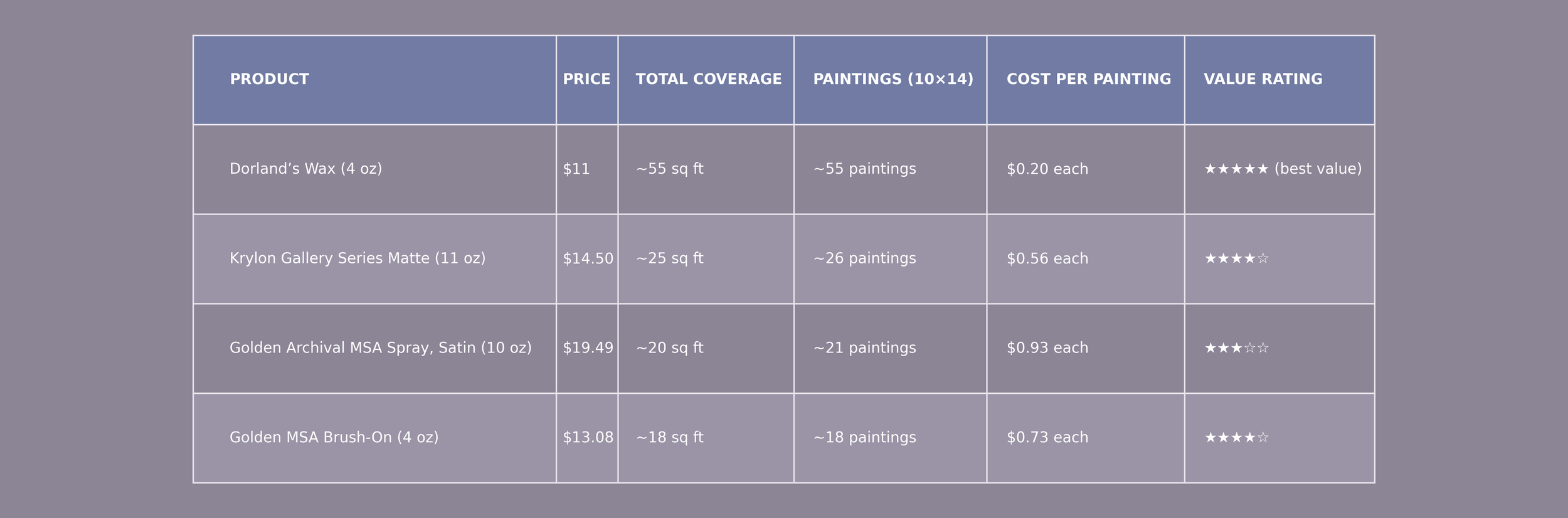
Dorland’s Wax is significantly more economical per small painting.
Spray varnishes cost more per surface area but provide stronger protection.
If you are sealing dozens of smaller works, cost accumulates.
This is not about saving money at all costs. It is about knowing the tradeoff.
Technical Properties Overview
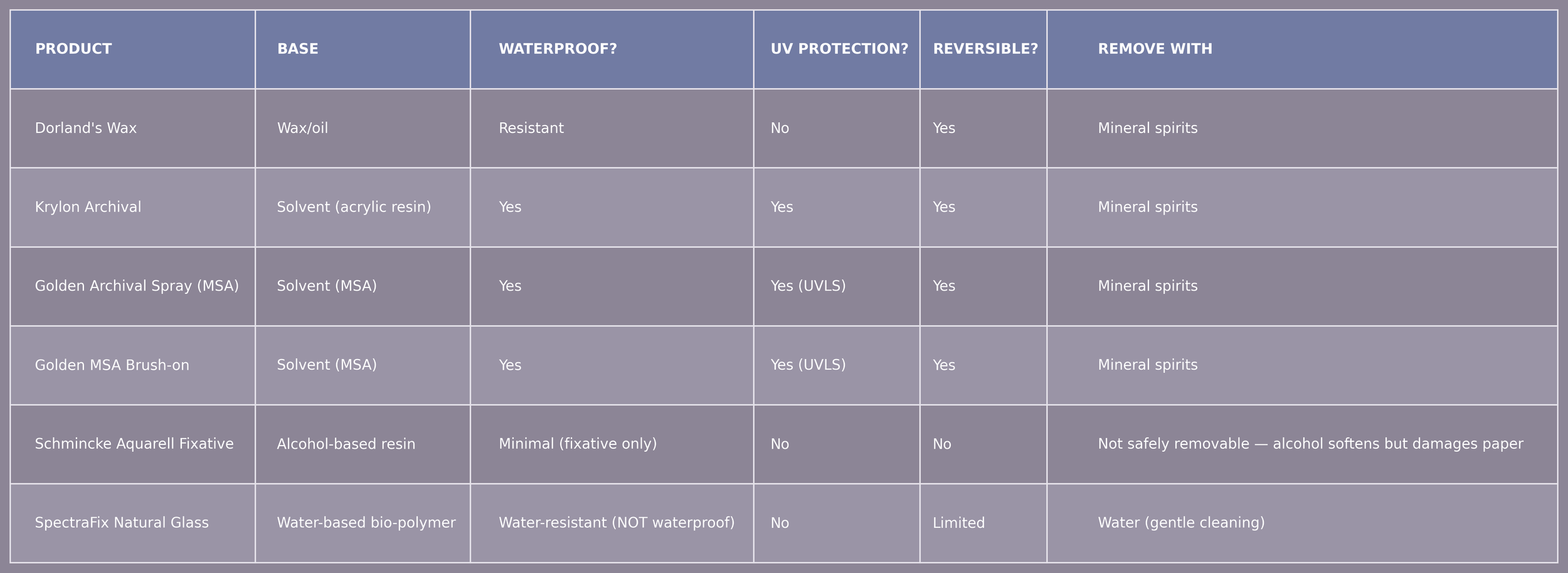
Here is the simplified framework I now use:
Wax
Surface unification
Light protection
Reversible
No UV protection
Solvent-based MSA
True waterproof barrier
UV protection (if labeled UVLS)
Reversible with mineral spirits
Fixatives
Not archival varnish
Not sufficient for glass-free framing
Once you see these categories clearly, the decision becomes calmer.
What I Would Use
If I want maximum durability without glass, I would use an archival MSA spray system, layered carefully, in proper humidity conditions.
If I want to unify mounted watercolor and lightly protect it in a low-risk environment, Dorland’s Wax still has a place.
I would not rely on wax alone for humid environments or high-traffic settings.
The deeper lesson is this:
Varnish does not make watercolor invincible.
It only changes the balance between softness and protection.
Materials Used in This Test
Most of the materials I used are available here:
Art Supplies Used in This Video
All supplies: https://tinyurl.com/esmppz56
If you are mixing solvent-based varnish and need accurate ratios, I used these pipettes:
Pipettes (Amazon): https://amzn.to/4rNLooH
These are affiliate links. If you choose to use them, it does not cost you anything extra. It simply supports the careful testing I continue to do in the studio.
Watch the Full Test
You can see the full water test and application process in the video below.